

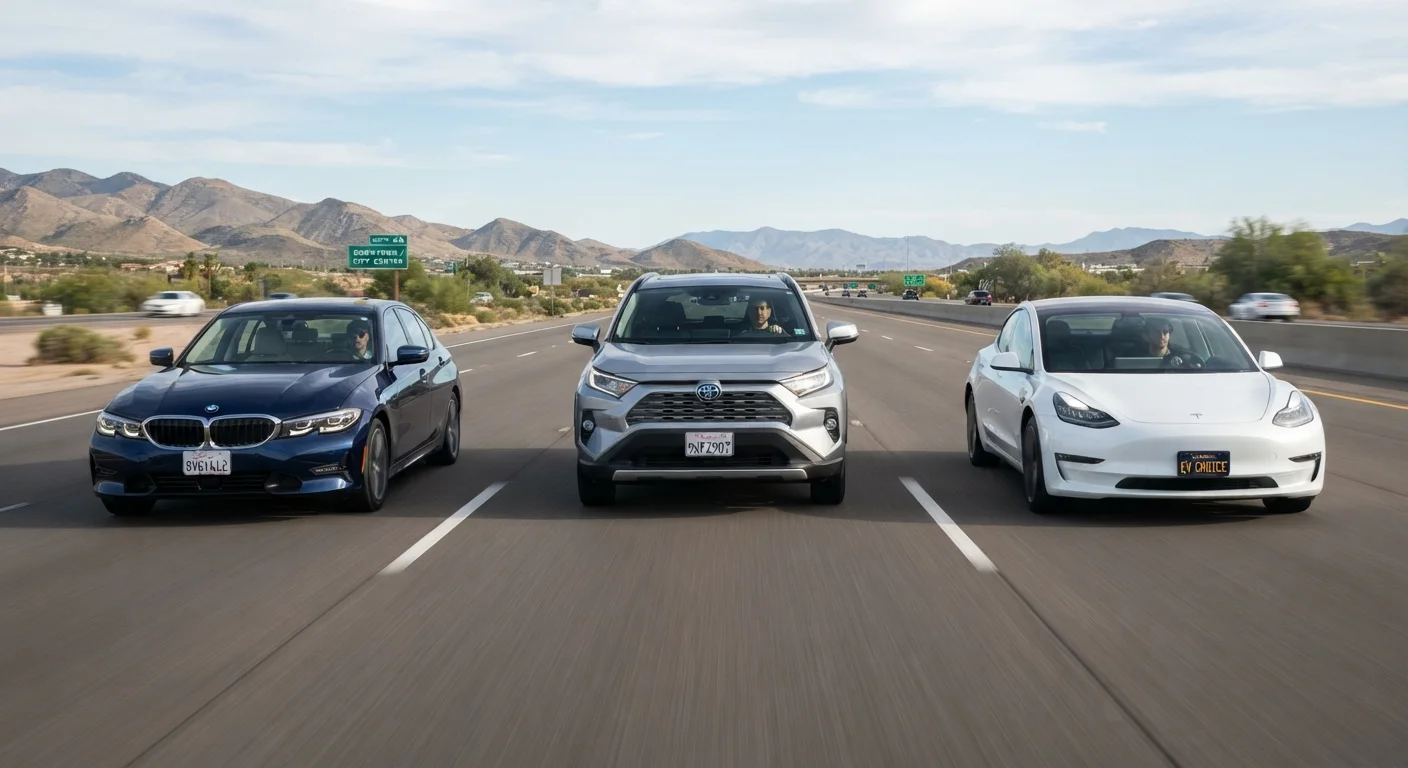
Key Takeaways
- Electric vehicles typically have the lowest per-mile energy costs, but higher upfront purchase prices.
- Hybrids offer a middle ground - better fuel economy than gas vehicles without the charging infrastructure requirement.
- Gasoline vehicles often cost less to purchase but accumulate higher fuel expenses over a typical ownership period.
- Local fuel prices, electricity rates, and annual mileage significantly affect which powertrain saves the most.
- Federal and state incentives can meaningfully reduce the effective cost of hybrid and electric vehicle ownership.
Our Verdict
For high-mileage drivers with home charging access, electric vehicles generally deliver the lowest lifetime energy costs despite a higher purchase price. Hybrids are the pragmatic choice for those without reliable charging infrastructure or who drive moderate annual miles. Gasoline vehicles remain competitive for low-mileage drivers or in regions where electricity rates are unusually high.
| Best for | Recommended |
|---|---|
| High-mileage drivers with home charging access | Electric Vehicle |
| Drivers without reliable charging infrastructure | Hybrid |
| Low-mileage drivers or those in high-electricity-rate areas | Gasoline |
| Drivers balancing fuel savings with minimal lifestyle changes | Hybrid |
Why Fuel and Energy Costs Define Long-Term Ownership Value
The purchase price of a vehicle is just one chapter in a much longer financial story. Over a typical 8- to 10-year ownership period, fuel or energy costs can rival - or even exceed - what you originally paid for the car. According to the U.S. Department of Energy's Alternative Fuels Data Center, the average American driver covers roughly 14,000 to 15,000 miles per year, making powertrain efficiency one of the most consequential cost variables in vehicle ownership.
Understanding how gasoline, hybrid, and electric powertrains compare on energy expenditure requires looking beyond advertised MPG figures. Factors including your local fuel and electricity prices, how and where you drive, and how long you keep the vehicle all shape the true cost picture. For a broader view of every cost category involved, see our full breakdown of car ownership costs in America.
How Each Powertrain Handles Energy Costs
Gasoline vehicles remain the most common choice. Their per-mile fuel cost depends almost entirely on pump prices and the vehicle's fuel economy rating. A vehicle averaging 30 MPG and driven 15,000 miles per year consumes roughly 500 gallons annually. At a national average gasoline price of approximately $3.50 per gallon, that amounts to around $1,750 per year - though regional price swings can push that figure considerably higher or lower.
Hybrid vehicles use a combination of a gasoline engine and an electric motor to recapture energy through regenerative braking, reducing fuel consumption without requiring external charging. A typical non-plug-in hybrid might achieve 45-55 MPG in combined driving, cutting annual fuel costs by 30-40% compared to a comparable gas-only vehicle. Plug-in hybrids (PHEVs) add a larger battery that can handle short electric-only trips - often 20-50 miles - before the gasoline engine takes over, which can further reduce fuel spending for commuters who charge regularly.
Electric vehicles (EVs) replace gasoline entirely with grid electricity. The U.S. Department of Energy estimates that EVs cost roughly $0.03-$0.05 per mile to operate on electricity, compared to $0.10-$0.15 per mile for a typical gasoline vehicle. At 15,000 miles per year, that gap can translate to $900-$1,500 in annual savings - though home electricity rates vary significantly by state and utility.
| Gasoline | Hybrid | Electric | |
|---|---|---|---|
| Typical fuel/energy cost per mile | $0.10-$0.15 | $0.06-$0.10 | $0.03-$0.05 |
| Estimated annual energy spend (15k miles) | $1,500-$2,250 | $900-$1,500 | $450-$750 |
| Charging/fueling infrastructure needed | Gas station only | Gas station only (PHEV: + outlet) | Home charger recommended |
| Fuel economy range (MPG or MPGe equivalent) | 25-35 MPG | 40-55 MPG | 90-130 MPGe |
| Sensitivity to fuel/electricity price swings | High | Moderate | Low to moderate |
| Typical purchase price premium vs. gas baseline | Baseline | Moderate (+$2k-$6k) | Higher (+$5k-$15k+) |
Variables That Shift the Math
No single comparison holds for every driver. Several factors can swing the lifetime cost calculation substantially:
- Annual mileage: Higher mileage amplifies per-mile savings, making EVs and hybrids more financially attractive the more you drive.
- Local energy prices: In states with low electricity rates (such as parts of the Pacific Northwest or Southeast), EV operating costs are especially low. In states with high electricity rates, the advantage narrows.
- Charging behavior: EV drivers who charge primarily at home during off-peak hours pay less than those relying on public DC fast chargers, which can cost two to four times more per kilowatt-hour.
- Driving patterns: Hybrids perform best in stop-and-go urban driving, where regenerative braking recovers the most energy. Highway-heavy drivers see a smaller efficiency advantage.
It's worth noting that fuel and energy costs are just one slice of total ownership expense. Maintenance, insurance, depreciation, and registration fees all contribute - our article on understanding your vehicle's total cost of ownership explains how to estimate all of these together.
Calculate Your Personal Break-Even Point
Before comparing powertrains, gather your actual annual mileage and look up your local gasoline and electricity rates. Plug these into the U.S. Department of Energy's free Vehicle Cost Calculator at fueleconomy.gov to model costs specific to your situation. The national averages cited in most comparisons may not reflect your real-world numbers, especially if you live in a high- or low-energy-cost state.
Incentives, Depreciation, and the Full Financial Picture
Federal tax credits of up to $7,500 are available on qualifying new EVs under the Inflation Reduction Act, and several states layer additional rebates on top. These incentives directly offset the higher purchase price that often makes EVs appear less competitive at first glance. Buyers should verify current eligibility requirements, as income limits and vehicle price caps apply, and program terms can change.
Depreciation also interacts with powertrain choice in ways that aren't always intuitive. Some EV models have experienced steeper depreciation than comparable gas vehicles as newer models with longer range enter the market, while popular hybrids have historically held their value reasonably well. This matters because a vehicle's resale value affects its true lifetime cost as much as what you spend at the pump or charging station.
For drivers looking to keep all ownership costs manageable over time, developing a consistent approach matters more than any single powertrain choice. Our guide on keeping vehicle ownership costs under control over time outlines practical habits that apply regardless of what you drive.
$0.04
Median EV cost per mile (electricity)
The U.S. Department of Energy's Alternative Fuels Data Center estimates average electricity costs for EVs at roughly $0.03-$0.05 per mile under typical residential charging conditions.
~30%
Fuel cost reduction from non-plug-in hybrid
Compared to a similarly sized gasoline vehicle, a conventional hybrid typically cuts annual fuel spending by 30-40% based on combined-cycle efficiency gains.
14,263 miles
Average annual U.S. miles driven
The Federal Highway Administration reports that the average American driver travels approximately 14,000-15,000 miles per year, a key input for lifetime cost projections.