

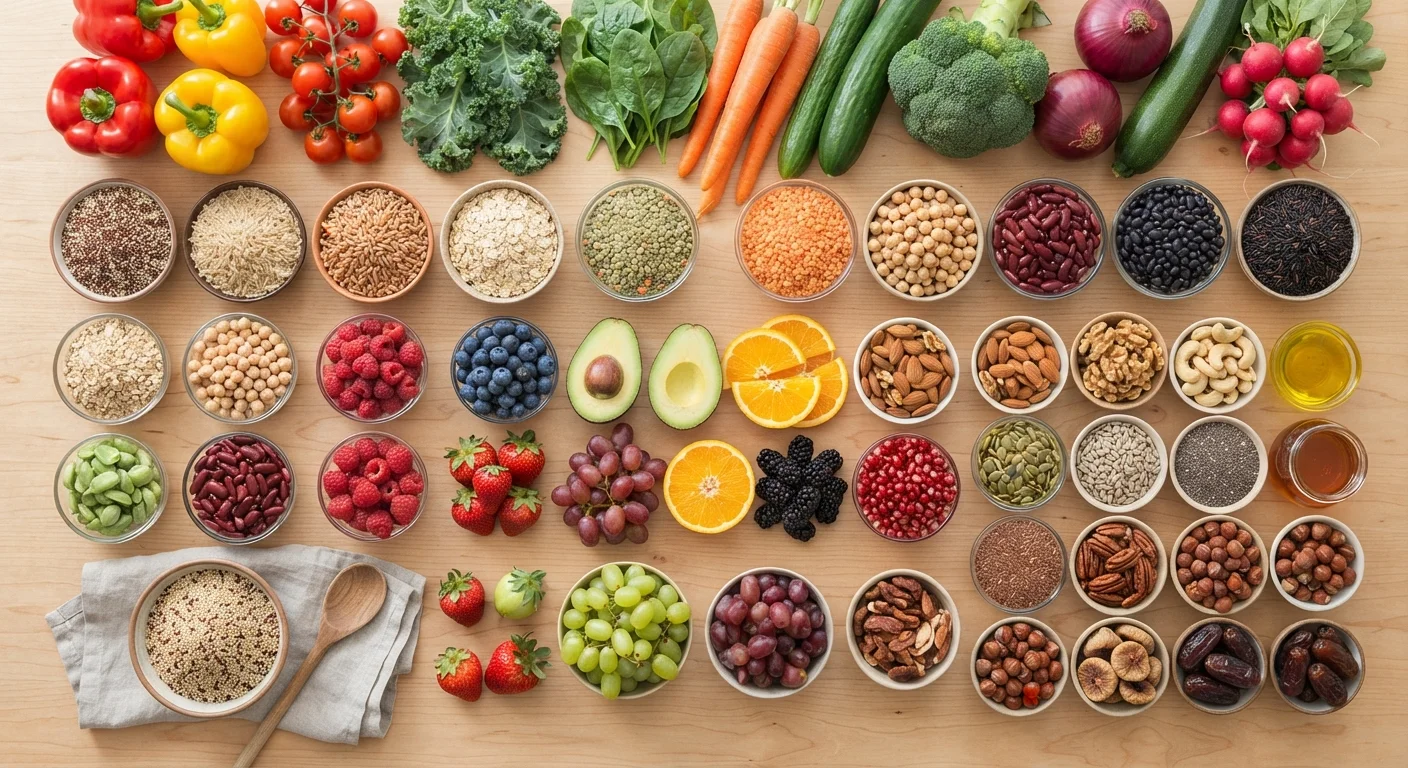
Key Takeaways
- A balanced grocery list spans all major food groups, not just a few favorites.
- Whole, minimally processed foods generally deliver more nutrients per calorie.
- Protein, fiber, and healthy fats together support satiety and steady energy levels.
- Variety within each food group helps cover a broad spectrum of micronutrients.
- Planning purchases before shopping reduces impulse buys and nutritional gaps.
- Individual needs vary - consult a registered dietitian for personalized guidance.
Summary
26 items · 20-40 minutes
Why a Structured List Changes What You Actually Eat
Most people don't undereat because they lack willpower - they undereat key nutrients because their shopping cart doesn't reflect a complete nutritional picture. A grocery list built around food-group coverage, rather than habit or convenience, is one of the most practical tools in everyday nutrition.
Research consistently shows that the food environment at home - meaning what's readily available - strongly predicts eating patterns. Stocking your kitchen deliberately closes the gap between what you intend to eat and what you actually reach for on a Tuesday evening. This checklist organizes that process by food group so no major category gets skipped.
Before you shop, it helps to understand what's actually on product packaging. Our guide to reading a Nutrition Facts panel walks through every section, from serving sizes to % Daily Value, so you can compare options with confidence. You may also want to pair this checklist with a practical meal planning approach to translate your stocked kitchen into actual meals.
Reusable grocery list template (paper or app)
Helps you organize items by food group before entering the store, reducing the chance of skipping categories.
Nutrition Facts panel awareness
Used to compare packaged items for sodium, added sugars, fiber, and key nutrients at the point of purchase.
Meal planning notes or app
Connects your grocery list to actual planned meals so purchases translate into eaten food rather than wasted produce.
Registered dietitian consultation
Provides personalized guidance on quantities, food restrictions, and nutrient targets suited to your individual health needs.
Using This Checklist
Work through each group below before or during your shopping trip. Items marked must represent nutritional foundations - categories that the Dietary Guidelines for Americans consistently identify as under-consumed by most adults. Items marked should are strongly recommended additions that meaningfully broaden your nutrient intake. Nice-to-have items add variety and functional benefit without being essential every single week.
Quantities are intentionally left open - household size, activity level, and individual health conditions all influence how much of each category you need. If you have a specific health goal or a diagnosed condition, a registered dietitian can help you tailor amounts to your circumstances.
Vegetables
Fruits
Whole Grains & Starches
Proteins
Dairy & Fortified Alternatives
Healthy Fats
Pantry Staples & Flavor Foundations
This Is Education, Not a Prescription
The guidance on this page reflects general nutrition science and public health recommendations. It is not a substitute for individualized medical or dietary advice. Nutrient needs vary by age, sex, health status, physical activity, and other factors. Please consult a qualified healthcare professional or registered dietitian before making significant dietary changes, especially if you are managing a health condition or taking medications.
Filling Nutritional Gaps Strategically
Even a well-planned list can leave micronutrient blind spots if you consistently choose the same items within each group. Rotating your selections - swapping spinach for kale one week, lentils for chickpeas the next - broadens the range of vitamins and minerals you're exposed to. Our plain-language micronutrient reference is a useful companion when you want to quickly check which foods supply a specific nutrient.
Protein variety deserves particular attention. Both animal and plant proteins contribute to meeting daily needs, and each comes with a different micronutrient profile. For a detailed comparison, see our overview of protein sources across dietary patterns. If you're moving toward more plant-centered eating, our introduction to plant-based eating outlines common nutrient gaps and realistic ways to address them.
Nutrition needs also shift meaningfully with age. If you're shopping for multiple generations under one roof, our decade-by-decade nutrition guide explains what changes and why. Finally, if grocery spending is a concern alongside nutrition quality, building a grocery budget that holds offers practical strategies for balancing both.
One List Doesn't Fit Every Body
This checklist reflects general population guidance based on established dietary frameworks. It is not tailored to individual health conditions, allergies, intolerances, medications, or life stages such as pregnancy or early childhood. If you have a chronic condition or specific nutritional concern, the items here may need meaningful adjustment. Always work with a registered dietitian or your healthcare provider before overhauling your diet.
This article is for general informational and educational purposes only and does not constitute medical or dietary advice. Individual nutritional needs vary. Please consult a qualified healthcare professional or registered dietitian before making significant changes to your diet, especially if you have a health condition or take medications.