

Key Takeaways
- Serving size is the anchor for every number on the label - always check it first.
- % Daily Value tells you how much a nutrient contributes to a 2,000-calorie reference diet.
- Nutrients to limit include saturated fat, sodium, and added sugars; prioritize fiber and key micronutrients.
- The ingredient list runs from highest to lowest weight - position matters when evaluating quality.
- Label reading is a skill that improves with practice and pays dividends across every grocery trip.
What you will need
Why the Nutrition Facts Panel Exists
The Nutrition Facts panel is a federally standardized label required on most packaged foods sold in the United States. Administered by the Food and Drug Administration (FDA), it was designed to give consumers reliable, comparable nutrition information at the point of purchase. The current format - updated in 2020 - reflects decades of nutrition science and consumer research, including a more prominent display of calories, a mandatory line for added sugars, and updated reference values for nutrients like vitamin D and potassium.
Despite its familiarity, the label is frequently misread. People focus on calories alone, skip serving size math, or misapply % Daily Value figures as though they were personalized targets. This guide walks through each section in order, so you can use the panel as the practical tool it was designed to be.
Labels Inform - They Don't Diagnose
Nutrition Facts panels are general education tools, not personalized medical guidance. Individual nutrient needs vary significantly based on age, health status, medications, and other factors. If you have a chronic condition, food allergy, or specific dietary requirement, consult a registered dietitian or your healthcare provider before making significant changes to your diet.
Once you are comfortable with labels, you can apply this knowledge directly to structured shopping - see building a nutritionally sound grocery list for a practical framework.
How to Read Every Section, Step by Step
What you will need
Food package or product label
The primary document you will practice reading through each step of this guide.
Smartphone calculator
Helps you scale nutrient amounts when you eat more or fewer servings than the label lists.
Find the serving size and servings per container
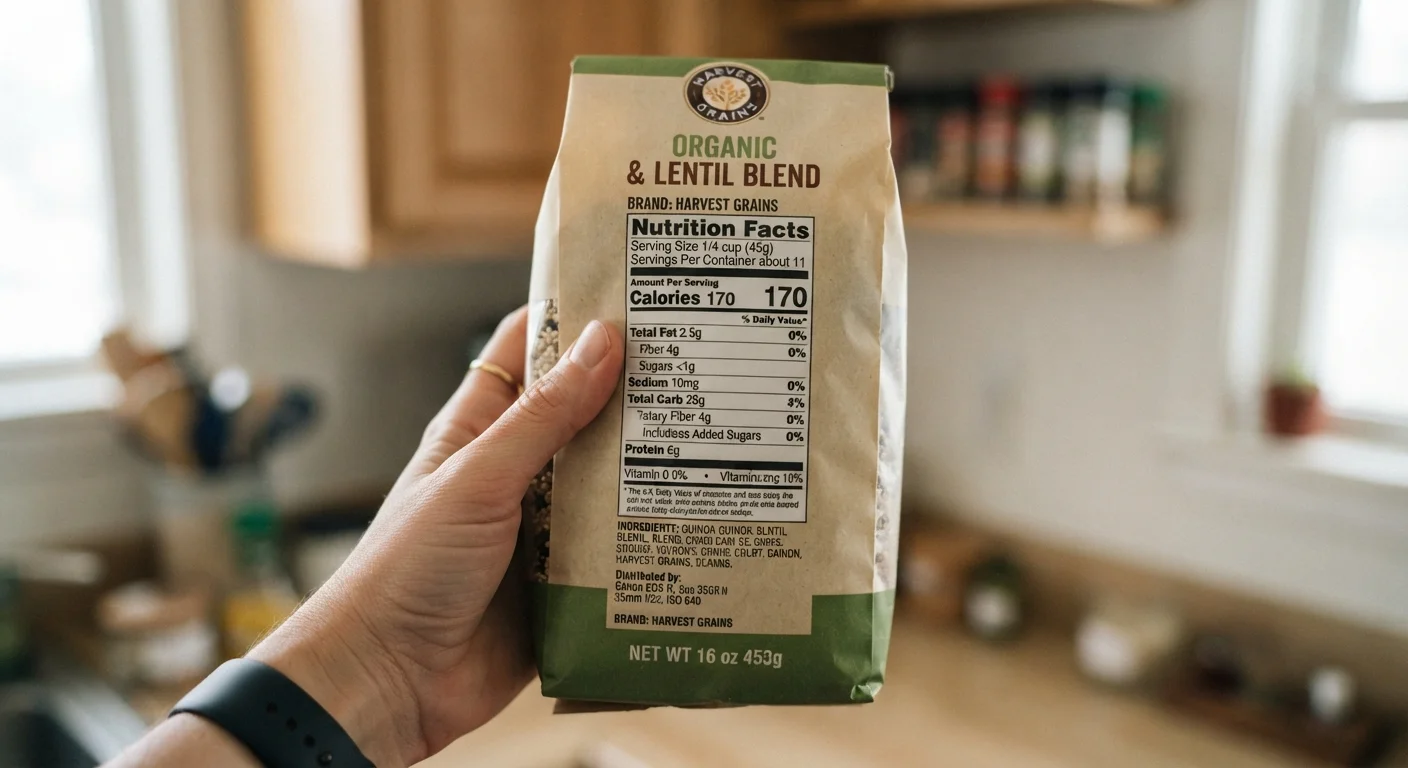
The very top of every Nutrition Facts panel lists two figures: the serving size (in a common household measure, such as cups or pieces, followed by grams) and the number of servings per container. Every calorie count and nutrient figure on the label applies to exactly one serving - not the whole package.
Before reading anything else, decide how much of the product you actually plan to eat, then calculate accordingly. If the serving size is ¾ cup and you pour a full cup, you are consuming roughly 33% more of every nutrient listed.
Read the calorie count in context
Calories are displayed in the largest text on the panel and represent total energy per serving. Neither high nor low calorie counts make a food automatically good or bad - context matters. A handful of mixed nuts is calorie-dense but nutrient-rich; a low-calorie flavored drink may offer little nutritional value. Use calories as one data point, not the whole story.
Examine the macronutrients section
Below calories, the label lists total fat (broken into saturated and trans fat), total carbohydrate (broken into dietary fiber, total sugars, and added sugars), and protein. Understanding what each macronutrient does helps you interpret these numbers meaningfully - our guide to macronutrients explains each one in plain language.
- Saturated fat and trans fat: Most dietary guidance recommends limiting both. Trans fat should ideally be zero.
- Added sugars: Distinct from naturally occurring sugars in fruit or dairy; these are sugars incorporated during processing. For a deeper look at how added sugar hides on labels, see our added sugar reference guide.
- Dietary fiber: A nutrient most Americans fall short on; higher amounts are generally favorable.
Interpret % Daily Value (%DV)
To the right of each nutrient, a % Daily Value figure shows how much that nutrient in one serving contributes to a total daily intake of 2,000 calories. It is a reference benchmark, not a personal target, but it is the fastest way to compare products or spot a standout nutrient level at a glance.
[tip_callout]Use %DV to identify nutrients worth limiting (saturated fat, sodium, added sugars) and those worth getting enough of (fiber, vitamin D, calcium, iron, potassium).
Check the micronutrient panel
U.S. regulations require labels to display vitamin D, calcium, iron, and potassium - nutrients historically under-consumed by Americans. Some manufacturers voluntarily list additional vitamins and minerals. Use these figures to understand a food's contribution to your overall micronutrient intake. For a quick reference on what each of these nutrients does and where else you can find them, our micronutrients reference guide is a useful companion.
Scan the ingredient list
The ingredient list appears below the Nutrition Facts panel and is ordered by weight from greatest to least. The first three to five ingredients make up the bulk of the product. Look for:
- Whole food ingredients (e.g., whole wheat flour, oats, olive oil) appearing near the top
- Added sugars appearing under any of their many names - corn syrup, cane juice, dextrose, and others
- Length: a longer list often - though not always - signals more processing
If you are exploring plant-based eating, the ingredient list is especially useful for identifying animal-derived components that may not be obvious from the product name.
After working through these steps a few times, the process becomes quick - most experienced label readers spend under 30 seconds on a familiar product type. The skill compounds: once you understand what to look for on a cereal box, the same logic applies to sauces, frozen meals, and snack foods. If you want to carry this knowledge into weekly planning, meal planning strategies show how label literacy translates into practical decisions across a full week of eating.
Watch for Multi-Serving Packages
A container that looks like a single portion - a bottled drink, a small bag of chips - may list two or three servings inside. All the calorie and nutrient numbers on the label apply only to one serving. Eating the whole package means multiplying every figure by the number of servings listed.