

Key Takeaways
- Flexible meal planning around your actual schedule reduces decision fatigue and food waste.
- Batch-prepping a few versatile ingredients is more sustainable than full Sunday meal prep.
- Building in one or two intentional "flex nights" makes a plan more resilient, not less structured.
- Nutrition quality improves when meals are planned around seasonal, affordable staples.
- Consulting a registered dietitian is recommended for anyone with specific dietary health needs.
Why Most Meal Plans Fall Apart by Wednesday
Rigid meal plans fail for a simple reason: real weeks rarely go as expected. A late meeting, a sick child, or sheer exhaustion can derail even the most enthusiastic Sunday prep session. Research in behavior change consistently shows that overly prescriptive plans create an all-or-nothing mindset - one missed dinner leads to abandoning the entire system.
Effective meal planning isn't about control; it's about reducing the number of decisions you face when you're tired and hungry. A plan that accounts for unpredictability will outlast one built for a perfect week. The goal is a framework, not a rigid script.
Start Smaller Than You Think You Should
If you've tried and abandoned meal planning before, begin with just three dinners planned per week rather than seven. Consistent partial planning builds the habit and reduces cognitive load. Once three nights feel easy, adding a fourth or fifth is a natural extension rather than an overwhelming commitment.
Build Around Your Week, Not a Template
Before choosing a single recipe, look at your actual calendar for the week ahead. Identify your two or three highest-effort evenings - those are not the nights for ambitious cooking. Reserve simple, low-prep meals (stir-fries, sheet-pan dinners, eggs) for those slots, and save more involved recipes for days when you genuinely have time.
This approach, sometimes called energy-matched planning, aligns your meal complexity with your real daily capacity. It's the same principle behind a well-built workout week - pair effort to availability. If you're building other healthy habits simultaneously, you might also explore building a weekly movement routine that fits the same real-life calendar.
Plan meals around your calendar before choosing recipes
Matching meal complexity to your daily energy and schedule prevents the Wednesday burnout that derails most plans. A realistic plan you follow is more valuable than an ambitious one you abandon.
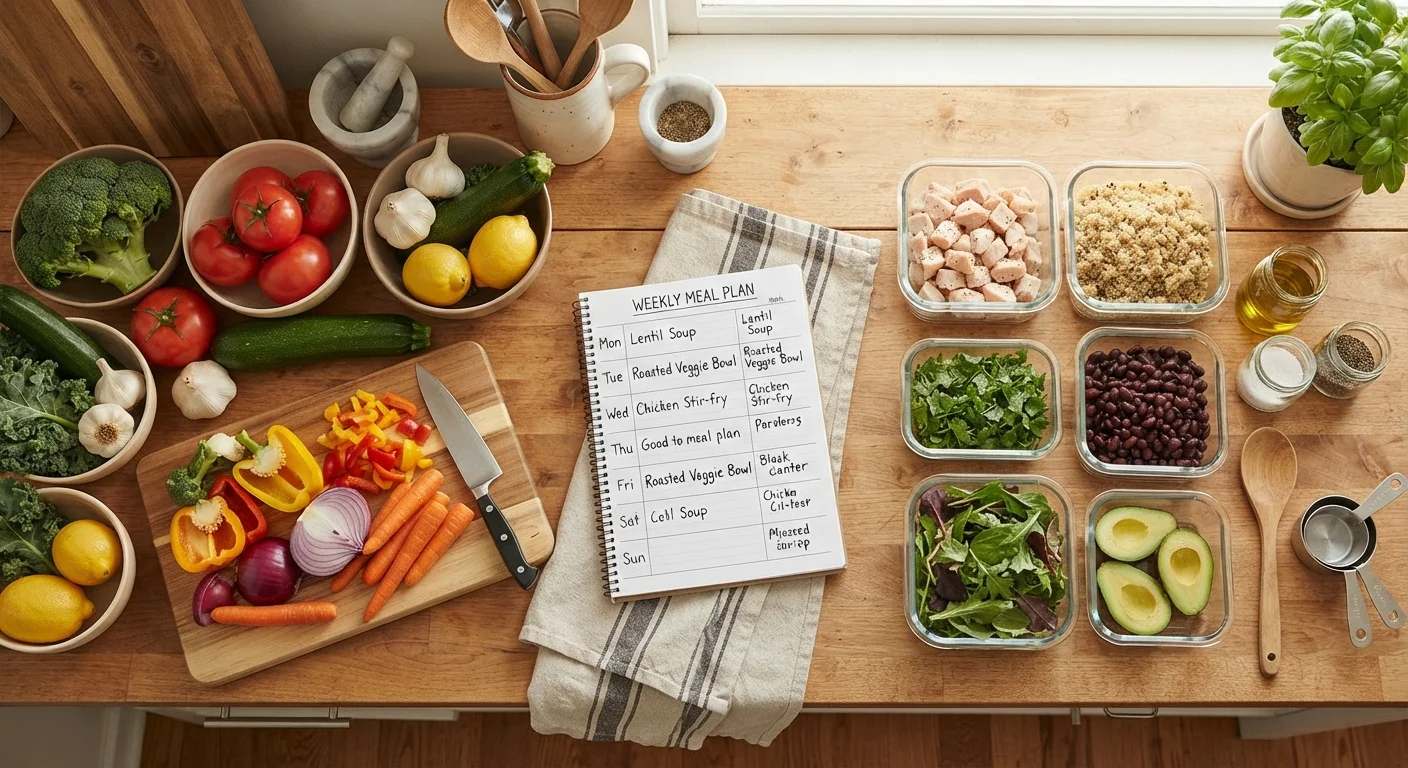
Prep two or three versatile ingredients, not full meals
Batch-cooking complete meals can feel monotonous and wastes time if plans change. Prepping building blocks - cooked grains, roasted vegetables, marinated proteins - gives flexibility without locking you in.
Build in one or two intentional flex nights per week
Flex nights are planned spaces for takeout, leftovers, or improvised meals - not failures. They make the overall plan more resilient by removing pressure from unpredictable evenings.
Write a focused shopping list tied directly to the plan
Unstructured grocery shopping leads to impulse purchases that don't combine into coherent meals, increasing both spending and food waste. A list built from your week's plan ensures every ingredient has a purpose.
Review and adjust your plan weekly, not monthly
A meal plan is a living document. Brief weekly reviews - five minutes on Sunday - let you notice what worked, what didn't, and adjust before habits calcify around ineffective patterns.
Stock Smarter, Plan Faster
Meal planning becomes dramatically easier when your kitchen holds a reliable set of versatile staples - whole grains, canned legumes, frozen vegetables, eggs, and a few core spices. Rather than planning meals around whatever happens to be on sale, build a rotating pantry base that supports multiple different dinners without requiring separate shopping trips for each one.
If storage space is a challenge, practical strategies for organizing a small kitchen without a pantry can help you maximize what you have. Reducing food waste is also a budget consideration - a well-stocked, intentional pantry directly supports the kind of household budgeting that makes healthy eating more financially sustainable over time.
Nutrition Quality Without Obsessive Counting
Evidence-based nutrition research consistently points toward dietary patterns rather than individual foods or precise calorie counts. A practical meal plan should aim for variety across protein sources, a range of colored vegetables and fruits, adequate fiber, and healthy fats - without requiring a spreadsheet to track every gram.
A useful planning heuristic: aim for meals that cover roughly half the plate with vegetables or fruit, a quarter with a quality protein source, and a quarter with a whole grain or starchy vegetable. This isn't a prescription - it's a visual prompt that naturally guides portion balance. For anyone managing a specific health condition, a registered dietitian can tailor this further to individual needs.
The Half-Plate Approach Is a Guide, Not a Rule
The half-plate visual is a general public health guideline drawn from sources such as the USDA's MyPlate framework - useful for most adults as a practical prompt. It is not a clinical prescription. Individuals with diabetes, kidney disease, eating disorder history, or other specific conditions should work with a registered dietitian rather than applying general guidelines without personalization.
This article is for general informational and educational purposes only and is not a substitute for personalized medical or nutritional advice. Always consult a qualified healthcare provider or registered dietitian for guidance specific to your health situation.