

Key Takeaways
- Six fluids require regular monitoring: engine oil, coolant, brake fluid, power steering fluid, transmission fluid, and windshield washer fluid.
- Most fluid checks take under two minutes each and require no special tools.
- Low or degraded fluids can lead to engine damage, brake failure, or overheating if ignored.
- Always check fluids on a level surface with the engine cool unless your owner's manual says otherwise.
- Color and consistency matter as much as level - dark, milky, or gritty fluid signals a problem.
What you will need
Why Fluid Checks Are the Highest-ROI Maintenance Habit
Your vehicle relies on a network of fluids to lubricate moving parts, transfer heat, transmit hydraulic force, and keep glass clear. When any one of them drops too low or degrades past its useful life, the consequences range from reduced performance to catastrophic mechanical failure. The good news: catching problems early costs nothing but a few minutes of attention.
This guide walks through the six fluids every driver should monitor, where to find them under the hood, how to read the indicators correctly, and when topping off isn't enough - and a professional inspection is warranted. For a broader orientation to routine upkeep, see our first-time owner's maintenance guide.
What you will need
The Six Fluids and What Each One Does
Before opening the hood, it helps to understand what you're looking for and why it matters.
- Engine oil lubricates metal components and reduces friction-generated heat. It's the fluid most drivers are familiar with and the most critical to check regularly.
- Coolant (antifreeze) absorbs engine heat and carries it to the radiator. It also prevents freezing in cold weather - a detail covered in depth in our seasonal car maintenance guide.
- Brake fluid transfers hydraulic pressure from the pedal to the calipers. It is hygroscopic, meaning it absorbs moisture over time, which lowers its boiling point and can compromise stopping power.
- Power steering fluid enables easy steering by pressurizing the steering rack. Many newer vehicles use electric power steering and have no fluid reservoir, so check your owner's manual first.
- Transmission fluid lubricates and cools the transmission's gears and clutch packs. Automatic and manual transmissions use different fluid types.
- Windshield washer fluid is the least safety-critical but the most often ignored - until visibility becomes dangerous.
Owner's Manual
Specifies the correct fluid type, capacity, and check intervals for your specific vehicle.
Lint-Free Rags or Paper Towels
Used to wipe dipsticks clean before taking a reading and to clean up any spills.
Flashlight or Headlamp
Helps you see fluid levels and colors clearly in shaded or dim engine bays.
Funnel
Prevents spills when pouring fluid into narrow reservoir openings.
Step-by-Step: How to Check Each Fluid
Follow these steps in order. Park on a flat, level surface and allow the engine to cool for at least 10 minutes before opening the hood - hot components and pressurized reservoirs can cause burns.
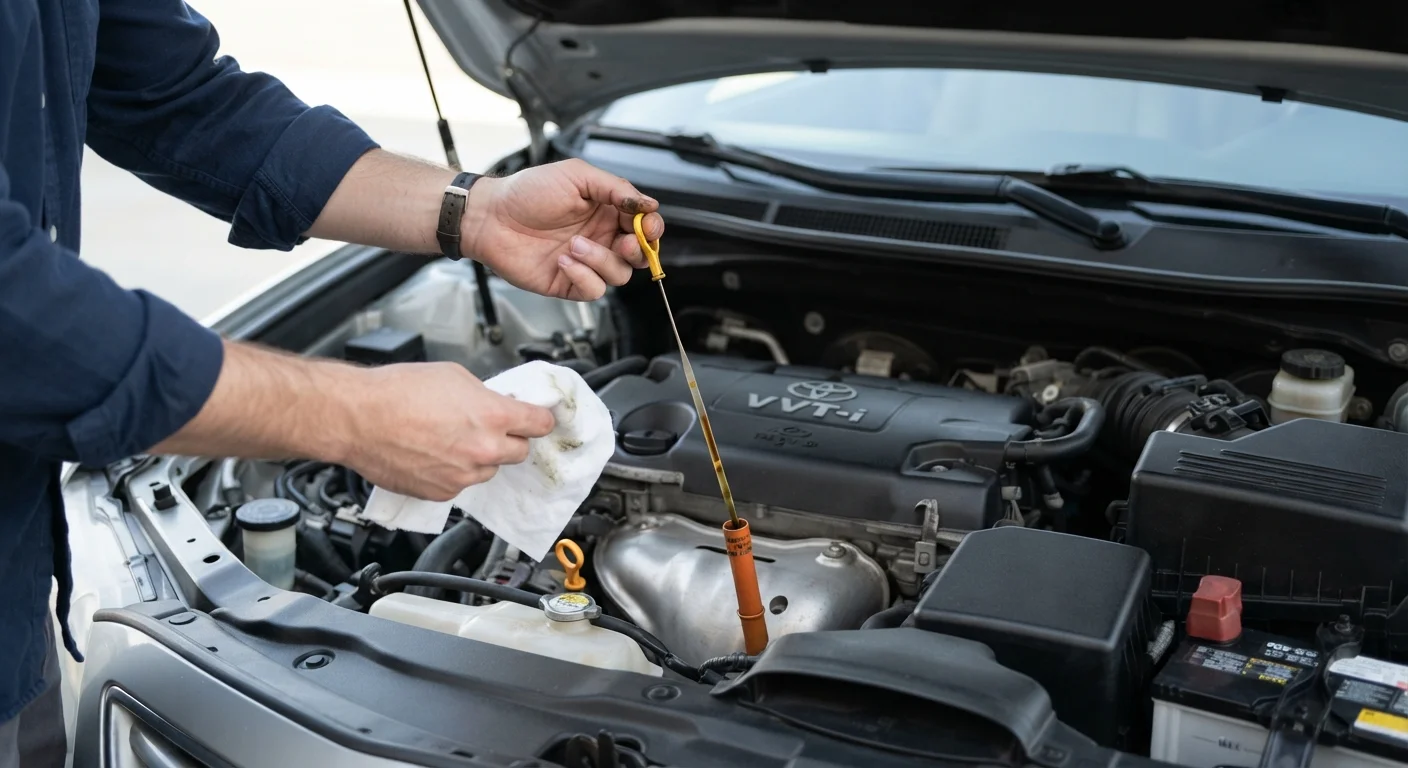
Check Engine Oil
Locate the oil dipstick - typically a brightly colored loop or handle near the front of the engine. Pull it out, wipe it clean with a rag, reinsert it fully, then withdraw it again. Read the level against the MIN and MAX markers on the stick. The oil should fall between those two marks. Also examine the color: healthy oil ranges from amber to dark brown. Black, gritty, or milky oil suggests it's overdue for a change or has a contamination problem.
Check Coolant Level
Never open the radiator cap on a hot engine - pressurized coolant can erupt and cause severe burns. Instead, find the translucent plastic coolant reservoir (usually labeled with a thermometer or wave icon) and read the level against the MIN/MAX lines on the side. Coolant should be a bright green, orange, or pink depending on type - never brown or oily. If the reservoir is empty, wait for the engine to cool fully before adding the correct coolant type specified in your manual.
Check Brake Fluid
The brake fluid reservoir sits on top of the master cylinder, usually at the back of the engine bay on the driver's side. Most reservoirs are translucent, allowing you to see the level without removing the cap. The fluid should be between the MIN and MAX lines and appear clear to light amber. If the level is low, check for brake pad wear before simply topping off - as pads wear down, the caliper pistons extend further, which draws fluid down from the reservoir.
Check Power Steering Fluid
If your vehicle has hydraulic power steering, locate the reservoir - often marked with a steering wheel icon. Many have a dipstick built into the cap; others use MIN/MAX lines on the reservoir body. Check the level when the engine is warm for the most accurate reading, as the fluid expands slightly with heat. The fluid should be clear to light red or pink. Dark, burnt-smelling, or foamy fluid indicates it needs to be changed.
Check Transmission Fluid
Many automatic transmissions have a dipstick (check with the engine warm and running in Park, unless the manual specifies otherwise). Pull, wipe, reinsert, and read. Healthy transmission fluid is bright red and slightly translucent. Dark brown or black fluid with a burnt odor means it needs to be changed. Some modern transmissions are sealed with no dipstick and require a dealer or shop to check - verify in your owner's manual. Manual transmissions typically require a lift and are best left to a professional for inspection.
Check Windshield Washer Fluid
The washer fluid reservoir is a white or blue plastic tank, usually marked with a fountain or wiper icon. Simply unscrew the cap and fill to the indicated level with premixed washer fluid rated for your climate. Do not use plain water - it can freeze in the lines and harbors bacteria. In winter climates, use a fluid rated to at least −20°F (−29°C).
Hot Engines and Pressurized Caps Are Dangerous
Coolant systems operate under significant pressure when hot. Opening a radiator cap or coolant reservoir cap on a warm engine can release a burst of scalding steam and fluid. Always allow the engine to cool fully - at least 30 minutes after driving - before opening any pressurized cap. If coolant is visibly boiling or steam is rising from the hood, do not open the hood until the car has cooled completely.
When Topping Off Isn't Enough
Adding fluid restores level but doesn't fix an underlying problem. If you find yourself topping off the same fluid repeatedly, that's a sign of a leak or internal failure - not a routine maintenance issue. Brake fluid that needs frequent topping may indicate a leak in the hydraulic system or worn brake pads allowing caliper pistons to extend. Engine oil that disappears between changes points to either burning (blue exhaust smoke) or a seal or gasket leak.
Fluid condition is equally telling. Engine oil that looks milky or foamy suggests coolant contamination - a serious symptom often associated with a blown head gasket. Coolant that appears rusty or oily warrants immediate professional evaluation. Brake fluid that has darkened significantly (it should be clear to light amber) should be flushed, not simply topped. High-mileage vehicles often require more attentive fluid monitoring; our article on maintenance for vehicles past 100,000 miles explains which checks become more critical as the odometer climbs.
Before any long drive, treat fluid levels as part of your pre-departure routine. Our pre-road-trip safety checklist covers fluids alongside tires and safety systems in a single walkthrough.
Build a Monthly Five-Minute Habit
Set a recurring reminder on the first of each month to run through the engine oil, coolant, and brake fluid checks. Add the remaining fluids to your quarterly service review. Consistent monitoring costs nothing and gives you an early warning system before small issues become expensive repairs. For more context on which maintenance beliefs are worth following, see our article on common car maintenance myths.