

Key Takeaways
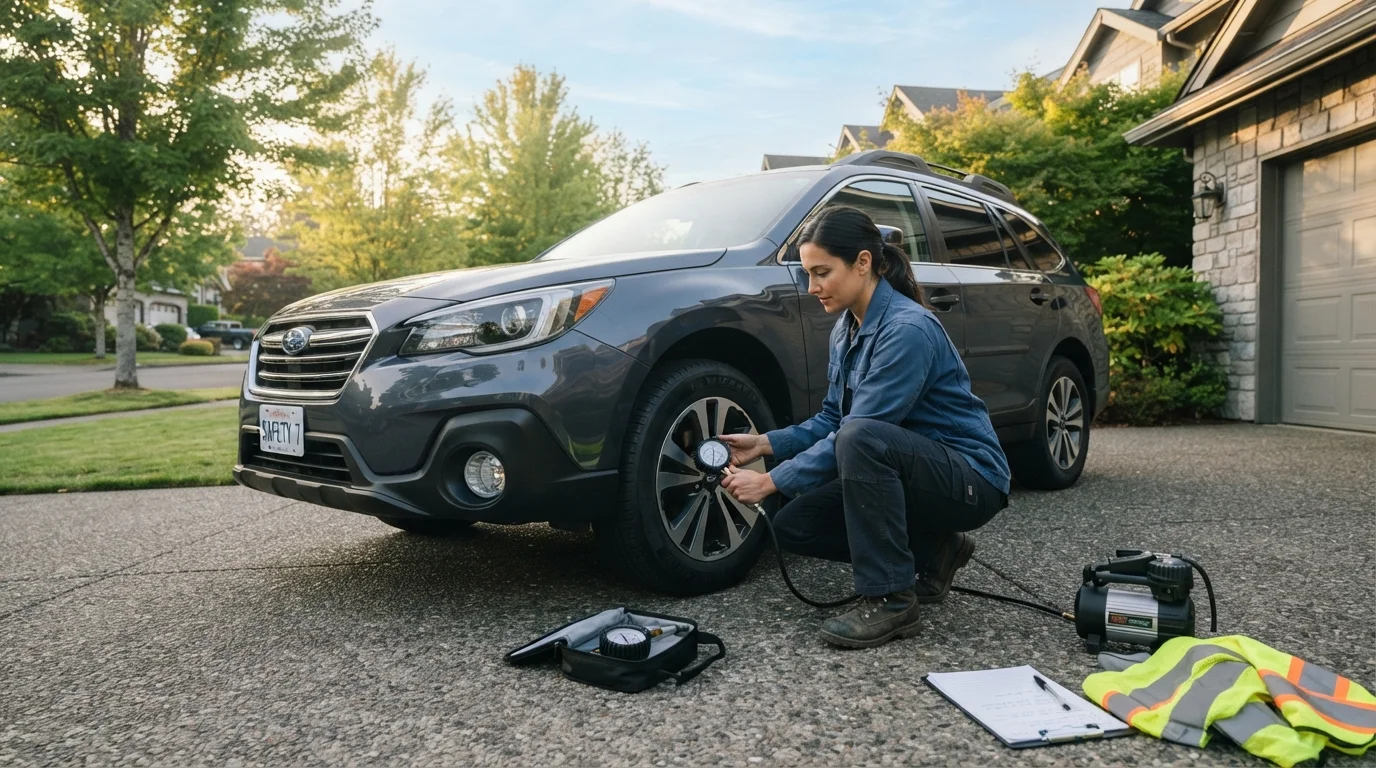
- Tires are the single most critical pre-trip check - inspect pressure, tread, and sidewalls on all four wheels plus the spare.
- Fluid levels including oil, coolant, and brake fluid should be verified cold, before the engine runs.
- A working emergency kit - jumper cables, reflective triangles, first-aid supplies - can make a breakdown manageable instead of dangerous.
- Dashboard warning lights that appear before departure should be diagnosed, not ignored, before you leave.
- Driver readiness - rest, medications, and route familiarity - is just as important as vehicle readiness.
Summary
24 items · 20-45 minutes
Why Long Drives Expose Problems Short Commutes Hide
Your daily commute rarely pushes a vehicle hard enough to reveal developing problems. Highway speeds, sustained engine loads, prolonged braking on descents, and hours of continuous tire rotation at temperature all stress components in ways that a 10-minute trip to work simply does not. A slow coolant leak, a tire nearing the end of its tread life, or a battery holding a marginal charge can all go unnoticed until the moment they fail - and on an interstate far from a service center, that failure becomes a serious inconvenience or safety hazard.
This checklist is designed to be worked through the evening before or the morning of departure, when the engine is cold and you have enough time to address anything you find. The car maintenance hub offers deeper guidance on individual systems if a check reveals something that needs attention beyond a simple top-off or adjustment.
Don't Ignore Dashboard Warning Lights
If a warning light - especially the check engine, brake, tire pressure, or temperature light - is active when you start the car, do not assume it will resolve on its own during the drive. Some warnings indicate conditions that can lead to mechanical failure at highway speeds. Consult our guide to dashboard warning lights to understand severity, and consider having the vehicle diagnosed before departing on a long trip.
Brake Fluid Below Minimum Needs Attention
Low brake fluid can indicate either normal pad wear or a leak in the hydraulic system. A leak is a safety-critical condition that should be professionally inspected before any significant drive. Do not top off brake fluid and assume the problem is solved without understanding the cause.
What to Check and Why It Matters
The checklist groups below follow a logical sequence: start with tires (the only parts touching the road), move through fluids and under-hood components, verify lights and visibility, confirm brakes and steering feel correct, then assemble your emergency supplies and confirm your own readiness to drive.
Tires
Fluids
Lights and Visibility
Under the Hood
Brakes and Steering
Emergency Preparedness
Driver Readiness
For winter road trips, many of these checks take on additional urgency - cold temperatures affect battery capacity, tire pressure, and fluid viscosity in specific ways covered in our guide to seasonal car maintenance for winter.
Tools and Supplies to Have on Hand
Most pre-trip checks require nothing more than your eyes and hands, but a few inexpensive tools make the process faster and more accurate. These are the items worth keeping in your vehicle permanently, not just for road trips.
Tire Pressure Gauge
Measures precise PSI in each tire so you can match the manufacturer's specification found on the door jamb sticker.
Tread Depth Coin (Quarter)
Used to perform a quick field check of remaining tread depth before departure.
Jumper Cables or Jump-Starter Pack
Allows you to restart a dead battery roadside without waiting for a service vehicle.
Portable Phone Charger
Keeps navigation and emergency communication available throughout a long drive.
Reflective Warning Triangles
Alert approaching traffic if you must stop on a highway shoulder, reducing collision risk.
Basic First-Aid Kit
Addresses minor injuries at roadside until professional medical assistance is available.
Planning the Drive Itself
Vehicle readiness is only half the equation. A well-maintained car driven without a realistic plan still puts you at risk. Before you leave, identify fuel stops at intervals appropriate for your tank size - don't assume stations will be frequent in rural stretches. Check weather forecasts for the full route, not just your origin and destination. If your route involves significant highway driving, review the basics of safe merging covered in our guide to merging onto a highway.
If this road trip is part of a larger travel plan, the long-haul trip planning guide covers the broader logistics - accommodations, documentation, and contingency planning - that complement this vehicle-focused checklist.
Fatigue Is a Vehicle Safety Issue
A mechanically sound car driven by an exhausted driver is still a dangerous situation. Research from the National Highway Traffic Safety Administration consistently shows that drowsy driving impairs judgment and reaction time in ways comparable to alcohol impairment. Build mandatory rest stops into your itinerary and recognize the early warning signs - see our article on driving fatigue warning signs - before they become a crisis at speed.