

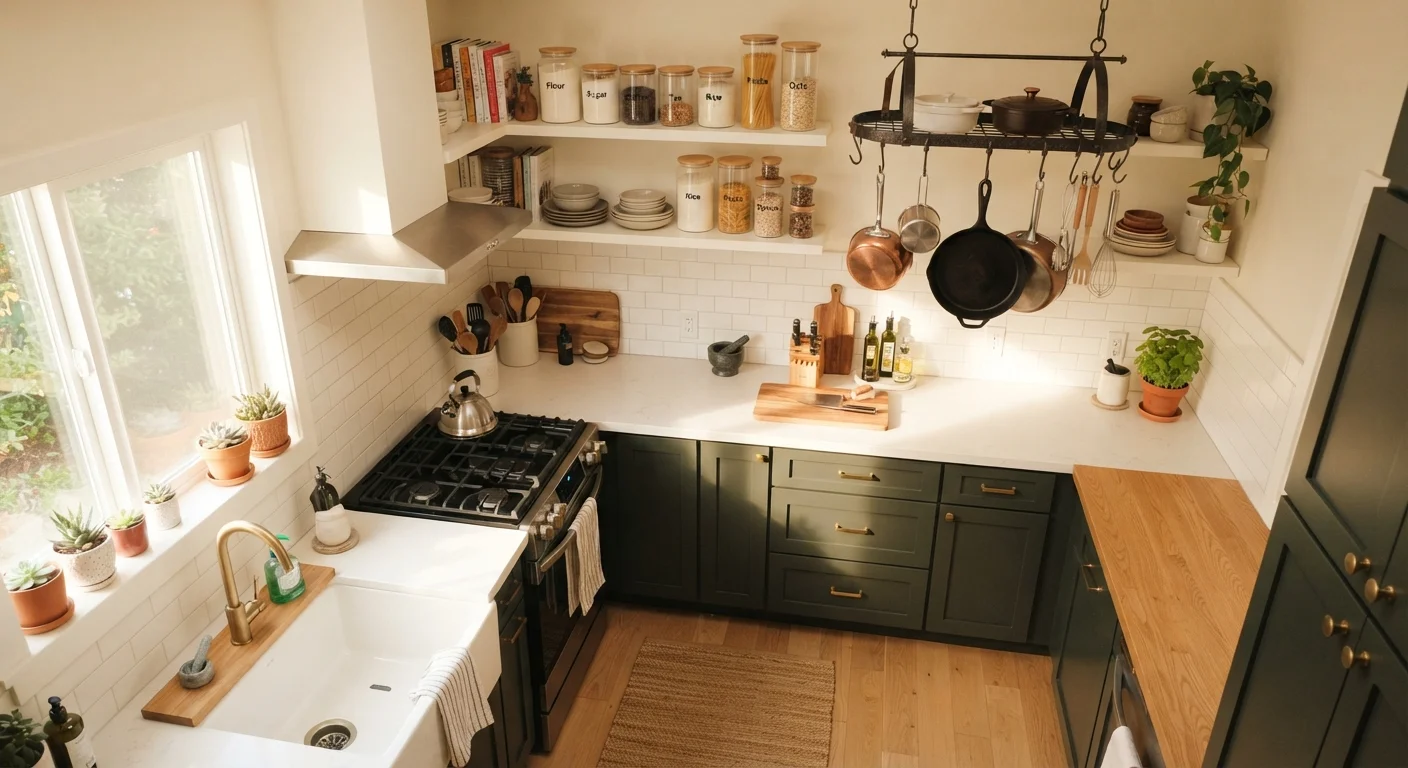
Key Takeaways
- Decluttering before reorganizing prevents you from storing items you don't actually use.
- Vertical space - cabinet tops, walls, and door backs - is often the most underused storage in small kitchens.
- Uniform, stackable containers recover significantly more cabinet space than mismatched original packaging.
- Zoning your kitchen by task type reduces daily friction and keeps surfaces clear.
- Small, low-cost organizers like risers and tension rods can double usable cabinet space.
What you will need
Why Small Kitchens Without Pantries Require a Different Approach
A dedicated pantry does more than hold food - it removes an entire category of storage from the active kitchen footprint. Without one, dry goods, canned items, small appliances, and cooking tools all compete for the same limited cabinet and counter space. The result is often a kitchen that feels chaotic not because it's dirty, but because no clear system exists for where things live.
The good news is that most small kitchens have more usable space than they appear to - it's just being used inefficiently. Door backs, cabinet tops, wall sections beside the refrigerator, and the vertical dimension inside existing cabinets are all commonly overlooked. A thoughtful reorganization can recover a meaningful amount of functional storage without adding a single piece of furniture. If you're also looking at the bigger organizational picture in your home, the room-by-room home organization audit offers a useful framework for identifying where storage gaps are hurting you most.
Don't Organize Clutter - Purge First
Buying organizers before decluttering is one of the most common small-kitchen mistakes. Storage products won't solve an overcrowded space if the underlying issue is too many items. Always edit what you own before deciding how to contain what remains.
This guide walks you through an organized, zone-based system designed specifically for kitchens without pantry space. The steps build on each other - starting with decluttering and ending with a simple maintenance routine that prevents the system from collapsing over time.
What You'll Need Before You Start
Gathering the right tools upfront makes the process smoother and helps you avoid mid-project hardware runs. The essentials are relatively inexpensive, and many kitchens only need two or three of the items below to see a significant improvement.
Stackable airtight canisters
Consolidate dry goods like flour, rice, pasta, and cereals into uniform containers that stack efficiently and seal out moisture.
Cabinet shelf risers
Create a second tier inside existing cabinets, effectively doubling storage capacity for plates, cans, or jars.
Over-the-door organizers
Mount on the inside of cabinet or pantry-closet doors to hold spices, foil boxes, or small bottles.
Tension rod dividers
Stand baking sheets, cutting boards, and pan lids upright in cabinets instead of stacking them flat.
Lazy Susan turntable
Spins to bring items at the back of deep cabinets or corner shelves within easy reach.
Magnetic spice strips
Mount on a wall or the side of the refrigerator to move spice storage off shelves and counter entirely.
Shop Your Home First
Before purchasing any organizers, walk through other rooms and gather baskets, bins, or containers you already own. Repurposing what you have lets you test a layout before committing to new purchases. Many effective kitchen systems cost little or nothing to get started.
If budget is a consideration, start with just the canisters and risers - those two changes alone tend to produce the biggest visible improvement in small cabinets. For guidance on spending thoughtfully on home improvements without overextending, see the budgeting basics hub.
What you will need
Step-by-Step: Organizing Your Pantry-Free Kitchen
Follow these steps in order. Skipping straight to purchasing organizers without completing the first two steps - audit and zoning - typically results in a system that doesn't hold up. Each step is designed to build on the last.
Empty and audit every cabinet and drawer
Pull everything out of your cabinets, drawers, and any existing storage. Group items by category - baking supplies, canned goods, cooking tools, small appliances - and do a ruthless edit. Discard anything expired, broken, or duplicated. Relocate rarely used items (holiday serving pieces, specialty gadgets) to another room if possible.
Map out your kitchen zones
Identify four functional zones: prep, cooking, cleaning, and food storage. Assign each zone a physical area near where that activity happens - prep tools near the cutting board, pots near the stove, dish soap and towels near the sink. Food items replace your missing pantry and belong in whatever cabinet space is furthest from the stove's heat.
Transfer dry goods to uniform containers
Decant pasta, grains, cereals, flour, sugar, and legumes from their original bulky packaging into stackable, airtight canisters. Uniform containers stack tightly and reclaim a surprising amount of shelf space. Label each container clearly with the contents and, if useful, the approximate refill quantity.
Double your cabinet capacity with risers and dividers
Place shelf risers inside cabinets to stack dishes or canned goods on two tiers instead of one. Use tension rods vertically to stand baking sheets, lids, and cutting boards upright rather than stacking them flat. In deep lower cabinets, a lazy Susan turntable prevents items from disappearing into the back corner.
Claim vertical and door space
Install a magnetic spice strip on a wall or the side of the refrigerator to move spices off shelves entirely. Mount over-the-door organizers on the inside of cabinet doors for foil, wrap boxes, and small bottles. Use the tops of upper cabinets for bulky, infrequently used items stored in labeled bins. Wall-mounted hooks near the stove hold pot lids or frequently used utensils.
Establish a maintenance habit
A small kitchen stays organized only with a simple ongoing habit. Spend two to three minutes at the end of each day returning items to their designated zones. Do a brief monthly reset - checking that containers are labeled, expired items are purged, and nothing has drifted out of its zone. Systems erode gradually; a light touch regularly prevents a big overhaul later.
Check Cabinet Weight Limits
Wall-mounted shelving and over-door organizers have load limits that vary by bracket type and wall material. Overloading them - especially with canned goods or heavy appliances - can cause sudden failure. When adding shelving or heavy racks, anchor into studs or use appropriate wall anchors rated for the expected weight.
Once your system is in place, connecting it to how you shop and plan meals makes it significantly more sustainable. A consistent meal planning routine that matches what you actually keep stocked means fewer impulse purchases that disrupt your storage layout.
Keeping the System Working Over Time
Even the best-organized small kitchen will drift back toward disorder without a maintenance strategy. The goal isn't perfection - it's a system simple enough that everyone in the household can actually use and sustain it. If you're organizing with children at home, approaches that hold up over time offers practical strategies for building systems that survive real family life.
For kitchens that feel cramped even after reorganizing, structural changes to the cabinets themselves may be worth considering. Cabinet upgrades that don't require a full renovation - such as adding pull-out inserts or replacing fixed shelves with adjustable ones - can dramatically expand what your existing cabinets can hold. These changes generally don't require permits, though it's always worth checking local building codes for any wall-mounted work.
Small kitchens reward consistency over complexity. A straightforward zone-based system, maintained with a light daily habit, will outperform an elaborate setup that's too complicated to sustain.