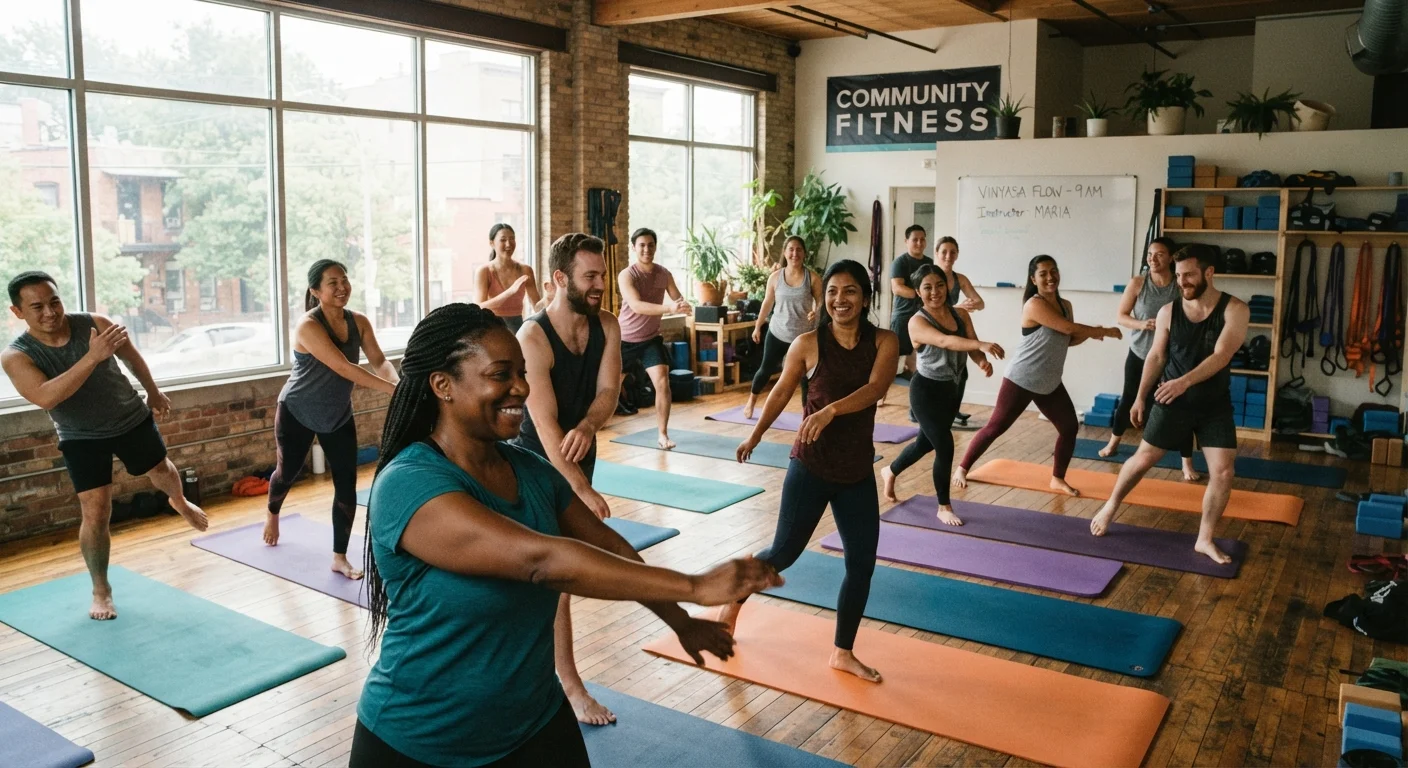
Arriving 10-15 minutes early gives you time to meet the instructor and settle in.
Telling the instructor about any injuries or limitations helps them keep you safe.
You can modify almost any movement - going at your own pace is always encouraged.
Wearing comfortable, breathable clothing appropriate to the class format is all you need.
Most first-time nerves fade within the first few minutes of class.
20–40 min
Summary
18 items · 20-40 minutes
Why Preparation Makes the Difference
Walking into a group fitness class for the first time can stir up a surprising amount of anxiety - even for people who already exercise on their own. The unfamiliar environment, the social dynamics, and uncertainty about what you'll actually be asked to do can all feel like barriers before you've taken a single step.
The good news: most of that discomfort evaporates quickly, and a small amount of preparation goes a long way. Whether you're trying a spin class, a yoga session, or a high-energy cardio circuit, the fundamentals of showing up prepared are largely the same. If you're returning to exercise after time away, our companion guide on starting exercise after a long break offers a helpful framework for pacing yourself as you rebuild.
Use this checklist before your first class to make sure you walk in confident, comfortable, and ready to participate - at whatever level works for you.
Required
Studio or Gym App
Used to register for your class, confirm the schedule, and review any pre-class instructions or equipment notes.
Required
Refillable Water Bottle
Essential for staying hydrated throughout any group fitness class, particularly high-intensity or heated formats.
Optional
Workout Towel
Recommended for wiping down shared equipment and managing sweat during more intense class formats.
Required
Appropriate Footwear
Class-specific shoes (e.g., cycling shoes, grip socks, cross-trainers) help ensure comfort and prevent injury.
Optional
Exercise Mat
Required for mat-based classes like yoga or Pilates if the studio does not provide them - check in advance.
Your Pre-Class Checklist
Work through these items in the days and hours before your class. They're grouped into stages so you can tackle them in a logical order without feeling overwhelmed.
Before the Day of Class
Research the class format in advance - read the studio's description or watch a short preview video so you understand the general structure and intensity level.Must
Check the studio's website or app for any registration requirements, since many group classes require advance sign-up and have limited spots.Must
Review the equipment list, if provided, and confirm whether items like mats, weights, or shoes are supplied or need to be brought from home.Must
Note any class-specific footwear requirements (e.g., cycling shoes for spin, bare feet or grip socks for barre or Pilates) and arrange them ahead of time.Should
Speak with your doctor if you have any existing injuries, cardiovascular conditions, or haven't exercised in a significant period - group settings vary widely in intensity.Must
What to Wear and Bring
Choose moisture-wicking, breathable clothing that allows a full range of motion - avoid restrictive fabrics or anything that could catch on equipment.Must
Pack a water bottle that you can sip from during class, especially for high-intensity or heated formats.Must
Bring a small towel for sweat, particularly for cycling, HIIT, or hot yoga classes where perspiration is expected.Should
Carry only what you need - most studios offer cubbies or lockers, and a cluttered workout space can be a safety hazard.Nice to have
Arriving at the Studio
Plan to arrive 10-15 minutes before class starts so you have time to check in, store your belongings, and orient yourself without rushing.Must
Introduce yourself to the instructor and let them know it's your first time - they can point out any modifications and keep an eye on your form.Must
Mention any injuries, joint concerns, or physical limitations to the instructor before class begins, not during.Must
Choose a spot near the front or middle of the room for a clear view of the instructor, especially if you're unfamiliar with the movements.Should
During and After Class
Follow the instructor's cues rather than trying to mirror other participants - the instructor's form and pace are your most reliable guide.Must
Take modifications whenever they are offered; adapting a move to your current fitness level is smart training, not a shortcut.Must
Hydrate during any water breaks provided, and don't push through sharp or unusual pain - discomfort from effort is normal, but pain is a signal to stop.Must
Stay for the cool-down and stretching portion; this is when the instructor typically explains what muscles were targeted and offers post-class tips.Should
Note how your body feels in the 24-48 hours after class - mild muscle soreness is common, but persistent joint pain warrants professional attention.Should
Consider introducing yourself to a classmate after - social connection is one of the strongest predictors of long-term fitness habit formation.Nice to have
Pain Is Not the Same as Effort
Some muscle fatigue and breathlessness during a challenging class is expected - that's normal exertion. However, sharp pain, dizziness, chest tightness, or difficulty breathing are signals to stop immediately and inform the instructor. Do not push through these symptoms. If they persist, seek medical attention promptly.
This article is for general informational purposes only and is not a substitute for medical advice. If you have any health conditions, injuries, or concerns about beginning a new exercise program, consult a qualified healthcare professional before participating.
Health & Wellness Editorial Team is the collective byline for our editorial team and contributor network. Articles published under this byline or an editorial pen name are researched, written, and reviewed according to our editorial standards for clarity, consistency, and independence before publication.
Disclaimer: The content provided on our blog site traverses numerous categories, offering readers valuable and practical information. Readers can use the editorial team’s research and data to gain more insights into their topics of interest. However, they are requested not to treat the articles as conclusive. The website team cannot be held responsible for differences in data or inaccuracies found across other platforms. Please also note that the site might also miss out on various schemes and offers available that the readers may find more beneficial than the ones we cover.