

Key Takeaways
- Low-impact exercise reduces joint stress while still delivering meaningful cardiovascular and strength benefits.
- Options like swimming, cycling, and yoga suit a wide range of fitness levels and physical conditions.
- Consistency over intensity is the principle that makes low-impact movement effective long-term.
- People returning from injury, managing chronic pain, or aging actively are especially well-suited to these formats.
- Always consult a healthcare professional before beginning a new exercise program, especially with existing conditions.
Why Low-Impact Movement Deserves a Closer Look
High-impact exercise - running, jumping, plyometrics - places repeated, forceful loads on joints. For many people, that's simply not sustainable. Arthritis, previous injuries, excess body weight, age-related joint changes, or a long stretch of inactivity can all make high-impact movement painful or risky. Yet the case for staying physically active is overwhelming across virtually every health metric.
Low-impact exercise resolves this tension. It keeps at least one foot on the ground at all times (or offloads bodyweight through water or a machine), dramatically reducing the peak forces that joints absorb with each movement. Crucially, reduced impact does not mean reduced benefit - many low-impact formats still build cardiovascular fitness, muscular strength, balance, and flexibility. They're not a compromise. For many people, they are the smarter long-term strategy.
If you're returning to movement after time away, this realistic re-entry guide offers useful context on building back gradually. The options below cover what each format actually involves, so you can match the movement to your body and goals.
Swimming and Water Aerobics
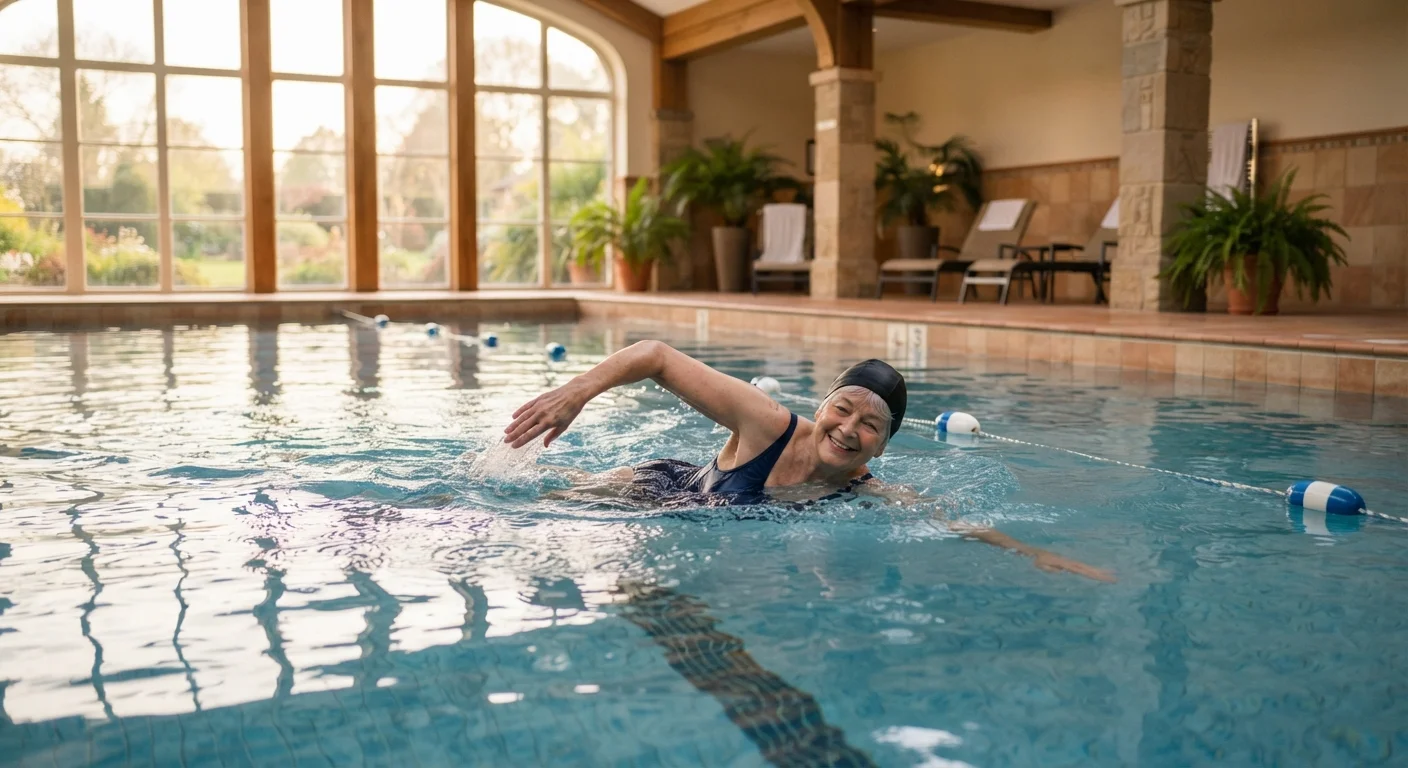
Water is one of the most forgiving exercise environments available. Buoyancy offloads the majority of bodyweight, meaning joints absorb a fraction of the stress they would on land. Swimming engages nearly every major muscle group simultaneously, making it an efficient full-body cardiovascular workout. Water aerobics - group or solo - offers similar joint protection with a social element many find motivating.
These formats are particularly valuable for people with osteoarthritis, fibromyalgia, or lower-limb injuries. The resistance water provides also builds muscular endurance without the need for weights. The main barrier is access to a pool, though many community recreation centers and YMCAs keep membership costs relatively modest.
Buoyancy offloads most of your bodyweight, making water the most joint-friendly exercise environment available.
Cycling (Stationary or Outdoor)
Cycling, whether on a stationary bike or outdoors, produces smooth, circular motion that places minimal shear force on the knee and hip joints compared with running. The saddle supports a significant portion of bodyweight, further reducing joint load. Stationary cycling has the added advantage of controllable resistance and no traffic hazards, making it easy to dial intensity up or down.
Research consistently associates regular cycling with improved cardiovascular health, lower-body strength, and reduced knee pain in people with mild to moderate osteoarthritis. Proper bike fit - seat height in particular - is important to avoid creating new strain at the knee or lower back. A quick adjustment at a local bike shop or gym can make a meaningful difference.
Cycling's circular motion produces minimal shear force on joints while still building meaningful cardiovascular fitness.
Walking
Walking is classified as low-impact because one foot always remains in contact with the ground. It is also one of the most well-studied forms of physical activity, linked to reduced risk of cardiovascular disease, improved mood, better blood sugar regulation, and enhanced cognitive function. The evidence base is substantial enough that many public health guidelines treat brisk walking as a primary recommendation for general health maintenance.
For most healthy adults without significant lower-limb conditions, walking is an excellent foundation. Supportive footwear and varied terrain (to engage different stabilising muscles) can enhance the experience. The case for walking as a serious health habit explores the depth of this evidence in more detail.
Walking is among the most extensively researched physical activities, with benefits spanning cardiovascular, metabolic, and mental health.
Yoga
Yoga combines controlled movement, static holds, breathwork, and balance work in a format that is almost entirely free of impact. Depending on the style - restorative, hatha, vinyasa - intensity can range from deeply gentle to moderately challenging. Many practitioners report improvements in joint mobility, muscular flexibility, posture, and stress levels.
From a joint-health perspective, yoga's emphasis on controlled range of motion and body awareness is particularly valuable. It also pairs well with understanding the difference between mobility and flexibility, two qualities yoga develops simultaneously. Beginners should look for classes explicitly described as beginner-friendly or therapeutic, as some advanced styles involve positions that may not suit everyone.
Yoga builds joint mobility and body awareness through controlled movement, with virtually no impact on joints.
Elliptical Training
The elliptical trainer mimics a running stride while keeping feet in continuous contact with the pedals, eliminating the impact phase that makes running hard on joints. Studies comparing treadmill running with elliptical exercise have found similar cardiovascular and muscular activation with significantly lower joint loading - particularly at the knee.
Most machines allow users to adjust both resistance and incline, making it possible to increase challenge without adding impact. The inclusion of moveable handlebars on many models also engages the upper body, improving the overall muscle recruitment of each session. The elliptical is a common fixture in commercial gyms, but compact home versions are also widely available for those who prefer to train indoors. Home workout habits worth keeping covers how to set up an effective home training environment.
The elliptical replicates a running motion while eliminating the impact phase, protecting joints without sacrificing intensity.
Resistance Training with Controlled Movements
Strength training is not inherently high-impact. When performed with deliberate, controlled tempo - avoiding explosive or ballistic movements - resistance exercises place joints under load in a way that actually strengthens the surrounding tendons, ligaments, and supporting musculature. This structural reinforcement can reduce joint pain over time, particularly in the knees and hips.
Bodyweight exercises such as squats, wall push-ups, and seated leg raises are an accessible starting point. Light free weights or resistance bands allow gradual progression. Comparing bodyweight training with weight machines can help you decide which format suits your situation. People with existing joint conditions should work with a physical therapist or certified trainer when beginning a resistance program.
Controlled resistance training strengthens the structures around joints, which can reduce pain and improve long-term joint health.
Building a Routine That Holds Up Over Time
The hallmark of effective low-impact training is repeatability. Because these formats are gentler on the body, they tend to support more consistent participation - and consistency is what produces lasting results. A thirty-minute swim four times a week will outperform an intense session you can only manage once before soreness sidelines you.
Start With Two or Three Sessions Per Week
If you're new to regular exercise or returning after a break, beginning with two to three sessions per week gives your body adequate recovery time while establishing the habit. Increase frequency or duration gradually - most exercise science supports adding no more than roughly ten percent more volume per week. Small, consistent steps are more sustainable than ambitious starts that lead to burnout or injury.
Consider mixing two or three of the options above across a week to engage different muscle groups and prevent boredom. For readers interested in understanding the broader principles behind exercise that lasts, sustainable fitness principles are worth exploring. And if you're curious how these formats compare with higher-intensity approaches, see how HIIT, steady-state cardio, and circuit training stack up by demand.
This article is for general informational purposes only and does not constitute medical advice. If you have a health condition, joint injury, or other concern, consult a qualified healthcare professional before starting any new exercise program.