

| Therapist credentials (examples) | LCSW, LPC, LMFT, PhD, PsyD |
| Can prescribe medication | Psychiatrists (and PMHNPs in most states); not therapists or counselors |
| Counseling setting examples | Schools, substance use programs, community mental health, career centers |
| Psychiatrist training | Medical school + psychiatric residency (MD or DO) |
| Therapy focus | Talk-based treatment using evidence-based psychological frameworks |
| Where to start if unsure | Your primary care physician can provide a referral or initial screening |
Why the Distinctions Matter
When you're considering mental health support, the range of professional titles can feel confusing - and the differences aren't just semantic. Therapists, counselors, and psychiatrists are trained differently, operate under different licenses, and offer different kinds of help. Choosing the right type of provider for your situation can meaningfully affect your experience and outcomes.
This article offers a clear, evidence-informed breakdown of each role. It is general health information, not a substitute for a personal evaluation by a qualified professional. If you're unsure where to start, your primary care physician can often provide a referral.
| Therapist credentials (examples) | LCSW, LPC, LMFT, PhD, PsyD |
| Can prescribe medication | Psychiatrists (and PMHNPs in most states); not therapists or counselors |
| Counseling setting examples | Schools, substance use programs, community mental health, career centers |
| Psychiatrist training | Medical school + psychiatric residency (MD or DO) |
| Therapy focus | Talk-based treatment using evidence-based psychological frameworks |
| Where to start if unsure | Your primary care physician can provide a referral or initial screening |
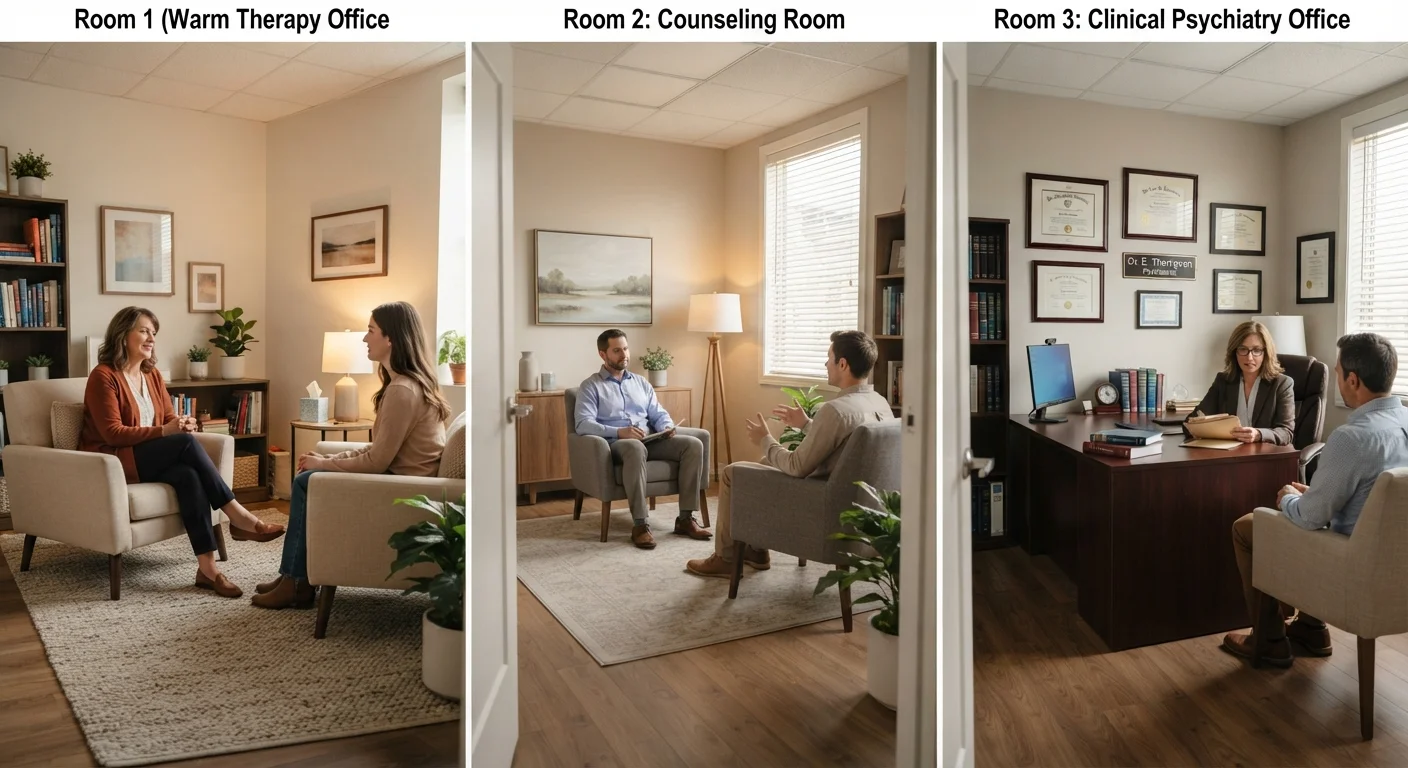
Therapists: Trained in Talk-Based Treatment
The term therapist is broad and may refer to licensed professionals such as Licensed Clinical Social Workers (LCSWs), Licensed Professional Counselors (LPCs), Licensed Marriage and Family Therapists (LMFTs), or psychologists (PhD or PsyD). What unites them is a focus on psychotherapy - structured, talk-based treatment grounded in established psychological frameworks.
Therapists are typically trained in specific modalities such as Cognitive Behavioral Therapy (CBT), psychodynamic therapy, or trauma-focused approaches. They work with individuals, couples, families, and groups to address conditions like anxiety, depression, trauma, relationship difficulties, and grief. Most hold at minimum a master's degree and are required to complete supervised clinical hours before licensure.
Psychologists, who hold doctoral degrees, may also conduct psychological testing and assessments in addition to therapy. In most U.S. states, psychologists cannot prescribe medication, though a small number of states have granted prescriptive authority to specially trained psychologists.
If you're exploring specific therapeutic approaches, see our comparison of CBT and DBT to understand two of the most widely used evidence-based methods.
Counselors: Support Across a Broad Spectrum
The line between counseling and therapy often overlaps in practice, but there are meaningful distinctions in context and emphasis. Counselors frequently work in specific settings - schools, substance use recovery programs, career centers, or community mental health organizations - and may concentrate on defined issues rather than longer-term therapeutic work.
Licensed counselors (such as LPCs or Licensed Mental Health Counselors, or LMHCs, depending on state) are trained in many of the same techniques as therapists and are qualified to treat a range of mental health conditions. The key practical difference is often the duration and depth of treatment: counseling may be more solution-focused or time-limited, while therapy may address deeper psychological patterns over a longer period.
Counseling is often well-suited for situational challenges - navigating a career transition, processing grief, addressing relationship conflict, or managing work-related stress. For a broader look at when professional support is the right step, see our guide on self-care versus professional mental health support.
Psychotherapy
A structured, talk-based treatment conducted by a trained mental health professional. It uses established psychological frameworks to help individuals understand and change thought patterns, emotions, and behaviors.
Licensure
A state-granted credential that authorizes a professional to practice in a specific field. Mental health licensure requirements vary by state and profession, but typically include graduate-level education and supervised clinical experience.
Psychiatric Nurse Practitioner (PMHNP)
An advanced practice registered nurse with specialized training in psychiatric and mental health care. PMHNPs can diagnose mental health conditions and prescribe medication in most U.S. states.
Solution-Focused Therapy
A short-term therapeutic approach that emphasizes identifying current strengths and building toward specific goals, rather than exploring past experiences in depth. It is commonly used in counseling contexts.
Psychologist
A doctoral-level mental health professional (PhD or PsyD) trained in psychotherapy and psychological assessment. Most psychologists cannot prescribe medication, though prescriptive authority exists in a small number of states for specially trained practitioners.
Psychiatrists: Medical Doctors Specializing in Mental Health
Psychiatrists are fully licensed medical doctors (MDs or DOs) who have completed medical school and a residency specializing in psychiatry. This medical training is the defining distinction: psychiatrists can diagnose mental health conditions, prescribe and manage medication, and order lab tests or brain imaging when clinically appropriate.
Psychiatry is especially relevant when a mental health condition may have a biological component requiring medication management - such as schizophrenia, bipolar disorder, severe depression, or certain anxiety disorders. Some psychiatrists also provide psychotherapy, though in many clinical settings they focus primarily on medication evaluation and management while coordinating care with a therapist or counselor.
Psychiatric Nurse Practitioners (PMHNPs) are advanced practice nurses with specialized psychiatric training who can also diagnose conditions and prescribe medication in most states, and are an increasingly important part of the mental health care landscape.
Reaching out to a loved one about their mental health before they seek professional care? Our article on talking to someone you love about mental health struggles offers practical, compassionate guidance.
This article is for general informational and educational purposes only and does not constitute medical advice. Always consult a qualified healthcare professional for guidance specific to your situation.