

Key Takeaways
- Tomato splitting is almost always caused by irregular watering, not disease or poor luck.
- Consistent soil moisture is the single most effective defense against fruit cracking.
- Mulching and deep, infrequent watering work together to prevent dramatic moisture swings.
- Calcium deficiency and rapid growth spurts can cause splitting even when watering seems consistent.
- Harvesting tomatoes slightly early during wet spells can save fruit that would otherwise crack.
What's Actually Happening When a Tomato Splits
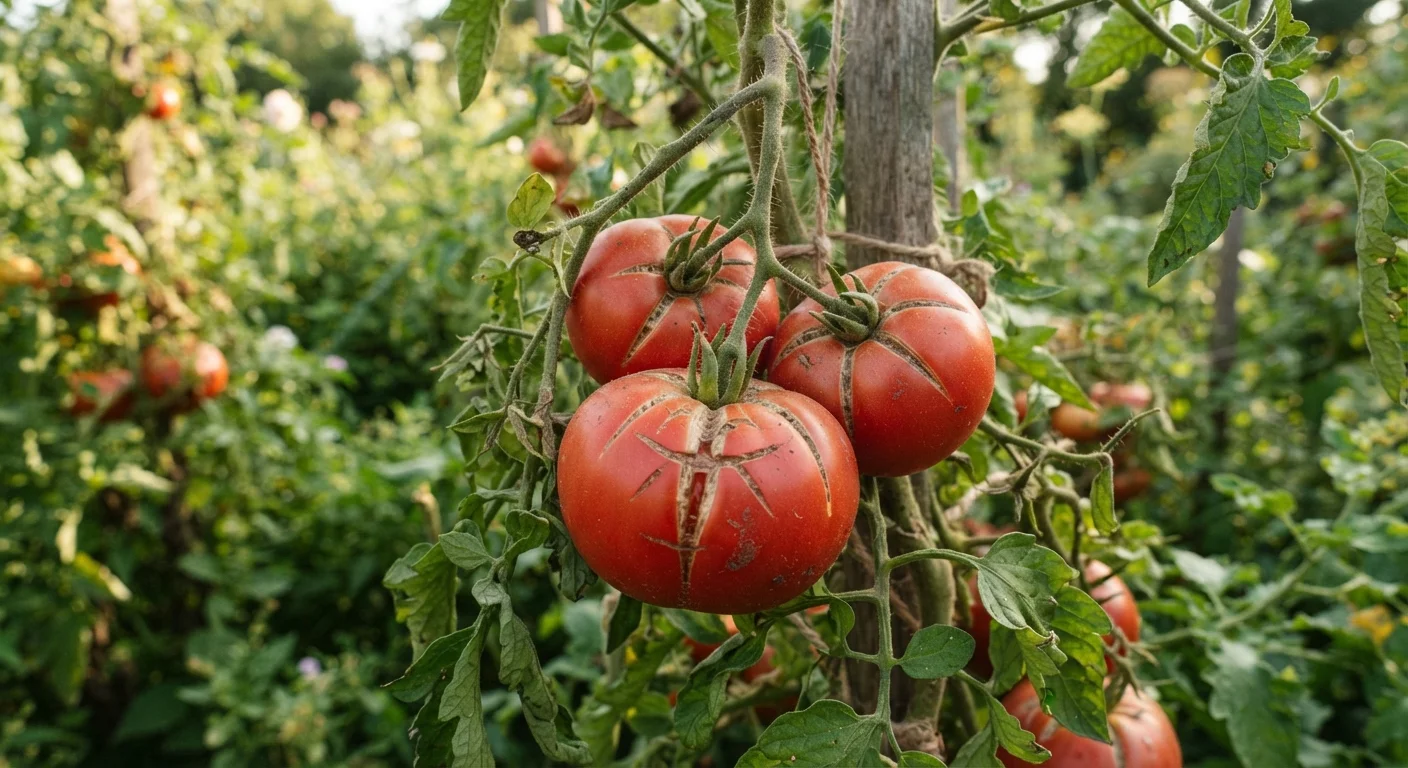
Tomato splitting - whether the radial cracks that run from stem to blossom end, or the concentric rings that circle the top of the fruit - is almost always a physical stress response, not a disease. The fruit's interior grows faster than its skin can accommodate, and the skin gives way.
The most common trigger is a sudden surge of moisture after a dry period. When the soil transitions rapidly from dry to saturated, the tomato plant draws up water aggressively, and the pulp swells. If the skin has already toughened slightly during the dry spell, it lacks the elasticity to keep up - and it splits.
Radial cracks are typically linked to that moisture surge pattern. Concentric cracking near the stem more often signals prolonged weather stress or variety susceptibility. Either way, the garden is signaling that conditions have been inconsistent.
Overwatering After a Dry Spell Is the Biggest Trigger
Applying a heavy soak after the soil has dried out significantly is the classic recipe for split tomatoes. The fruit pulp expands faster than the skin can stretch, and the skin ruptures. Even one or two events like this per season can ruin a significant portion of your harvest. Consistent, moderate irrigation matters more than total water volume.
Understanding the root cause matters because the fix isn't complicated - it just requires consistency. For gardeners just getting started, starting a vegetable garden from scratch covers the foundational habits that prevent many common problems before they begin.
The Mistakes That Let Splitting Happen
Most splitting incidents can be traced back to a handful of repeating errors. Recognizing these patterns in your own garden is the first step toward a consistently clean harvest.
Watering irregularly - letting soil dry out completely, then saturating it.
Why it happens: Many gardeners water based on a loose schedule or only when plants visibly wilt, leading to feast-or-famine moisture cycles that stress developing fruit.
Skipping mulch around the base of tomato plants.
Why it happens: Mulching can feel like an optional finishing step, so gardeners sometimes skip it to save time or materials - not realizing how much it stabilizes soil moisture.
Ignoring calcium deficiency in the soil or watering schedule.
Why it happens: Calcium is often present in the soil but becomes unavailable when moisture is inconsistent, since plants absorb calcium through water uptake. Gardeners may not connect fruit problems to a nutrient issue.
Leaving tomatoes on the vine too long during rainy periods.
Why it happens: Gardeners want fully vine-ripened fruit and resist picking early, not anticipating that a rainfall event can cause near-ripe tomatoes to split overnight.
Over-fertilizing with nitrogen mid-season, causing rapid leafy and fruit growth.
Why it happens: Gardeners eager for bigger yields sometimes add fertilizer heavily once plants are established, not realizing nitrogen-driven growth spurts can outpace the fruit skin's ability to expand.
For a deeper look at how your watering habits may be affecting more than just tomatoes, common irrigation myths debunked breaks down what actually works versus what most gardeners assume.
Building a Garden Routine That Protects Your Fruit
Preventing splits isn't about perfection - it's about reducing the extremes. A few structural habits, maintained through the growing season, make a measurable difference.
Cracked Tomatoes Are Still Edible - With Caveats
A freshly split tomato is generally safe to eat if used immediately, but the open wound invites bacteria and mold rapidly, especially in humid conditions. Do not store cracked fruit - use it within hours or cut away the affected area before consuming. Deeply cracked tomatoes left on the vine in wet weather should be discarded rather than risked.
- Water in the morning, deeply and less frequently. Shallow daily watering encourages surface roots and leaves the lower soil prone to drying. Deep, infrequent sessions - allowing the top inch to dry before watering again - train roots downward where moisture is more stable.
- Mulch consistently from early in the season. Don't wait until summer heat arrives. Laying mulch when plants are young locks in the moisture equilibrium you've worked to establish.
- Choose splitting-resistant varieties if you garden in a region prone to erratic summer rain. Many modern hybrid tomatoes are bred with thicker, more flexible skin. Heirloom varieties, while often superior in flavor, tend to split more readily.
- Monitor the forecast. Before a heavy rain, assess which tomatoes are close to ripe. A proactive harvest can save fruit that would otherwise crack overnight.
If you're growing in containers, managing moisture is somewhat easier but requires more attentive watering since pots dry out faster. See container gardening guidance for soil mix and drainage tips that help maintain steady moisture levels in pots.
~70%
Of tomato splitting traced to water stress
University extension horticulture programs consistently identify uneven soil moisture as the primary cause in the majority of home garden splitting cases.
2-3 inches
Recommended mulch depth around tomato plants
Horticultural guidance from cooperative extension services suggests this depth effectively reduces soil moisture fluctuation between waterings.