

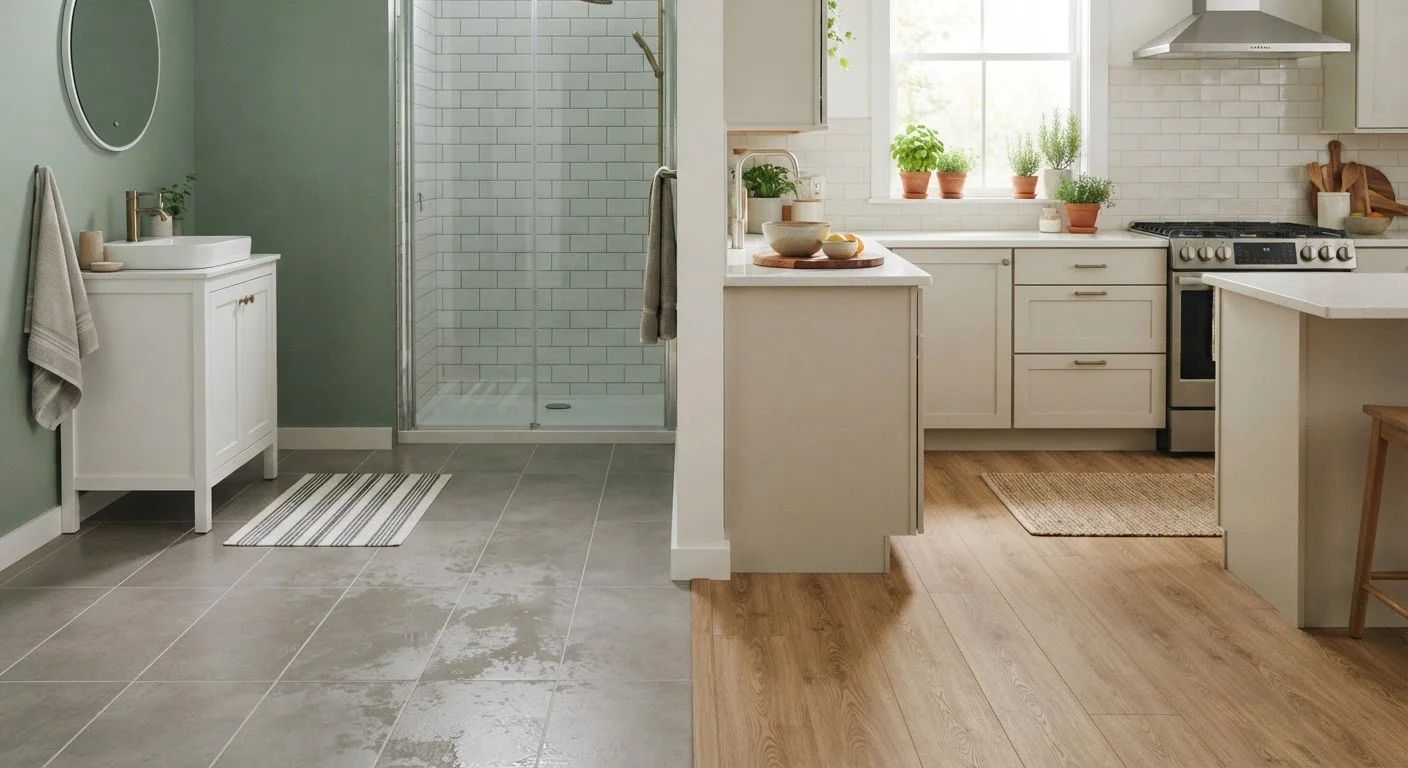
Key Takeaways
- Ceramic and porcelain tile offer superior long-term durability and are fully waterproof when properly grouted and sealed.
- Luxury vinyl plank is 100% waterproof at the plank level but can allow moisture beneath floating installations if not correctly sealed at edges.
- Tile installation is more labor-intensive and typically requires professional skills; LVP is one of the more DIY-friendly flooring options available.
- Tile is cold and hard underfoot; LVP provides more cushion and warmth, making it more comfortable in bathrooms.
- Both materials work in kitchens and bathrooms, but your subfloor condition, budget, and project timeline will heavily influence the better choice.
Option A
Ceramic & Porcelain Tile
The time-tested, water-impervious classic.
Best for: Homeowners who want permanent, long-lasting flooring that stands up to heavy moisture, heat, and heavy foot traffic.
Option B
Luxury Vinyl Plank (LVP)
The resilient, DIY-friendly modern alternative.
Best for: Homeowners seeking a comfortable, budget-conscious floor that installs quickly and mimics the look of wood or stone.
If you want a floor that will last 30+ years with minimal replacement
Ceramic & Porcelain Tile
Properly installed and sealed tile is virtually impervious to water damage and can outlast the home itself with routine grout maintenance.
If you want to complete the project yourself over a weekend
Luxury Vinyl Plank (LVP)
LVP click-lock systems require no adhesive or grout, making them accessible to confident DIYers with basic tools.
If underfoot comfort is a top priority in your bathroom
Luxury Vinyl Plank (LVP)
LVP has a softer, warmer surface than tile, which is noticeably more comfortable on bare feet during cold mornings.
If you have a high-moisture shower area or steam room
Ceramic & Porcelain Tile
Tile with a properly waterproofed substrate and sealed grout is the industry-standard choice for areas with direct, continuous water exposure.
If your subfloor has minor imperfections or unevenness
Luxury Vinyl Plank (LVP)
Many LVP products tolerate slight subfloor variations better than tile, which demands a very flat, rigid base to prevent cracking.
Water Resistance: Understanding What Each Material Actually Offers
When choosing flooring for wet areas, the distinction between water-resistant and waterproof matters enormously. Ceramic and porcelain tile are inherently impervious to water absorption at the tile surface itself - porcelain, in particular, has a very low water absorption rate, which is why it's used in commercial settings. However, the system as a whole is only as waterproof as its grout and the membrane beneath it. Unsanded or cracked grout is a common entry point for moisture, which can damage the subfloor over time.
Luxury vinyl plank planks are themselves 100% waterproof - water cannot penetrate the core. The important caveat is that floating LVP installations aren't sealed at the seams, meaning standing water that works beneath the planks can cause problems with the subfloor or adhesive layer. Glue-down LVP installations in wet areas provide better moisture protection overall. Always seal the perimeter where LVP meets walls or fixtures with a waterproof silicone caulk.
A Note on Shower Floors vs. General Wet Areas
There is an important distinction between areas that get occasional splashing - like a bathroom floor near a sink - and surfaces with direct, continuous water exposure, such as a shower floor or the interior walls of a wet shower. Tile with a properly waterproofed substrate (such as a sheet membrane or foam board system) is the standard approach for direct shower applications. LVP is generally not recommended for shower floors or walls, even if the planks themselves are waterproof.
Installation Complexity and Subfloor Requirements
Tile installation has a steeper learning curve. A successful tile job requires a flat, rigid subfloor - typically cement board or an uncoupling membrane over plywood. You'll also need to plan your tile layout, mix and apply thinset mortar, manage spacing with tile spacers, and then grout and seal. Mistakes in any of these steps can cause tiles to crack, pop, or allow moisture intrusion. For most homeowners, a full bathroom tile floor is a multi-day project that may benefit from professional assistance, especially when cuts around fixtures or drains are involved.
LVP installation, by contrast, is one of the more achievable weekend DIY projects. Click-lock floating floors snap together without adhesive, require no curing time, and can often be installed directly over existing flooring when the surface is smooth and structurally sound. The primary tools needed are a utility knife or laminate cutter, a rubber mallet, and a tape measure. Glue-down LVP is more demanding and is better suited to experienced DIYers or professionals.
| Criterion | Ceramic & Porcelain Tile | Luxury Vinyl Plank (LVP) |
|---|---|---|
| Waterproofness | Waterproof surface; grout requires sealing | 100% waterproof plank; perimeter sealing needed |
| DIY Friendliness | Moderate to difficult; multiple steps | Easy to moderate; click-lock system |
| Subfloor Requirements | Must be very flat and rigid | Tolerates minor imperfections |
| Typical Lifespan | 30-50+ years with maintenance | 15-25 years depending on grade |
| Underfoot Comfort | Hard and cold | Softer and warmer |
| Maintenance | Grout cleaning and periodic resealing | Easy cleaning; no grout lines |
| Heat Tolerance | Excellent; works with radiant heat | Limited; check manufacturer specs |
Durability, Maintenance, and Long-Term Performance
Tile's durability is hard to match. A properly installed tile floor can serve for decades without needing replacement, and individual cracked tiles can often be replaced without redoing the entire floor. The main ongoing maintenance task is grout - it should be resealed periodically (annually in high-use areas is a reasonable target) to prevent staining and moisture penetration. Grout cleaning can be labor-intensive but is manageable with the right tools and products.
Quality LVP products carry wear layers measured in mils (thousandths of an inch) - thicker wear layers resist scratches and surface damage better. In wet areas, look for products rated at 12 mils or higher for residential use. LVP is generally easier to keep clean day-to-day: no grout lines means fewer places for grime to accumulate. However, LVP can be damaged by prolonged exposure to very high temperatures or by sharp, heavy objects, and full-floor replacement is more common than with tile when damage occurs.
12+ mils
Minimum wear layer for residential wet areas
Industry guidance generally recommends a wear layer of at least 12 mils for LVP installed in high-traffic or moisture-prone residential spaces.
~6%
Max water absorption for standard ceramic tile
The ANSI standard for ceramic tile sets an upper limit of 6% water absorption; porcelain tile must measure at 0.5% or below, making it significantly denser.
Cost Considerations and What Affects Your Final Budget
Material and labor costs for both options vary widely by region and product grade, so treat the following as general guidance rather than precise estimates. Tile materials themselves can range from modest to very expensive depending on the tile type, size, and finish, while installation labor is typically priced per square foot and increases with design complexity. Grout, thinset, cement board, and sealer add to the total.
LVP materials generally span a broad price range based on thickness and wear layer, and the absence of grout, mortar, and cement board brings the overall cost - particularly the labor component - down considerably for DIY installations. Keep in mind that subfloor repair or leveling can add cost to either project. Always obtain a thorough assessment of your subfloor condition before committing to a flooring type, as an uneven or damaged subfloor is one of the most common sources of unexpected expense in flooring renovations.
This article is for general informational purposes only. Local building codes and permit requirements for flooring work vary by municipality - check with your local building department before beginning any renovation, particularly in areas involving plumbing fixtures or structural subfloor repair.