

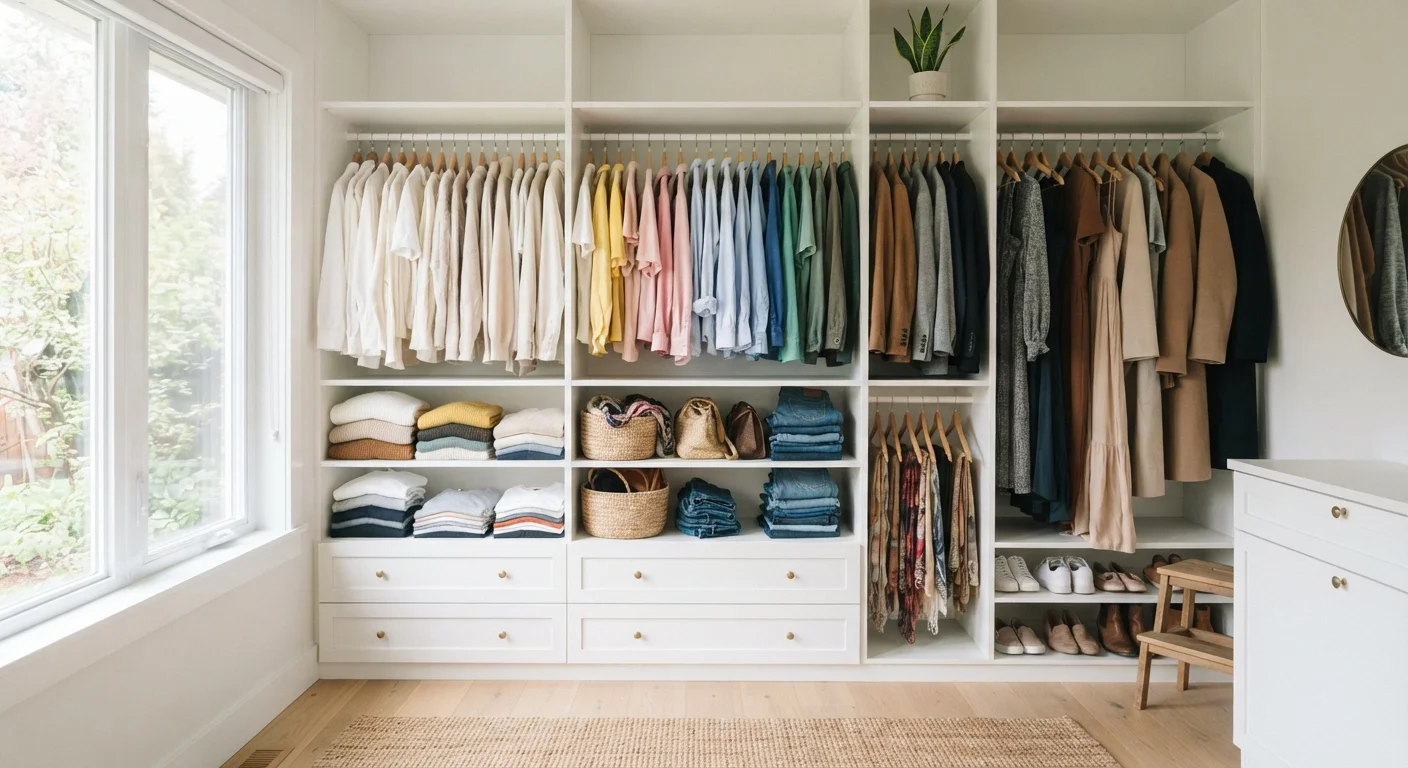
Key Takeaways
- More hangers and bins don't fix a closet - editing what you own comes first.
- Folding isn't always superior to hanging; the right method depends on the garment type.
- Color-coding looks appealing but isn't the most functional organizing system for most households.
- A one-time organizing session rarely sticks without simple daily maintenance habits.
- Seasonal rotation and letting items go are essential parts of a functional wardrobe system.
Why Closet Myths Are So Persistent
Closet organization advice is everywhere - social media, home improvement shows, lifestyle blogs - and much of it is built around aesthetics rather than function. The result is a collection of widely repeated ideas that look compelling but often lead homeowners to spend money, invest time, and still end up frustrated with a wardrobe in disarray. Understanding which assumptions are myths, and why, is the starting point for building a system that actually works for your household.
The myths below are among the most common culprits behind closets that never quite come together. Each one sounds reasonable - that's precisely what makes them sticky. Replacing them with accurate, practical principles takes less effort than most people expect.
Myth
Buying more storage bins, hangers, and organizers will finally fix my cluttered closet.
Fact
Adding storage without first reducing the number of items almost always makes clutter worse, not better.
More storage containers give the illusion of progress, but they typically just relocate the problem. When a closet is overstuffed, the root issue is volume - too many items competing for too little space. Purchasing additional organizers before decluttering means you're creating homes for things you may not need or use. The most effective first step is always an honest edit: pull everything out, assess what you actually wear, and remove items that no longer serve you. Only after that reduction should you measure and shop for storage solutions that fit what remains.
Myth
Everything should be folded neatly - folded clothes are always more organized than hanging ones.
Fact
Hanging is often better for structured garments, while folding works well for casual knits and denim - the fabric and construction determine the right method.
Folding suits, blazers, or dress shirts can create creases and distort their shape over time. These items benefit from being hung on appropriately shaped hangers with enough breathing room between them. On the other hand, heavy knit sweaters can stretch and lose their shape on hangers, making folding or shelf-stacking the smarter choice. Assessing each category of clothing individually - rather than applying a single universal rule - leads to a system that actually preserves your clothes and makes them easier to find.
Myth
Color-coding your wardrobe is the gold standard of closet organization.
Fact
Color-coding is visually pleasing but often impractical; organizing by category or occasion tends to support how people actually get dressed.
While rainbow-arranged wardrobes photograph beautifully, most people don't think "I need something blue" when getting dressed - they think "I need a work blouse" or "I want something casual for the weekend." Organizing by clothing type (tops, bottoms, outerwear) or by occasion (work, casual, formal) aligns the system with natural decision-making. Color-coding can be a secondary layer within those categories if it appeals to you, but it works poorly as the primary organizing logic for a functional, everyday wardrobe.
Myth
Once you organize a closet properly, it should stay that way indefinitely.
Fact
Even a well-designed closet system requires regular, brief maintenance to stay functional as life and wardrobe needs change.
Closets drift back toward disorder not because the original system failed, but because daily habits - tossing items in quickly, shopping without removing old pieces, or skipping seasonal reviews - gradually erode the order. A five-minute reset at the end of the week can prevent the gradual buildup that leads to a full reorganization. Pairing that with a seasonal decluttering routine keeps the closet aligned with what you actually own and wear throughout the year.
Myth
A small closet simply can't be organized - there isn't enough space to work with.
Fact
Small closets benefit most from thoughtful organization; vertical space, door backs, and category discipline can dramatically expand usable capacity.
The constraint of limited space actually forces the kind of intentional decision-making that large closets rarely demand. Double-hang rods can nearly double hanging capacity for shorter garments. Over-door organizers and hooks claim space that otherwise goes unused. Shelf dividers keep folded stacks from toppling. Many of the same principles that apply to organizing a small kitchen translate directly here: maximize vertical real estate, use the back of doors, and be ruthless about what earns a spot. Editing the wardrobe down to what's genuinely used transforms even a narrow closet into a functional one.
Building Habits That Keep Order in Place
Correcting these myths is a one-time mental shift, but sustaining an organized closet is an ongoing practice. The everyday habits that quietly undermine a tidy home - dropping items on the floor, leaving returns in bags, skipping the hanger after laundry - are far more responsible for closet chaos than a flawed storage system.
Don't Let a Big Reveal Become Your Only Maintenance
A major closet overhaul is satisfying, but treating it as the finish line rather than the starting point is one of the most common reasons closets return to chaos within weeks. Plan for short, regular check-ins - even five minutes on a weekend - rather than relying on another large reorganization session months later. Small, consistent habits preserve the system far more reliably than periodic dramatic resets.
A useful guiding principle is to pair each outgoing item with any incoming one. This one-in, one-out approach prevents slow accumulation from undoing your work between seasonal resets. When the number of items stays stable, the system you set up continues to function - and getting dressed each morning becomes genuinely easier.