
Paper Clutter Is Not a Personality Trait: A System for Managing Mail, Documents, and Filing

Key Takeaways
- Paper clutter accumulates by default - a deliberate intake system stops the pile before it starts.
- Sort incoming mail at the door using a three-category method: act, file, or recycle.
- A simple home filing system needs only a handful of clearly labeled categories to be effective.
- Retaining documents longer than necessary creates clutter; most household papers can be discarded within one to seven years.
- Digital backups of critical documents protect you when physical copies are lost or damaged.
- Weekly maintenance of five minutes or less prevents backlogs from forming.
What you will need
Why Paper Piles Up in the First Place
Paper accumulates not because households are disorganized by nature, but because paper enters the home continuously with no default system to receive it. Mail arrives daily. School forms, receipts, medical EOBs, and insurance renewals follow. Without a clear path from arrival to action to storage, each piece lands wherever there's open horizontal space - which is always the wrong place.
This is a systems problem, not a character flaw. The fix isn't willpower or tidiness as a mindset; it's establishing a physical workflow that handles paper automatically. Once the system exists, maintaining it takes less effort than managing the chaos it replaces. For broader context on how this fits into managing household clutter, see our guide to household clutter principles that actually work.
Go Paperless Where It Makes Sense
Switching utility bills, bank statements, and insurance notices to electronic delivery eliminates a large portion of incoming paper before it ever arrives. Log in to each provider's account portal and opt for e-statements. You'll still want to save or file digital copies, but you'll dramatically reduce physical volume from the start.
What You'll Need Before You Start
Setting up a paper management system requires a small upfront investment in basic supplies. None of these need to be expensive or decorative - functional is the only requirement. Gather your materials before beginning so the setup happens in one session rather than stalling mid-process.
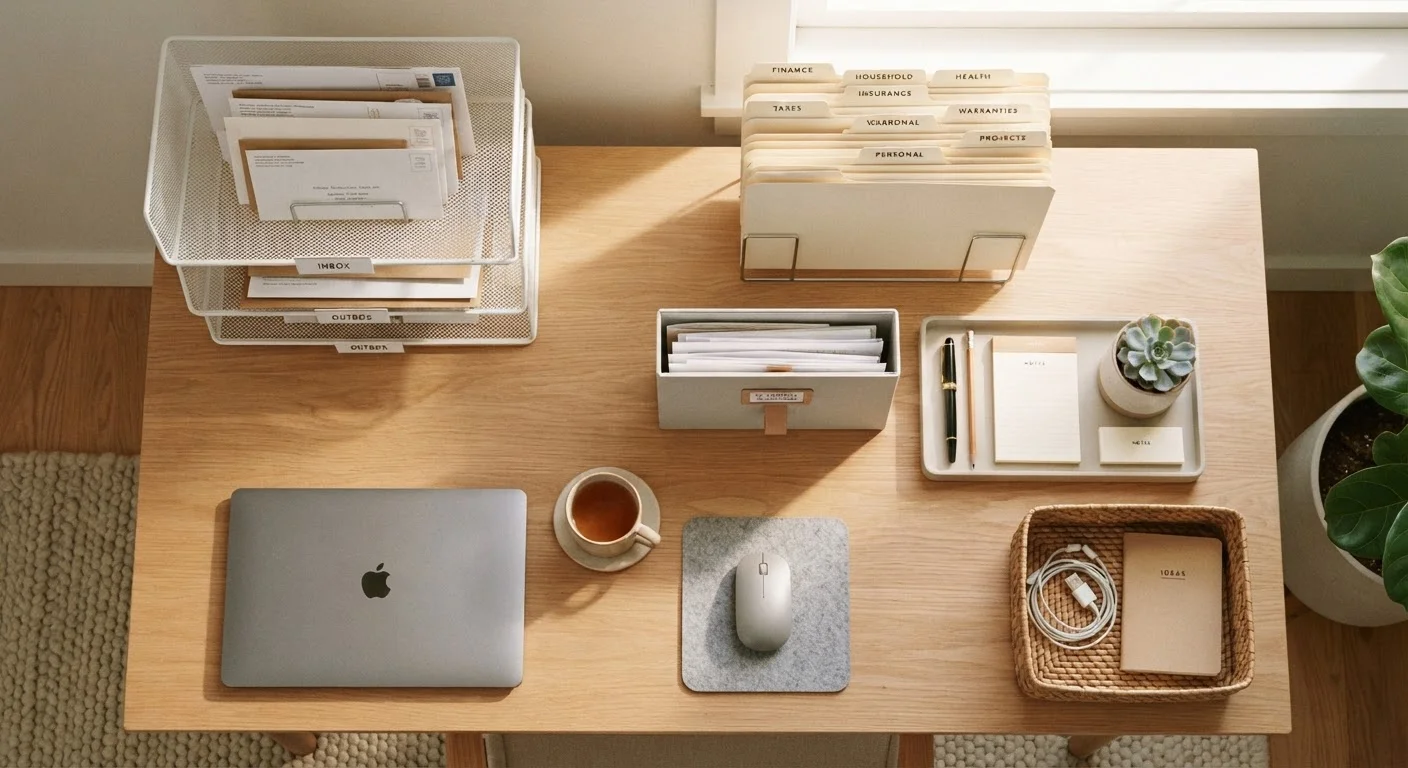
Letter tray or wall-mounted mail sorter
Creates a dedicated landing zone for incoming mail so it never gets piled on counters.
Hanging file folders and a filing cabinet or crate
Stores categorized documents in an upright, accessible format.
Label maker or adhesive labels
Clearly identifies each folder or category so filing and retrieval are fast.
Cross-cut paper shredder
Safely destroys documents containing personal or financial information before disposal.
Scanner or smartphone scanning app
Creates digital copies of important documents for backup and easy retrieval.
Fireproof document box or safe
Protects irreplaceable documents - such as birth certificates and passports - from fire or water damage.
What you will need
Building and Maintaining Your System
The steps below build your system in sequence - intake point first, then sorting habit, then filing structure, then retention rules, digital backup, and finally a maintenance rhythm. Complete them in order for the first setup; after that, only the weekly reset requires ongoing effort.
Designate a single paper intake point
Choose one fixed location where all incoming paper enters your home - typically near the front door or in a kitchen zone. Place a small tray, basket, or wall pocket here. Nothing should be set on counters or tables before passing through this point. The physical constraint forces a decision moment instead of a drift pile.
Sort every piece at intake using three categories
Each time mail or papers arrive, sort them on the spot into three and only three destinations:
- Act: Requires a response, payment, or decision within 30 days.
- File: Needs to be kept for records but requires no action.
- Recycle or shred: Junk mail, expired coupons, duplicate statements - dispose of immediately.
Anything in the Act category goes into a dedicated action tray. Never place it in the general filing system until the task is complete.
Build a simple home filing system
Set up hanging folders using broad, intuitive categories that match your household's actual paper life. Common categories include: Banking & Investments, Insurance, Medical, Home & Property, Taxes, Vehicle, and Warranties & Manuals. Resist creating sub-folders until a category genuinely overflows - over-engineered systems collapse under their own complexity.
Label every folder clearly, then file all items from your Act tray once action is complete.
Know what to keep and for how long
Retaining documents indefinitely is one of the main reasons home filing systems become unmanageable. General guidance - which may vary based on your individual situation - suggests the following retention windows:
- Monthly bills and bank statements: One year, then shred unless needed for tax purposes.
- Tax returns and supporting documents: Seven years is a commonly cited guideline; consult a tax professional for your specific circumstances.
- Insurance policies: Keep current policy only; discard expired versions after renewal.
- Warranties and manuals: Keep only while the item is owned.
- Vital records (birth certificates, passports, Social Security cards, property deeds): Keep permanently in a secure location.
Create digital backups of critical documents
Scan or photograph vital records and store them in an encrypted cloud service or an external hard drive kept off-site. This protects you if originals are lost in a fire, flood, or theft. At minimum, digitize: passports, birth certificates, insurance policy summaries, property deeds, and vehicle titles. A free smartphone scanning app can produce clear, readable PDFs in seconds.
Schedule a weekly five-minute paper reset
Once the system is in place, maintenance is minimal. Set aside five minutes - same day each week - to clear the action tray, file completed items, and shred what's ready for disposal. This single habit prevents the backlog that makes paper feel unmanageable. Pair it with an existing routine (Sunday evening bill review, Monday morning coffee) so it becomes automatic rather than optional.
Protect Sensitive Documents Before Discarding
Identity theft frequently originates from improperly discarded paperwork. Before recycling any document that contains your name, address, account numbers, or identifying information, run it through a cross-cut shredder. Strip-cut shredders offer minimal protection against determined reconstruction. This is not an optional step.
Once your paper system is running smoothly, it integrates naturally with a broader home organization effort. Our room-by-room organization audit can help you identify other areas of your home that may benefit from the same systematic approach. If you find the system stalling after initial setup, common habits that undermine tidy homes are often the culprit - and they're correctable once identified.