

Key Takeaways
- Most utility savings come from behavioral changes and low-cost fixes, not major renovations.
- Heating and cooling typically account for the largest share of a household's energy bill.
- Water heating, phantom loads, and peak-hour usage are often overlooked savings opportunities.
- Consistent habits - not one-time actions - produce durable reductions in monthly utility costs.
- Some utility companies offer free energy audits and rebate programs worth checking before spending anything.
Why Small Changes Add Up on Utility Bills
For most American households, utilities - electricity, natural gas, and water - represent a significant and recurring budget line. The U.S. Energy Information Administration consistently finds that space heating and cooling alone account for roughly half of a typical home's energy use. That's a substantial target for savings that doesn't require tearing out walls or replacing your HVAC system.
The good news: a meaningful portion of utility costs is driven by habits and settings, not by the infrastructure of your home. Adjusting how and when you use energy can produce real dollar reductions on your monthly bill - often without spending more than a few dollars upfront, if anything at all. If you're looking to build these savings into a broader financial plan, it helps to budget for seasonal utility swings as part of your regular household planning.
The strategies below focus on actions available to renters and homeowners alike - no contractors required.
Adjust Your Thermostat by a Few Degrees
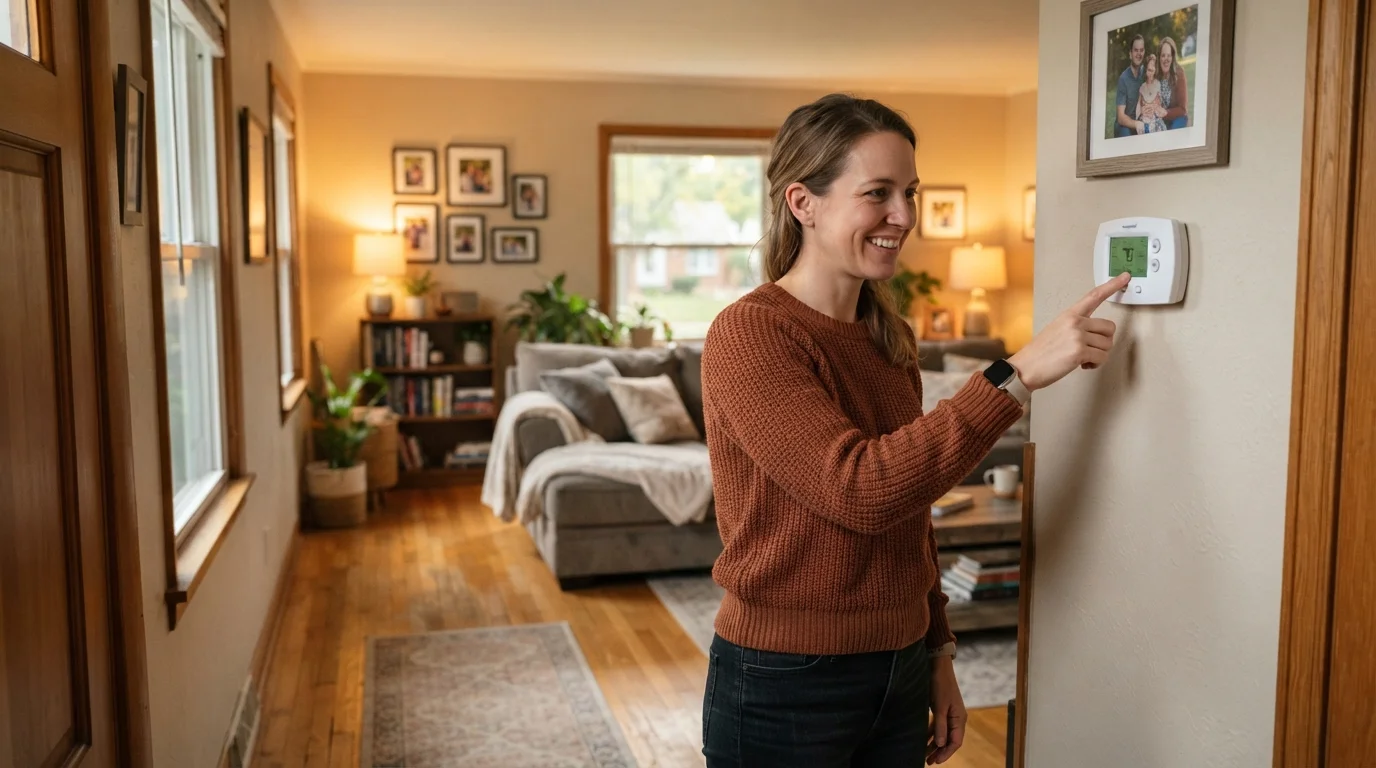
Heating and cooling are the single largest energy expense in most homes. Setting your thermostat just 7-10°F lower for eight hours a day - while you're asleep or away from home - can make a noticeable difference on your annual energy costs, according to the U.S. Department of Energy. A programmable or smart thermostat automates this without requiring any discipline on your part. Many utility providers offer rebates on these devices, so check your provider's website before purchasing.
If you rent and can't install a thermostat, use portable fans and window coverings strategically: keeping blinds closed during peak afternoon heat and opening windows in the evening can reduce how hard your system has to work.
A few degrees of adjustment, consistently applied, can translate into meaningful annual energy savings.
Eliminate Phantom Loads from Electronics
Devices that remain plugged in while not in active use - televisions, game consoles, phone chargers, coffee makers - continue to draw power. This is commonly called a "phantom load" or standby power. The Lawrence Berkeley National Laboratory has estimated that standby power can account for roughly 5-10% of a home's electricity use.
Plugging device clusters into a power strip and switching it off when not in use eliminates this waste with no ongoing effort. Prioritize entertainment centers, home offices, and kitchen counters, where multiple devices tend to cluster.
Standby power from idle electronics can account for up to 10% of your home electricity use.
Shift High-Energy Tasks to Off-Peak Hours
Many electric utilities use time-of-use (TOU) pricing, where the rate per kilowatt-hour is higher during periods of peak demand - typically mid-afternoon to early evening on weekdays. If your utility offers TOU rates, running your dishwasher, washing machine, and electric dryer during off-peak windows (evenings, nights, or weekends) can lower your bill without changing how much you use those appliances at all.
Check your utility's website or call their customer service line to find out whether TOU pricing applies to your account and what the peak hours are in your area.
Running appliances during off-peak hours can reduce electricity costs without changing how often you use them.
Lower Your Water Heater Temperature
Many water heaters ship from the factory set at 140°F, but the U.S. Department of Energy recommends 120°F for most households. Reducing the temperature by 20°F can lower water heating costs and also reduces the risk of scalding. This is typically a free adjustment - your water heater's thermostat dial is usually accessible on the unit itself, though gas models may require a service call if the dial is inside a sealed compartment.
Pairing this with shorter showers and fixing dripping faucets (a faucet dripping once per second wastes roughly 3,000 gallons per year) compounds the savings on both water and energy bills.
Dropping your water heater to 120°F is a free adjustment that cuts heating costs and improves safety.
Seal Air Leaks Around Doors and Windows
Drafts around doors, windows, and electrical outlets can quietly undermine the efficiency of your heating and cooling system. Weather stripping and foam outlet gaskets cost just a few dollars per window or door and can be applied without any special tools. For renters, these are generally reversible and unlikely to violate lease terms, but check with your landlord before making any modifications.
A simple test: hold a lit incense stick or a thin piece of tissue near door frames and window edges on a windy day. Movement indicates air infiltration worth addressing. This type of fix sits firmly in the low-cost, high-impact category of home improvements - distinct from larger renovation projects that require permits or contractors.
Weather stripping and outlet gaskets cost just a few dollars and can meaningfully reduce drafts and heating loss.
Request a Free Energy Audit from Your Utility
Many electric and gas utilities offer free or low-cost home energy audits to their customers - and most people never take advantage of them. A trained auditor can identify insulation gaps, inefficient appliances, and usage patterns that are costing you money, often with far more precision than a DIY check. Some utilities also connect customers to rebate programs for efficient appliances or weatherization assistance for lower-income households.
Call your utility's customer service line or visit their website to ask whether an audit program is available. This step costs nothing and can surface personalized recommendations that a general article cannot.
A free utility energy audit can surface savings opportunities tailored to your specific home and usage patterns.
Making It Stick: Turning Tips Into Lasting Habits
A one-time adjustment will only carry you so far. The households that see durable reductions in their utility bills are the ones that build these behaviors into their routines - checking thermostat schedules seasonally, running an annual audit of appliances left plugged in, and reviewing their bill each month for unexplained spikes.
Track Your Bills Month Over Month
Keep a simple log of your monthly utility totals - even a spreadsheet with three columns (month, amount, notes) will do. When you implement a new habit, you'll have a baseline to measure against. Unexplained spikes are also easier to catch and investigate when you have historical data to compare. This practice pairs naturally with other small habits that build financial momentum over time.
Utility savings are also a useful entry point for finding other budget inefficiencies. The same discipline that catches phantom energy loads often surfaces spending leaks in other areas of your budget. If you want a more structured review, a monthly bill audit can help you spot where you're overpaying across all recurring expenses - not just utilities.
This article is for general informational purposes only and does not constitute financial or legal advice. Consult a qualified financial professional for guidance tailored to your personal situation.