
The Debt Avalanche vs. Debt Snowball: Which Payoff Strategy Actually Works for You?

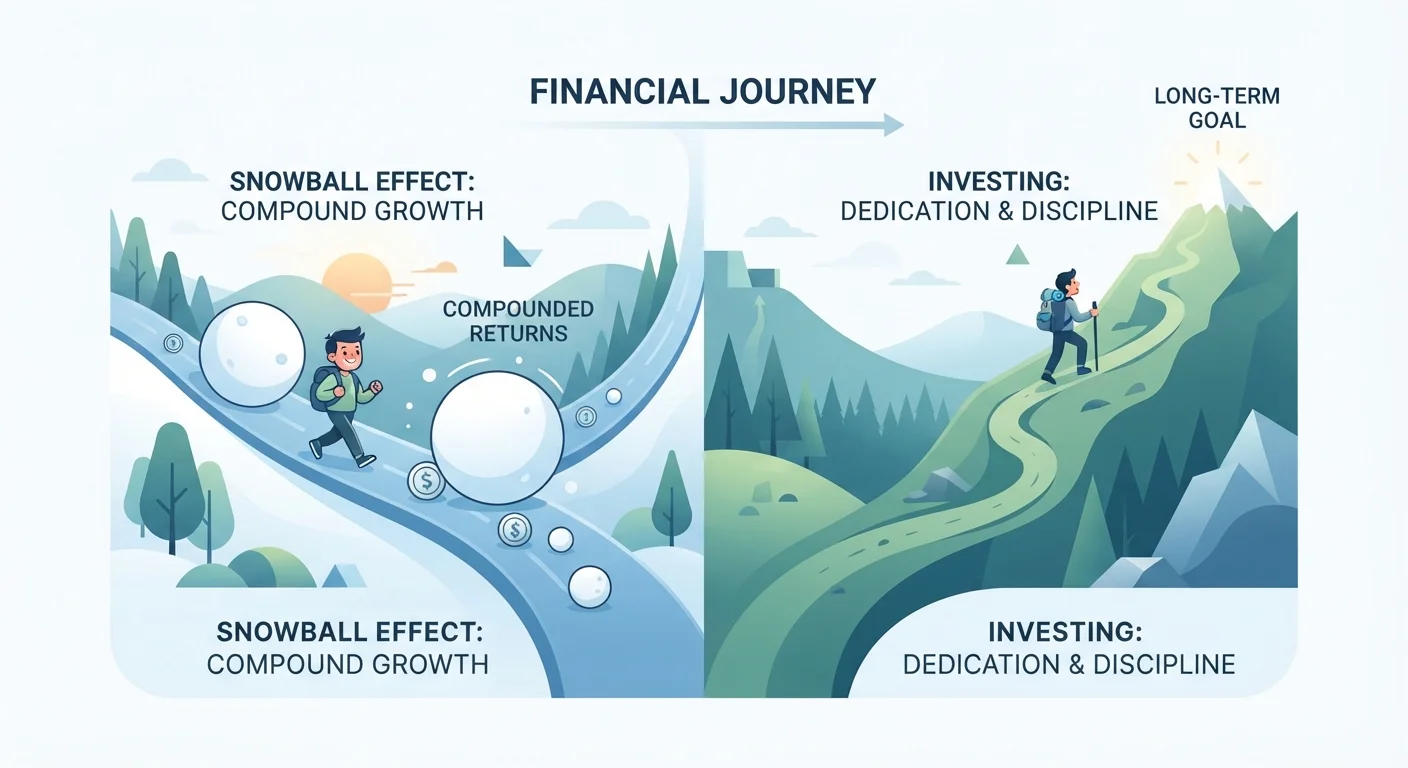
Key Takeaways
- The debt avalanche targets the highest-interest debt first, minimizing total interest paid over time.
- The debt snowball pays off the smallest balances first, delivering faster emotional wins.
- Research suggests behavior and consistency matter as much as mathematical efficiency in debt payoff.
- Both strategies require making minimum payments on all other debts while concentrating extra funds on one.
- Your financial personality and motivation style should heavily influence which method you choose.
- Neither strategy is universally superior - the best one is the one you will actually stick with.
Option A
Debt Avalanche
The mathematically optimal, interest-minimizing approach.
Best for: People who stay motivated by long-term savings and are comfortable delaying early wins.
Option B
Debt Snowball
The psychologically rewarding, momentum-building method.
Best for: People who need quick wins to stay on track and find motivation through visible progress.
If you want to minimize total interest paid
Debt Avalanche
Targeting high-interest debt first reduces the overall cost of your debt, saving you money over the full repayment period.
If you need early victories to stay motivated
Debt Snowball
Clearing smaller balances quickly creates a sense of progress that helps many people sustain their payoff effort over months or years.
If your highest-interest debt also has the smallest balance
Debt Avalanche
In this scenario, both strategies converge - you get math efficiency and a quick win simultaneously.
If you have a history of abandoning financial plans
Debt Snowball
The psychological reinforcement of paid-off accounts can help break past patterns and build the habit of consistent payoff behavior.
If you are managing high-rate credit card debt alongside lower-rate loans
Debt Avalanche
Credit card interest rates are often significantly higher than other debt, making avalanche targeting particularly effective at reducing total cost.
How Each Strategy Works
Both the debt avalanche and debt snowball share a common foundation: you make minimum payments on all your debts each month, then direct any extra money toward one specific account. The difference is which account gets that focus.
Debt Avalanche: You rank your debts by interest rate - highest to lowest - and attack the top of the list first. Once that debt is eliminated, you roll its payment into the next highest-rate balance, and so on. This approach directly reduces how much interest accrues over time.
Debt Snowball: You rank debts by outstanding balance - smallest to largest - regardless of interest rate. Paying off the smallest balance first frees up a payment quickly, which then gets added to the next account. The psychological effect is a growing sense of momentum.
Before comparing them, it helps to understand concepts like APR and how interest compounds. Our plain-language debt glossary covers these fundamentals.
| Criterion | Debt Avalanche | Debt Snowball |
|---|---|---|
| Payoff order | Highest interest rate first | Smallest balance first |
| Total interest paid | Generally lower | Potentially higher |
| Time to first payoff | Longer (if high-rate debt is large) | Faster early wins |
| Psychological reward | Delayed but financially significant | Frequent and motivating |
| Best for | Disciplined, numbers-focused planners | Motivation-driven, behavioral planners |
| Complexity | Low - sort by APR | Low - sort by balance |
| Flexibility to combine | Yes - can blend methods | Yes - can blend methods |
The Math vs. The Mind: What the Evidence Suggests
Purely on a numbers basis, the avalanche method wins. By eliminating high-interest debt first, you reduce the rate at which interest compounds against you, meaning more of each future payment goes toward principal. The real-world difference can range from modest to substantial depending on your interest rate spread and balances.
However, personal finance research - including work published in the Journal of Consumer Research - has found that many people make faster overall progress using the snowball method, because they stay engaged. Seeing a $0 balance on a closed account is a tangible signal of success that keeps behavior on track.
$6,500+
Average American credit card balance
According to Federal Reserve data, the average credit card balance carried by U.S. households has remained above $6,000 in recent years, underscoring the stakes of choosing an efficient payoff strategy.
20%+
Typical credit card APR range
The Federal Reserve has reported average credit card interest rates above 20% in recent periods, making high-rate debt particularly costly to carry long-term.
Higher adherence
Snowball method completion rate
Research cited in the Journal of Consumer Research found that focusing on paying off individual accounts - rather than reducing total debt - was associated with greater repayment persistence.
The implication: mathematical efficiency is only valuable if you follow through. A plan that's slightly less optimal on paper but consistently executed will outperform a theoretically perfect plan that gets abandoned. Our piece on common debt payoff mistakes explores the behavioral pitfalls that derail even well-intentioned plans.
It's also worth noting that the two strategies can be blended. Some people use the snowball to eliminate one or two small accounts quickly - clearing mental clutter - then switch to avalanche order for the remaining balances.
Practical Considerations Before You Choose
A few real-world factors should shape your decision beyond which method sounds better in theory:
- Interest rate spread: If all your debts carry similar rates, the avalanche's mathematical advantage shrinks. Snowball order may be nearly equivalent in cost while offering stronger motivation.
- Balance distribution: If your smallest debt also happens to carry the highest interest rate, both methods point to the same account - choose it without hesitation.
- Income stability: If your cash flow is unpredictable, the snowball's quick wins can provide flexibility - fewer active accounts means fewer minimum payments to track.
- Windfall planning: Tax refunds, bonuses, or other lump sums can accelerate either strategy. See our guide on handling lump-sum windfalls for a decision framework.
It's also worth examining beliefs that may be holding you back. Our article busting common debt myths addresses misconceptions - like assuming minimum payments are an acceptable long-term strategy - that can quietly extend your repayment timeline by years.
This article is for general informational and educational purposes only and does not constitute personalized financial or legal advice. Consult a qualified financial professional regarding your specific situation.