

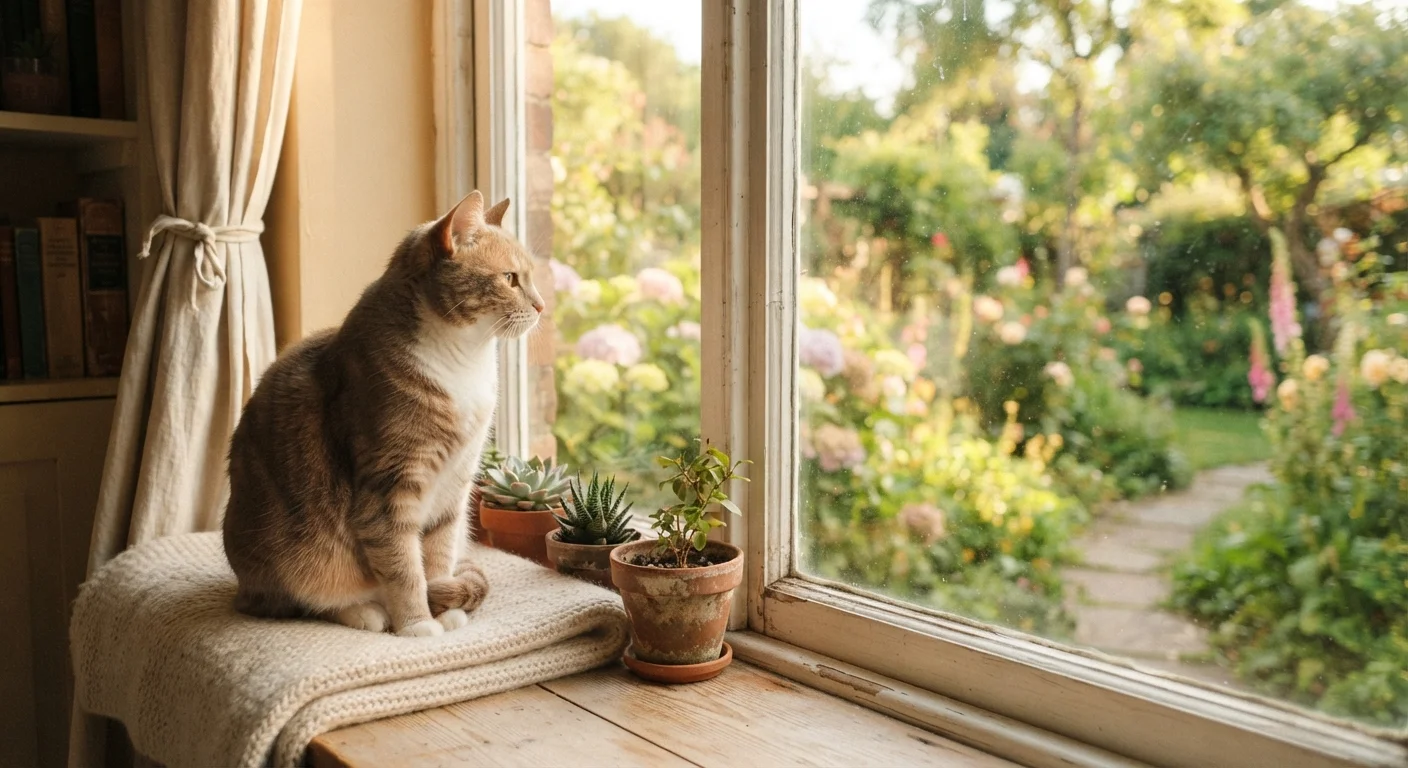
Key Takeaways
- Indoor cats live significantly longer on average than cats with outdoor access.
- Outdoor access exposes cats to traffic, predators, parasites, and infectious diseases.
- Indoor cats are at higher risk for obesity and stress-related behavioral issues without proper enrichment.
- A supervised outdoor compromise - such as a catio or leash walks - can balance safety and stimulation.
- Regular veterinary care is essential regardless of whether your cat lives indoors or outdoors.
Option A
Indoor Cats
The controlled, lower-risk environment.
Best for: Owners in urban or suburban areas who want to minimize injury, disease exposure, and predation risks.
Option B
Outdoor Cats
The stimulation-rich, higher-exposure lifestyle.
Best for: Cats in rural settings with supervised access, where enrichment and territorial roaming are prioritized.
If you live in a busy urban or suburban neighborhood
Indoor Cats
Traffic, roaming dogs, and dense human activity make outdoor access significantly more dangerous in high-density areas.
If your cat shows signs of stress, restlessness, or boredom indoors
Outdoor Cats
Supervised outdoor exposure or a structured catio can relieve behavioral tension while limiting the most serious hazards.
If long-term health and lifespan are your primary concern
Indoor Cats
Research consistently shows indoor-only cats live longer, with fewer injuries and lower rates of infectious disease.
If you live in a rural area with low traffic and access to safe outdoor space
Outdoor Cats
In lower-risk environments, supervised outdoor time can support natural behaviors without the same urban hazards.
Lifespan and Physical Health: What the Data Shows
One of the most consistent findings in feline research is the lifespan gap between indoor and outdoor cats. Studies and veterinary organizations, including the American Veterinary Medical Association, have noted that indoor cats generally live significantly longer - with many sources citing average lifespans of 12-18 years indoors, compared to estimates as low as 2-5 years for free-roaming outdoor cats, though the latter figure depends heavily on environment and access to care.
Outdoor cats face a cluster of physical hazards: vehicle strikes, predation by dogs or wildlife, territorial fights with other cats, and exposure to toxins such as pesticides or antifreeze. They also carry a higher risk of contracting infectious diseases including feline leukemia virus (FeLV) and feline immunodeficiency virus (FIV), both of which spread through bite wounds and close contact.
| Criterion | Indoor Cats | Outdoor Cats |
|---|---|---|
| Average lifespan | 12-18 years | 2-5 years (free-roaming) |
| Injury risk | Low | High (traffic, predators, fights) |
| Infectious disease exposure | Low | Higher (FeLV, FIV, etc.) |
| Parasite burden | Lower | Higher (fleas, ticks, worms) |
| Obesity risk | Higher without enrichment | Lower with active roaming |
| Behavioral stimulation | Requires active enrichment | Naturally higher |
| Environmental hazard exposure | Minimal | Toxins, extreme weather |
Parasites are another key differentiator. Fleas, ticks, intestinal worms, and ear mites are substantially more common in cats with outdoor access. While preventive treatments exist, outdoor cats require more rigorous and consistent parasite management than their indoor counterparts.
Behavioral and Mental Wellbeing: The Indoor Trade-Off
Indoor living removes physical dangers, but it introduces a different set of challenges - particularly around mental stimulation. Cats are natural predators with strong instincts to hunt, climb, scratch, and explore territory. Without environmental enrichment, indoor cats can develop stress-related behaviors including over-grooming, aggression, inappropriate elimination, and destructive scratching.
Obesity is also a growing concern for indoor cats. Reduced physical activity combined with unrestricted caloric intake contributes to weight gain, which in turn raises the risk of diabetes, joint problems, and urinary tract conditions. Owners of indoor cats need to be intentional about play, feeding schedules, and vertical space. Puzzle feeders, climbing trees, window perches, and regular interactive play sessions are not optional extras - they're part of responsible indoor cat care.
~40%
Indoor cats estimated to be overweight or obese
Veterinary nutritionists have consistently reported that a large proportion of indoor cats in the U.S. carry excess weight, often linked to low activity levels.
2-3×
Higher FIV/FeLV risk for outdoor cats
Cats with outdoor access face substantially greater exposure to feline infectious diseases spread through contact with other cats.
Understanding your cat's behavioral signals matters regardless of lifestyle. See how to read your cat's body language to better interpret signs of stress or contentment. You may also find it useful to explore general pet health guidance to support your cat's overall wellness indoors or out.
Middle-Ground Solutions: Balancing Safety and Enrichment
For many cats and owners, a hybrid approach offers the most practical balance. Catios - enclosed outdoor enclosures attached to a home - allow cats to experience fresh air, natural light, and sensory stimulation without exposure to roaming hazards. Leash and harness walking is another option, though it requires patient training and is better suited to some cats than others.
Supervised outdoor time in a safely fenced yard can provide meaningful enrichment while keeping risk manageable. Whatever approach you choose, seasonal factors matter: outdoor and semi-outdoor cats need additional attention during extreme weather, pest seasons, and holidays when toxins like fireworks residue may be present. Learn more in our guide on keeping pets safe during seasonal changes.
Wellness habits that often go unnoticed - such as adequate mental stimulation and sleep quality - are just as relevant to cats as their living environment. Explore overlooked wellness habits that quietly affect pet longevity for a broader look at how daily routines shape long-term health.
This article is for general informational purposes only and is not a substitute for advice from a licensed veterinarian. Consult your vet to determine the lifestyle and care plan best suited to your individual cat's health, temperament, and circumstances.