

Key Takeaways
- A distraction-free environment is one of the most overlooked factors in successful pet training.
- Having high-value treats pre-portioned before a session prevents fumbling and keeps your pet's focus.
- Short, consistent sessions are more effective than long, infrequent ones for most animals.
- Your own calm, patient mindset directly influences how your pet responds during training.
- Knowing your pet's baseline health and energy level helps you set realistic session expectations.
Summary
18 items · 20-40 minutes
Why Preparation Makes or Breaks a Training Session
Successful pet training rarely happens by pure instinct - it's built on preparation. Before your dog, cat, or other companion animal can learn effectively, you need to be organized, clear-headed, and ready. Scrambling for treats mid-session, working in a noisy environment, or starting when your pet is overtired can undo even the best training technique.
Think of preparation the same way you would before any structured activity. Just as athletes warm up before exercise and students review notes before a study session, pet owners benefit from a clear pre-training routine. The checklist below is designed to walk you through every layer of readiness - your space, your tools, your pet's state, and your own mindset - so that every session starts on the right foot.
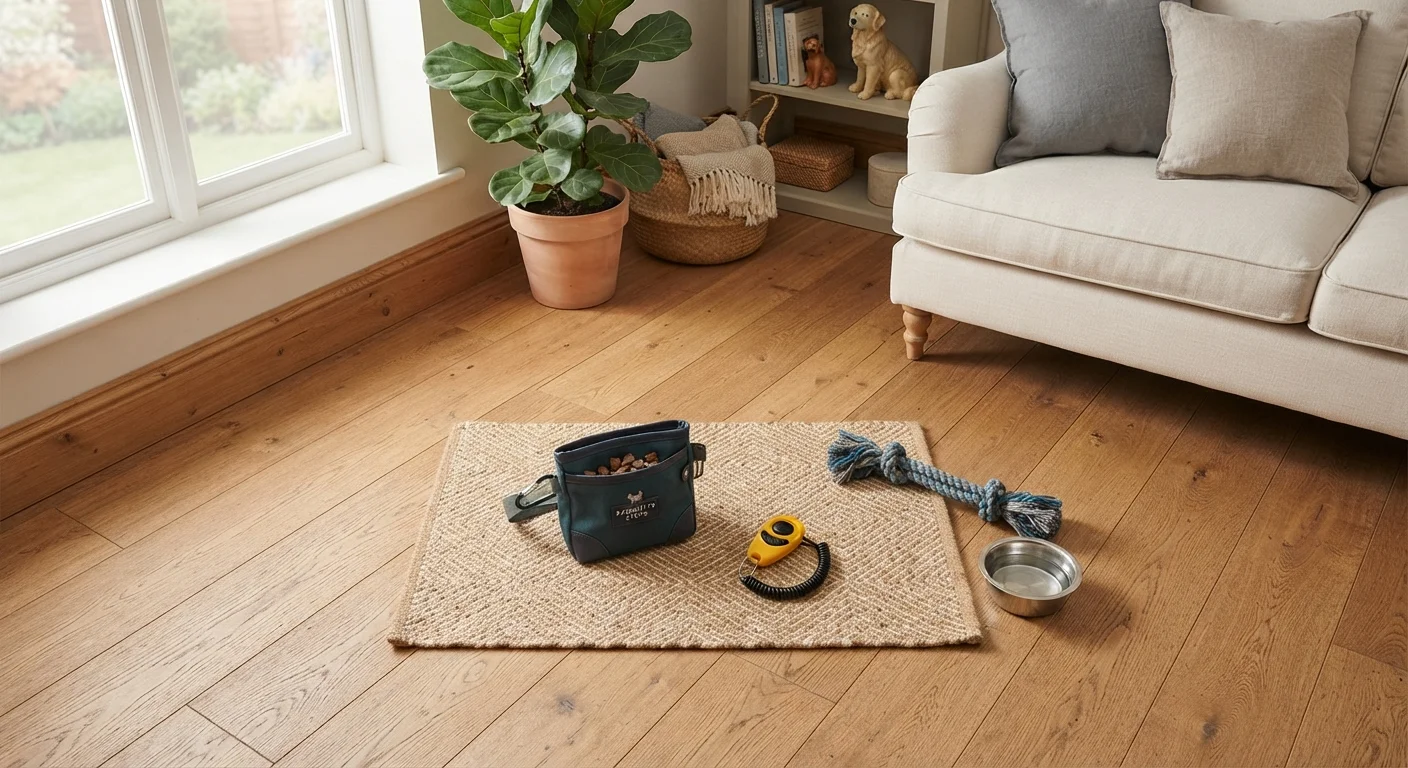
Treat Pouch
Keeps pre-portioned rewards immediately accessible so reward timing stays precise and your pet's attention doesn't wander.
Clicker or Marker Word
Provides a consistent, instant signal that marks the exact moment a correct behavior occurs - foundational for most reward-based training.
Non-Slip Training Mat
Gives your pet a defined station to work from and reduces slipping on smooth surfaces during stationary exercises.
Target Stick
Guides your pet's nose or paw to a specific position without luring with food, useful for shaping more precise movements.
Session Log (notebook or app)
Tracks which behaviors you practiced, the number of repetitions, and your pet's response so you can monitor progress accurately.
Your Pre-Training Checklist
Work through these grouped items before you call your pet over or reach for the leash. They're organized from environment setup through to your own mental readiness.
Environment Setup
Tools and Supplies
Your Pet's Readiness
Your Own Mindset
Never Train Through Pain or Illness
If your pet is showing signs of discomfort - limping, excessive scratching, lethargy, or unusual behavior - a training session should wait. Pushing an unwell or sore animal leads to negative associations with training and can worsen underlying conditions. When in doubt about your pet's health, consult a licensed veterinarian before resuming sessions.
Setting Yourself Up for the Long Term
Preparation isn't a one-time task - it becomes a reliable ritual that signals to your pet that a training session is about to begin. Many experienced trainers note that pets start anticipating and calming themselves simply because they recognize the pre-session routine.
Keep a small dedicated training kit - a pouch, clicker, and a few treat containers - stored in the same spot so setup time shrinks over weeks. Track each session in a simple notebook or phone note: what cue you practiced, how many repetitions, and how your pet responded. This record helps you spot plateaus early and adjust your approach rather than repeating what isn't working.
If you're considering formal instruction to complement your at-home efforts, it's worth thinking carefully about what a training course involves before you commit. The habits you build with preparation here are much the same as those that help learners of any kind succeed - clear goals, consistent environment, and realistic expectations. For general guidance on approaching structured learning thoughtfully, see our pre-enrollment checklist for evaluating any course before committing.
Above all, remember that effective training is a gradual process. Progress may be uneven - two steps forward, one step back is entirely normal. A well-prepared trainer who stays patient and consistent will almost always outperform an unprepared one, regardless of the technique used.