

Key Takeaways
- Positive reinforcement works by adding a reward immediately after a desired behavior to increase its frequency.
- Decades of animal behavior research support reward-based training as both effective and humane.
- Timing and consistency of rewards are critical - even a few seconds of delay can confuse a pet.
- Punishment-based methods carry documented risks including increased fear, aggression, and damaged trust.
- Positive reinforcement applies across species - dogs, cats, birds, and even fish can be trained this way.
- Consulting a certified professional trainer can help owners apply these techniques correctly for their pet's needs.
Positive Reinforcement
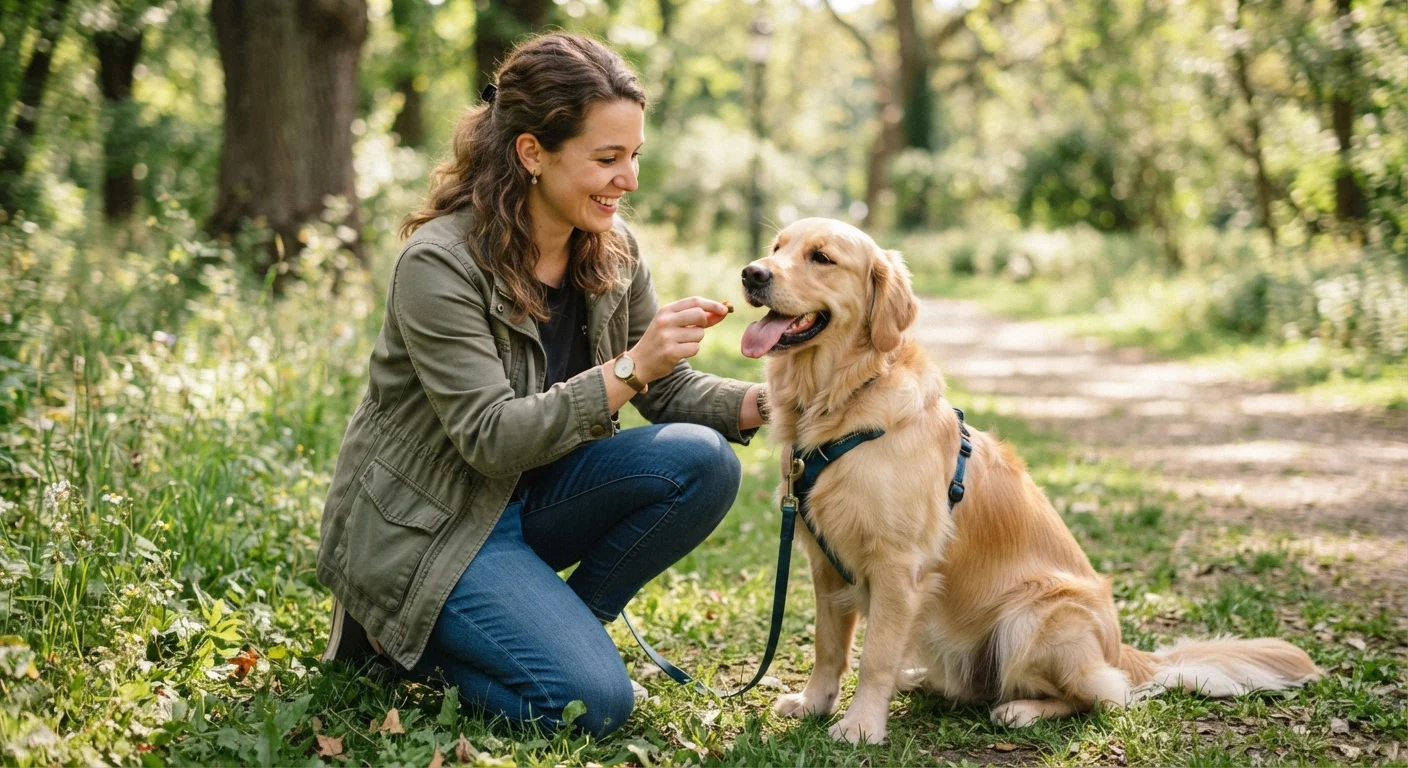
Positive reinforcement is a training method in which a desired behavior is followed immediately by something the animal finds rewarding - such as a treat, praise, or play - making that behavior more likely to occur again. The word 'positive' here means adding something, not that the experience is merely pleasant. This approach is grounded in the science of operant conditioning, a framework for how behavior is shaped by its consequences.
In behavioral science, positive reinforcement is one of four quadrants of operant conditioning, alongside negative reinforcement, positive punishment, and negative punishment. It consistently produces the most reliable behavior change with the fewest negative side effects across species.
The Scientific Foundation Behind Reward-Based Training
Positive reinforcement has roots in decades of behavioral science. Psychologist B.F. Skinner's mid-20th-century operant conditioning research demonstrated that behavior is reliably shaped by its consequences - a principle that applies across mammals, birds, and other animals. When a behavior is immediately followed by something rewarding, the brain reinforces that neural pathway, making the behavior more likely to repeat.
Modern animal behavior research has built substantially on this foundation. Studies comparing reward-based and aversive training methods - including those published in peer-reviewed journals such as Applied Animal Behaviour Science - have consistently found that animals trained with positive reinforcement show fewer signs of stress, perform more reliably in novel environments, and are easier to handle during veterinary visits. The evidence does not suggest that punishment is never effective at suppressing behavior, but it does show that the costs often outweigh short-term gains. For a closer look at those costs, see how punishment-based training affects dogs behaviorally and emotionally.
“The data are quite clear that aversive training methods are associated with increased anxiety and aggression in dogs, while reward-based methods produce reliable behavior without those costs. There is no scientific justification for using pain or fear as training tools.”
— American Veterinary Society of Animal Behavior, Professional organization representing veterinarians specializing in animal behavior
Why Timing and Consistency Are Everything
The most common reason positive reinforcement doesn't produce the results owners expect is flawed delivery - not a flaw in the method itself. The reward must arrive within one to two seconds of the desired behavior for the pet to connect cause and effect. A treat delivered five seconds late may inadvertently reinforce whatever the animal was doing at that moment, not the sit or stay the owner intended.
Consistency matters equally. If a behavior is rewarded sometimes but ignored or corrected at other times, the pet receives conflicting information. This is distinct from intentional variable reinforcement schedules, which are applied deliberately to maintain already-learned behaviors. In the learning phase, clear and consistent feedback accelerates progress.
Use a Marker to Improve Precision
A short, distinct sound - either a clicker or a consistent word like 'yes' - delivered at the exact moment a correct behavior occurs dramatically improves how quickly pets learn. The marker bridges the gap between the behavior and the reward, so the pet knows precisely what it did to earn the treat. Practice your timing with simple behaviors like a sit before moving to more complex cues.
Reward value also deserves attention. A dry kibble may work fine in a distraction-free living room but lose its appeal entirely in a busy park. Skilled trainers adjust reinforcer value to match the difficulty of what they're asking - a practice sometimes called 'paying the going rate' for a behavior.
How Positive Reinforcement Applies Across Species
While most training conversations center on dogs, reward-based methods are not species-specific. Marine mammal trainers have used positive reinforcement for decades - dolphins, sea lions, and orcas in research and zoological settings are all trained without the use of force or aversives. Parrot owners routinely use clicker training to teach complex behaviors. Even cats, long considered untrainable, respond measurably to consistent reward-based sessions.
The underlying mechanism is the same across species: behavior followed by reward becomes more frequent. What changes is the type of reward, the length of sessions, and the pace of training. Cats, for instance, typically benefit from sessions lasting just two to five minutes. Birds may respond to praise and social interaction as much as to food.
Understanding how stress and anxiety can masquerade as disobedience is equally important. A pet that appears unmotivated or disruptive may be overwhelmed. Our overview of how pets experience stress and what helps provides useful context for recognizing when a training environment needs adjustment before progress can happen.
Putting It Into Practice
Translating the science into daily training sessions comes down to a few practical commitments. First, identify what your individual pet finds genuinely rewarding - this varies considerably and is worth experimenting with. Second, keep sessions short and end on a success; five minutes of focused, rewarding interaction builds more skill than a frustrated thirty-minute session. Third, break behaviors into small, achievable steps rather than waiting for the complete finished behavior before rewarding.
For real-world application, loose-leash walking and what consistent progress actually requires shows how these principles translate into one of the most commonly struggled-with behaviors among dog owners.
73%
Dogs showing aggression linked to aversive training
A study published in Applied Animal Behaviour Science found that dogs trained with aversive methods were significantly more likely to show aggression compared to those trained with reward-based methods.
2-5 min
Ideal training session length for cats
Animal behavior practitioners and veterinary behaviorists commonly recommend sessions of two to five minutes for cats to maintain engagement and avoid frustration.
1-2 sec
Maximum effective reward delivery window
Behavioral science research indicates that rewards must arrive within approximately one to two seconds of a behavior for the animal to reliably associate the two events.
If you're uncertain whether your technique is correct, consulting a certified professional trainer - such as those credentialed through the Certification Council for Professional Dog Trainers (CCPDT) or the International Association of Animal Behavior Consultants (IAABC) - can make a significant difference. These organizations require trainers to demonstrate both knowledge and humane, evidence-based methodology.
This article provides general educational information about animal training methods and is not a substitute for guidance from a qualified animal behavior professional.