

Key Takeaways
- A ryokan is a centuries-old Japanese inn built around hospitality, bathing, and seasonal cuisine.
- Rates typically include dinner and breakfast, making the overall value more comparable to Western hotels than the sticker price suggests.
- Guests sleep on futons laid over tatami floors and are provided a yukata robe for the stay.
- Onsen (hot spring) bathing follows specific etiquette - washing before entering is non-negotiable.
- Tipping is not customary in Japan and is generally considered impolite at a ryokan.
- Booking well in advance is advisable, especially for popular destinations and peak travel seasons.
Start here
What Is a Ryokan?
Next
The Ryokan Room: Tatami, Futons, and Yukata
Then
Onsen Bathing: The Heart of the Ryokan Experience
Also
Kaiseki Dining: What to Expect at the Table
Before you go
Etiquette and Customs Every Guest Should Know
Book it
Planning Your Ryokan Stay: Practical Tips
What Is a Ryokan?
A ryokan (旅館) is a traditional Japanese inn with roots stretching back to the eighth century, when lodging houses served travelers along major road routes. Unlike standard hotels, a ryokan is an immersive cultural experience built around three pillars: omotenashi (wholehearted hospitality), communal hot spring bathing, and meticulously crafted seasonal meals.
Today, ryokan range from historic wooden buildings nestled in mountain villages to sleek modern interpretations in Kyoto's back alleys. What unites them is a philosophy of slowing down - you're not just booking a room, you're stepping into a living expression of Japanese aesthetics and values. If you're weighing this against other lodging types, our guide to accommodation trade-offs can help you decide what's right for your trip.
Ryokan
A traditional Japanese inn offering tatami rooms, communal hot spring baths, and multi-course meals as part of an immersive cultural stay.
Omotenashi
A Japanese concept of wholehearted, anticipatory hospitality - attending to a guest's needs before they're even expressed.
Onsen
A natural hot spring bath, typically rich in minerals. Soaking in onsen is a central ritual of the ryokan experience.
Kaiseki
A traditional Japanese multi-course cuisine that highlights seasonal ingredients, careful preparation, and beautiful presentation.
Tatami
Woven rush-grass floor mats used throughout traditional Japanese rooms - the foundation of ryokan room design.
Yukata
A casual, lightweight cotton robe provided by the ryokan for guests to wear throughout the property during their stay.
The Ryokan Room: Tatami, Futons, and Yukata
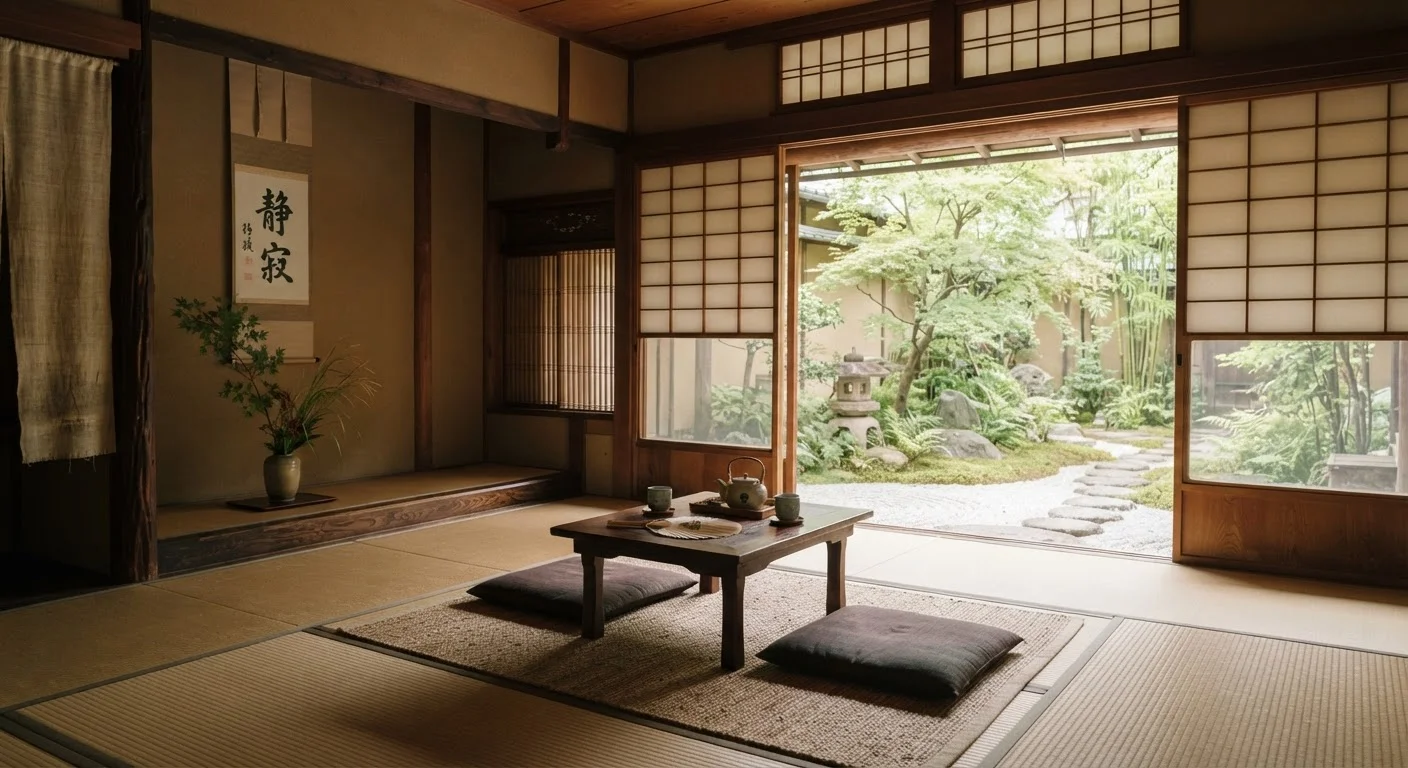
Step into a traditional ryokan room and you'll immediately notice what's absent: beds, chairs, and Western furniture. The floor is covered in tatami - woven rush-grass mats that define the room's size (measured in tatami units) and lend the space its characteristic earthy scent.
Rather than a fixed bed, staff lay out a futon directly on the tatami each evening and fold it away each morning. This transformation of the living space is a hallmark of ryokan culture. You'll also find a yukata - a lightweight cotton robe - waiting for you, which guests wear throughout the inn, to dinner, and to the baths.
Most rooms include a low table, cushions, a tokonoma (an alcove displaying seasonal art or flowers), and a window framing a carefully designed garden view. Minimalism here is intentional, not an oversight.
Onsen Bathing: The Heart of the Ryokan Experience
Japan's volcanic geography blesses the country with thousands of natural hot springs - onsen - and many ryokan are built directly above them. Soaking in mineral-rich waters is central to the ryokan experience, not an optional amenity.
Communal baths are typically gender-separated, though some properties offer private baths (kashikiri) that couples or families can reserve. The protocol is consistent everywhere: shower and scrub thoroughly before entering the shared bath. Soap and shampoo never enter the onsen pool itself. Most baths are au naturel - swimwear is not worn.
Book a Private Onsen Bath First
If you're new to communal bathing or traveling as a couple, ask your ryokan about reserving a private onsen (kashikiri) for a set time slot. Many properties offer this at no extra charge or a modest fee. It's a great way to enjoy the onsen experience at your own pace before venturing into the shared baths.
Guests with tattoos should check individual onsen policies before booking, as many traditional establishments maintain restrictions. Some properties have shifted their approach in recent years, but it's worth confirming in advance.
Kaiseki Dining: What to Expect at the Table
Kaiseki is a multi-course Japanese cuisine tradition that emphasizes seasonal ingredients, precise technique, and visual artistry. At a ryokan, both dinner and breakfast are usually included in your room rate and served either in a communal dining room or - at higher-end properties - in your private room.
Dinner typically unfolds across eight to twelve courses, each portion small and deliberate. You might encounter delicate sashimi, a warming soup, grilled river fish, simmered vegetables, and steamed rice, all arranged with painter's attention to detail. Breakfast is typically traditional Japanese style: miso soup, pickles, grilled fish, rice, and egg dishes.
Dietary restrictions are increasingly accommodated but should be communicated clearly at the time of booking - don't wait until arrival. Vegetarian and vegan options exist at many ryokan, though availability varies significantly.
Etiquette and Customs Every Guest Should Know
A few customs go a long way toward a respectful, enjoyable stay:
- Remove shoes at the entrance. You'll be given indoor slippers. Separate toilet slippers are provided at bathroom doors - swap them out, then back again.
- Do not tip. Tipping is not part of Japanese hospitality culture and can cause genuine discomfort. Exceptional service is simply the standard expectation.
- Keep noise levels low, particularly in corridors and near the onsen. Ryokan often have a contemplative atmosphere that guests collectively maintain.
- Meal times are structured. Dinner and breakfast happen within set windows - confirm your preferred times at check-in and plan your day accordingly.
- Respect communal spaces. Leave onsen areas, lounges, and dining rooms as you found them.
First-time visitors sometimes feel anxious about getting customs exactly right. Most ryokan staff are genuinely understanding of international guests navigating new territory - curiosity and politeness go further than perfection.
Planning Your Ryokan Stay: Practical Tips
Ryokan are found throughout Japan, though some of the most celebrated concentrations appear in Kyoto, Hakone, the Izu Peninsula, and the hot spring towns of Tohoku and Kyushu. Each region offers distinct local character - mountain springs, coastal views, or forested valleys.
Booking in advance is strongly advisable. Highly regarded ryokan fill up months ahead, especially during cherry blossom season (late March-April) and autumn foliage season (October-November). Many properties require a minimum two-night stay.
Rates are generally quoted per person, not per room, and include dinner and breakfast. Factor this into cost comparisons with standard hotels - the all-in value often surprises travelers. Consider which season, region, and level of formality suit your travel style before committing. Rural mountain ryokan deliver deep tranquility; urban options in Kyoto offer convenience alongside tradition.
Japan Tourism Agency (Official)
Japan's national tourism authority publishes destination guides, regional travel tips, and practical visitor information for international travelers planning a trip.
U.S. Department of State - Japan Travel Advisory
The official source for up-to-date entry requirements, safety advisories, and consular information for Americans traveling to Japan. Always verify before booking.
Ryokan-Specific Booking Platforms
Several travel booking platforms specialize in filtering ryokan by region, budget, and English-language support - useful for finding properties well-prepared for international guests.
Finally, verify all entry requirements, health considerations, and travel advisories through official government sources - the U.S. Department of State and the Japan Tourism Agency publish up-to-date guidance for American travelers.