
New Orleans Beyond Bourbon Street: What the City's Distinct Neighborhoods Actually Offer

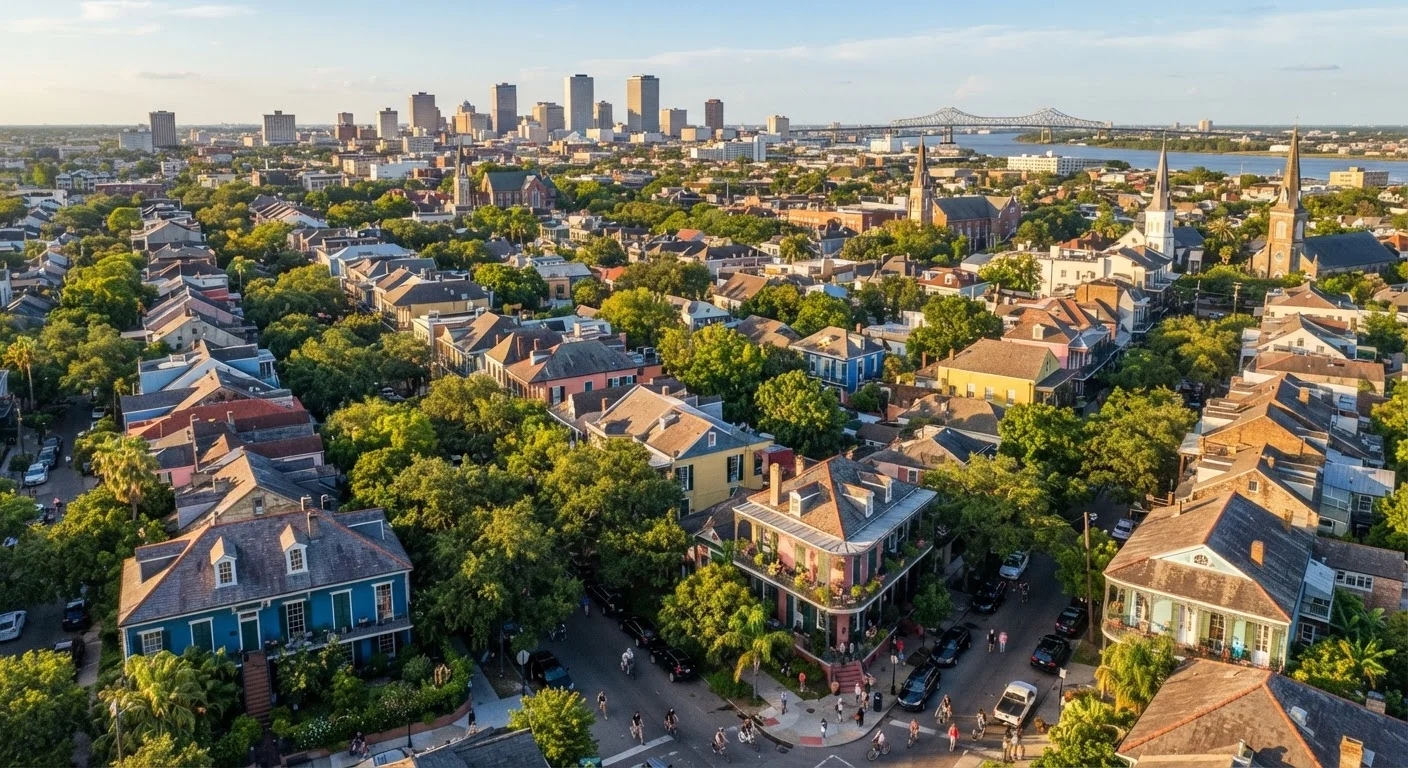
Key Takeaways
- Each New Orleans neighborhood has its own architectural identity, cultural history, and distinct local rhythm.
- The Tremé is widely recognized as one of the oldest African American neighborhoods in the United States.
- Bywater and Marigny attract visitors with live music, independent eateries, and a thriving creative community.
- The Garden District offers some of the South's most photographed antebellum mansions and oak-canopied streets.
- Walking or cycling is often the most rewarding way to absorb the texture of each neighborhood.
- Many of New Orleans' most memorable experiences are free or low-cost, found outside the tourist corridors.
Why the Neighborhoods Are the Real Story
Bourbon Street is loud, it's colorful, and it's exactly what it promises to be. But most seasoned travelers to New Orleans will tell you the same thing: the city's true character lives in the blocks beyond the French Quarter's perimeter. Each neighborhood reads like its own chapter - distinct architecture, a different cultural lineage, its own relationship with music, food, and time itself.
New Orleans is one of the few American cities where geography and history are so tightly braided that simply turning a corner can feel like entering a different world. Whether you have two days or two weeks, understanding the neighborhoods as distinct destinations - rather than scenery between bars - will transform what you take home from the trip.
Verify Conditions Before You Go
New Orleans neighborhoods are dynamic - businesses open and close, festival schedules shift, and some streets can flood after heavy rain. Always confirm hours, accessibility, and any local advisories through official city tourism resources or neighborhood-specific community sites before building your itinerary around a specific spot.
Below are five neighborhoods that consistently reward curious visitors. Conditions, events, and local businesses evolve constantly, so verify current hours and access before you go, and always check city or tourism resources for the latest neighborhood updates.
The Garden District: Grand Scale and Living History
Developed in the mid-19th century by wealthy American merchants who settled upriver from the Creole French Quarter, the Garden District is a showcase of antebellum excess done with genuine architectural ambition. Greek Revival and Italianate mansions sit behind magnolia trees and cast-iron fences on streets like Prytania and Coliseum.
Commander's Palace, the Lafayette Cemetery No. 1, and the steady rhythm of the St. Charles streetcar are the neighborhood's anchors. The cemetery - a walled, above-ground burial site dating to the 1830s - is open to visitors and is one of the more atmospheric places in a city that has no shortage of them. Wander the oak-canopied blocks in the late afternoon when the light is low and the foot traffic is quiet.
The Garden District's antebellum mansions and walled cemeteries offer a window into 19th-century New Orleans few tourists slow down to absorb.
Tremé: The Birthplace of American Jazz Culture
Just north of the French Quarter, Tremé (often spelled Treme) holds a claim few neighborhoods in the country can match: it is widely regarded as the oldest continuously inhabited African American neighborhood in the United States. The cultural output from this small stretch of New Orleans - jazz, second-line parades, Mardi Gras Indian traditions - has shaped American music and street culture in ways that are still unfolding.
Congo Square, now part of Louis Armstrong Park, is where enslaved Africans gathered on Sundays to maintain musical and cultural traditions that became foundational to jazz. The Backstreet Cultural Museum, a community institution dedicated to Mardi Gras Indian suits and second-line culture, is essential context for understanding why these traditions matter. Check current hours before visiting, as community museums often operate on limited schedules.
Congo Square, where enslaved Africans once gathered to preserve their traditions, is the spiritual origin point of American jazz.
Faubourg Marigny: Music, Color, and a Relaxed Pace
Immediately downriver from the French Quarter, the Marigny (pronounced MAIR-ih-nee) has long been a haven for artists, musicians, and residents who want the proximity of the Quarter without the noise floor. The neighborhood's signature street, Frenchmen Street, is where working musicians perform nightly in clubs that range from a few dozen seats to standing-room crowds spilling onto the sidewalk.
Unlike Bourbon Street, Frenchmen Street has historically drawn a more local audience - though its popularity with visitors has grown considerably. The Marigny's residential blocks are filled with brightly painted Creole cottage and shotgun house architecture, many with lush front stoops and container gardens that give the neighborhood a lived-in warmth. It's an excellent neighborhood to walk at dusk, before the music venues reach full swing.
Frenchmen Street offers nightly live music in an atmosphere that still leans local, making it one of the most authentic music experiences in the city.
Bywater: The Creative Edge of the City
Further downriver from the Marigny, Bywater has evolved over the past two decades into one of New Orleans' most creatively charged addresses. It's a neighborhood of murals, converted warehouses, independent coffee shops, and a density of working artists that gives the streets an energy distinct from the more tourist-trafficked areas upriver.
Crescent Park, a riverfront green space accessible from Bywater, offers some of the most quietly spectacular views of the Mississippi in the city - and a place to sit on a bench and watch the river traffic without any commercial pressure. The neighborhood's food scene skews creative and independent, with a range of spots that reflect both the city's culinary traditions and newer influences. It's the kind of neighborhood where the most interesting meal might be in an unmarked building with a short handwritten menu.
Bywater's combination of riverfront park views, murals, and independent food spots makes it the neighborhood most likely to surprise first-time visitors.
Mid-City: Everyday New Orleans Without the Performance
Mid-City doesn't show up in travel brochures as often as the neighborhoods closer to the river, but that's a large part of its appeal. This is where many working New Orleanians actually live, shop, and eat - and where you'll find local institutions that have been feeding the city for generations without catering to a tourist audience.
City Park, one of the largest urban parks in the country, anchors the northern edge of Mid-City. Its oak trees are among the oldest in the South, and the park contains a fine arts museum, botanical garden, and a network of lagoons that make it genuinely worth a few hours. The New Orleans City Park Botanical Garden is free on certain days - verify current admission policies through the park's official resources. Bayou St. John, which borders part of Mid-City, is a lovely stretch for walking and watching the city move at its own pace.
City Park's ancient oaks and bayou-side paths offer a calm, unhurried version of New Orleans that most visitors never find.
Make the Most of Your Neighborhood Exploration
New Orleans is a walkable city in places and a cycling city almost everywhere else. The Crescent Park trail, the St. Charles streetcar line, and the many bike-share options connect neighborhoods without requiring a car - which is genuinely helpful given how challenging parking can be. Plan at least a half-day per neighborhood if you want to move at a pace that lets you absorb the details: the ironwork patterns on a Marigny fence, the ghost signs on a Tremé building, the scale of a Garden District home behind its garden wall.
Support the Neighborhoods You Visit
Spending at locally owned restaurants, music venues, and shops has a more direct economic impact on the communities that sustain these neighborhoods. Many of New Orleans' cultural traditions depend on the residents who maintain them - your visit is more meaningful when it contributes to that ecosystem rather than extracting from it.
Eating and drinking locally is one of the most direct ways to support the communities that make these neighborhoods what they are. Prioritize spots that have been part of the fabric for years - corner grocery stores, neighborhood lunch counters, jazz bars where the musicians are regulars rather than touring acts.
New Orleans rewards the spontaneous detour, but it also rewards basic preparation. Street conditions, flooding after rain, and neighborhood event schedules can all shape the experience. A quick look at local publications and community calendars before your visit goes a long way.