
Portugal vs. Spain: Choosing Between Two Iberian Neighbors for Your European Trip

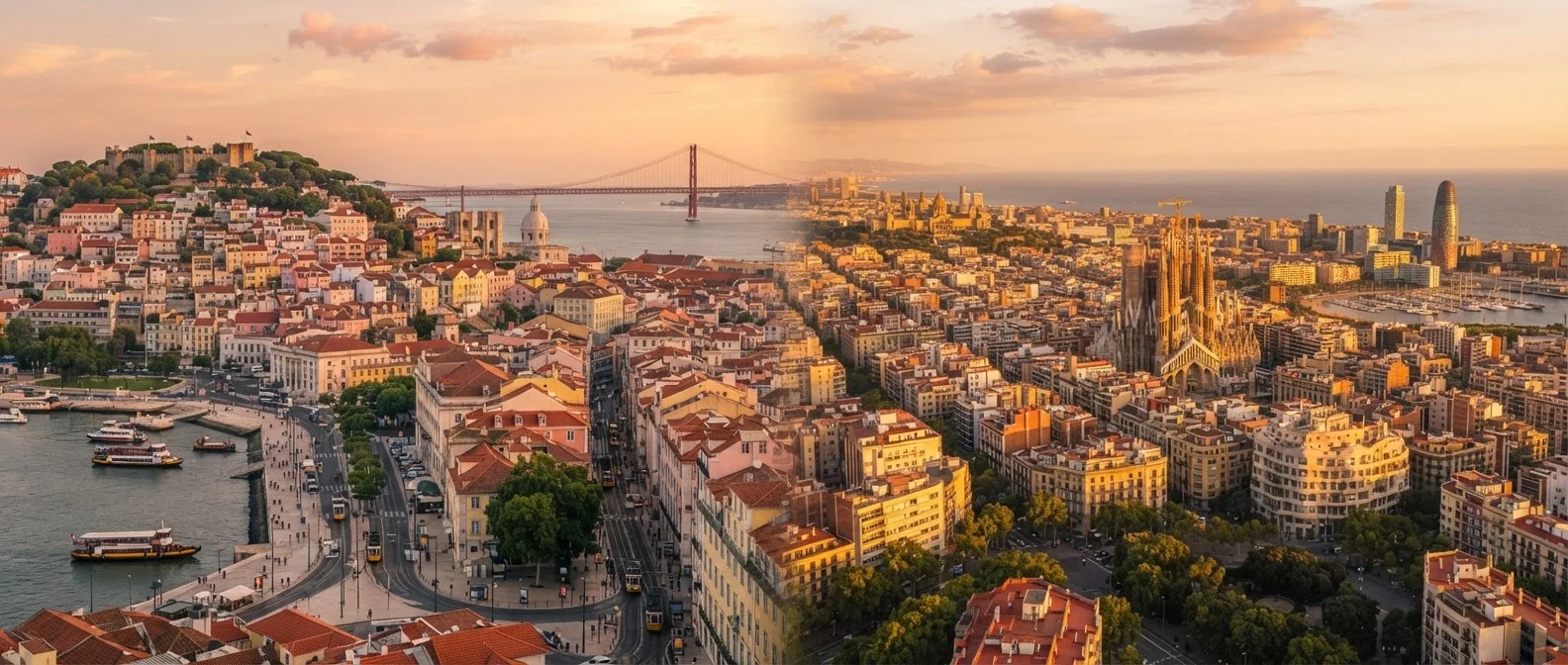
Key Takeaways
- Portugal generally offers a more affordable travel experience than Spain, particularly in accommodation and dining.
- Spain is larger with more regional variety, while Portugal delivers a more concentrated, easier-to-navigate experience.
- Both countries share an Iberian setting but have distinct languages, cuisines, and cultural identities.
- Crowd levels vary significantly by season and city - popular spots in both countries can feel overwhelmed in summer.
- Most US travelers find either destination accessible without a visa for stays under 90 days, but always verify entry requirements before traveling.
Our Verdict
Neither Portugal nor Spain is objectively better - your ideal pick depends on travel style, budget, and what kind of experiences you prioritize. Portugal rewards travelers who want depth over breadth, lower costs, and a quieter atmosphere. Spain suits those chasing regional diversity, vibrant nightlife, and iconic landmarks spread across a wider geography.
| Best for | Recommended |
|---|---|
| Budget-conscious travelers wanting maximum value | Portugal |
| Those who want diverse regions and iconic landmarks in one trip | Spain |
| First-time European visitors wanting an easier, compact itinerary | Portugal |
| Travelers seeking world-class art, architecture, and festival culture | Spain |
Cost: Where Does Your Dollar Stretch Further?
For American travelers watching their budget, Portugal consistently ranks as one of Western Europe's more affordable destinations. A mid-range dinner for two in Lisbon or Porto can run noticeably less than a comparable meal in Madrid or Barcelona. Accommodation in Portugal's major cities also tends to undercut Spanish equivalents at similar quality levels.
Spain's costs vary dramatically by region. Cities like San Sebastián and Barcelona can rival Western European pricing in many categories, while inland destinations like Salamanca or Extremadura feel much gentler on the wallet. Travelers who are flexible about Spanish destinations can find genuine value - but the most-visited cities command premium prices, especially in high season.
Transportation within each country is also worth factoring in. Spain's high-speed rail network (AVE) is excellent but priced accordingly. Portugal's intercity trains and buses are generally more affordable, and the country's compact size means you rarely need to cover enormous distances.
| Portugal | Spain | |
|---|---|---|
| Overall Cost Level | Lower - among W. Europe's more affordable | Moderate - varies widely by region |
| Country Size | Compact, easy to cover in one trip | Large - regional variety requires more time |
| Crowd Levels | Growing but generally less congested | High in major cities and peak season |
| Culinary Style | Seafood-forward, hearty, unpretentious | Regionally diverse, globally acclaimed |
| Language | Portuguese (distinct from Spanish) | Spanish + regional languages (Catalan, Basque) |
| Transport Network | Affordable trains and buses | Excellent high-speed rail, higher fares |
| Cultural Variety | Unified national character | Strong regional identities throughout |
Culture, Language, and Atmosphere
Despite sharing a peninsula, Portugal and Spain feel like genuinely distinct countries. Portuguese culture carries a reflective, melancholic undertone captured in fado music - the soulful, UNESCO-recognized song tradition you'll hear echoing through Lisbon's Alfama district. The pace of life tends to be relaxed, and even the capital retains a neighborhood intimacy that larger European cities often lose.
Spain's cultural character shifts considerably depending on where you are. Catalonia, the Basque Country, Andalusia, and Castile each have their own regional identities, languages or dialects, festivals, and culinary traditions. This internal diversity is one of Spain's greatest strengths as a destination - but it also means a single visit can barely scratch the surface.
English proficiency is solid in tourist areas of both countries, though making an effort with a few phrases in Portuguese or Spanish is always appreciated by locals.
Consider Combining Both Countries
If your schedule allows two or more weeks, a combined Iberian itinerary is genuinely practical. The Lisbon-to-Madrid overnight train or a short budget flight connects the two capitals easily. Starting in Lisbon, crossing into southern Spain, and exiting through Barcelona is a well-worn route that lets you sample both cultures without doubling back. Verify current rail schedules and entry requirements with official sources before booking.
Crowds, Accessibility, and Seasonal Considerations
Both countries have wrestled with overtourism in their most iconic spots. Barcelona, Seville, and the Alhambra in Granada can feel overwhelmed in July and August. Lisbon and the Algarve coast have similarly seen visitor numbers surge in recent years, putting pressure on neighborhoods and pushing up prices in peak periods.
Shoulder seasons - April through early June and September through October - tend to offer a better balance of pleasant weather and manageable crowds in both countries. Winter travel is underrated in southern Spain (Andalusia stays mild) and in Lisbon, where rain is possible but temperatures remain gentle.
Portugal's smaller scale makes it logistically simpler to navigate in a single trip. You can reasonably visit Lisbon, Porto, and the Algarve within ten to twelve days without feeling rushed. Covering Spain's highlights in the same timeframe requires tough choices - the country is nearly seventeen times the size of Portugal.
92,212 km²
Total area of Portugal
Spain, at roughly 505,990 km², is more than five times larger - a meaningful factor when planning how much ground you can realistically cover.
Top 5
Portugal's global tourism competitiveness rank
The World Economic Forum's Travel & Tourism Competitiveness Index has placed Portugal among Europe's top-performing destinations for value and visitor experience.
Food, Wine, and the Culinary Case for Each
Both countries offer outstanding food cultures, but they're quite different in character. Portuguese cuisine leans on seafood, salt cod (bacalhau), hearty soups, and egg-based pastries like the famous pastel de nata. Wine drinkers will find exceptional value in Portuguese table wines and the unique fortified wines of the Douro Valley.
Spain's culinary landscape is broader and more regionally variable. Pintxos in the Basque Country, paella in Valencia, jamón ibérico across Castile, and the avant-garde restaurant scene in multiple cities give food-focused travelers an enormous range to explore. Sherry from Jerez and Rioja wines are globally recognized, but Spain's wine map runs far deeper than its best-known labels.
For travelers whose itineraries are built around dining experiences, Spain offers a wider range of styles and price points. For those who want consistently excellent, unpretentious food without necessarily chasing Michelin stars, Portugal often surprises and satisfies.