
Thailand's Islands: A Reference Guide to the Major Ones and Their Personalities

| Number of islands | Over 1,400 (approximately 400 inhabited) (Tourism Authority of Thailand) |
| Two main coastlines | Gulf of Thailand (east) and Andaman Sea (west) |
| Largest island | Phuket (~576 sq km) |
| Peak travel season (Andaman) | November through April |
| Peak travel season (Gulf) | January through August (varies by sub-region) |
| Main entry airport for US travelers | Bangkok Suvarnabhumi (BKK) |
How Thailand's Islands Break Down
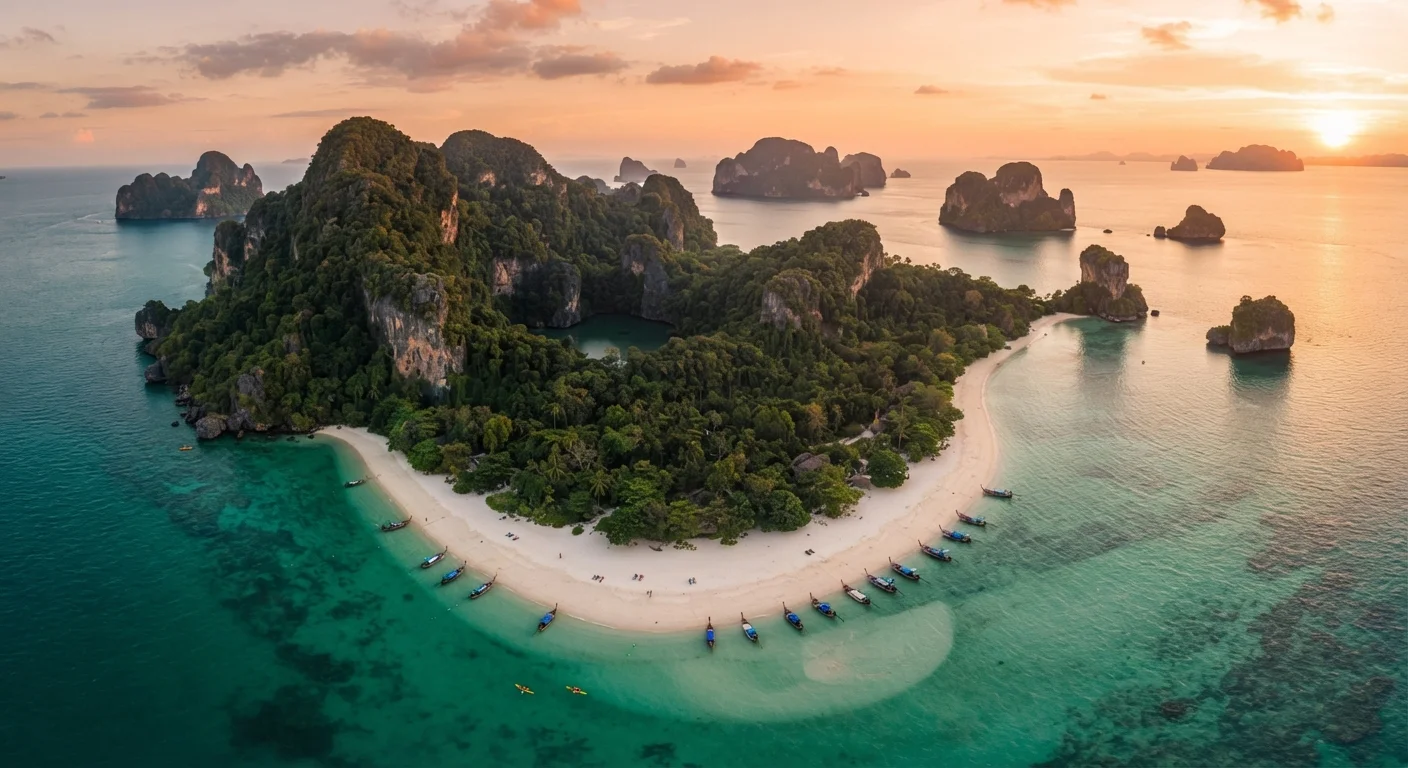
Thailand's islands fall along two very different coastlines. The Gulf of Thailand coast - home to Koh Samui, Koh Phangan, and Koh Tao - tends to have calmer seas and a distinct wet season from October through December. The Andaman Sea coast - where Phuket, Koh Lanta, and the Phi Phi Islands sit - gets rougher swells during monsoon season (roughly May through October) but rewards visitors with that iconic turquoise-and-limestone scenery.
Understanding this geography matters for trip planning. Monsoon timing is offset between the two coasts, which means savvy travelers can sometimes sidestep the worst weather by choosing their coast carefully. Always verify current conditions and seasonal advisories before booking.
| Number of islands | Over 1,400 (approximately 400 inhabited) (Tourism Authority of Thailand) |
| Two main coastlines | Gulf of Thailand (east) and Andaman Sea (west) |
| Largest island | Phuket (~576 sq km) |
| Peak travel season (Andaman) | November through April |
| Peak travel season (Gulf) | January through August (varies by sub-region) |
| Main entry airport for US travelers | Bangkok Suvarnabhumi (BKK) |
Island-by-Island Reference
Here's an honest personality sketch of each major island to help you match your travel style to the right destination.
Phuket
Thailand's largest island is essentially a small province unto itself - connected to the mainland by bridge, packed with international airports, resort chains, and a robust nightlife strip in Patong. It suits travelers who want amenities, dining variety, and easy logistics. Quieter pockets exist on the island's west coast away from Patong.
Koh Samui
Samui sits in the Gulf and has grown into a polished resort island with a cosmopolitan edge. Chaweng Beach is the commercial center; Bophut's Fisherman's Village offers a calmer, more boutique atmosphere. Samui has its own airport, making it one of the more accessible Gulf islands for US travelers connecting through Bangkok.
Koh Phangan
Famous for the monthly Full Moon Party on Haad Rin beach, Koh Phangan has historically drawn a younger backpacker crowd - but its northern and western shores have quietly developed into a wellness and yoga retreat destination. Travelers who want to skip the parties can find genuinely tranquil corners here.
Koh Tao
Small, approachable, and one of the most popular places in the world to complete an open-water scuba certification. The island's dive sites offer clear visibility and rich marine life. Nightlife exists but is secondary to the diving culture.
Koh Lanta
Stretched along the Andaman coast south of Krabi, Koh Lanta draws a more low-key, family-friendly crowd. Long Beach (Klong Dao) is gentle and swimmable; the island retains a slower pace than Phuket. It's a strong option for travelers who want Andaman scenery without the crowds.
Koh Phi Phi
The Phi Phi archipelago delivers dramatic scenery - sheer cliffs, impossibly blue bays - but also significant crowds, especially on Phi Phi Don. Day-trippers arrive in waves from Phuket and Krabi. Staying overnight lets you experience the scenery after the crowd boats depart.
Koh
The Thai word for 'island.' You'll see it spelled 'Ko' or 'Koh' interchangeably - both refer to the same geographic feature.
Andaman Sea
The body of water on Thailand's western coast, bordering Myanmar and Malaysia. Known for dramatic limestone karst scenery and strong monsoon swells from May to October.
Gulf of Thailand
The body of water on Thailand's eastern coast. Islands here generally have a different, offset monsoon season compared to the Andaman side.
Full Moon Party
A large monthly beach party held on Koh Phangan's Haad Rin beach around the time of the full moon. It draws thousands of international visitors and is one of the best-known nightlife events in Southeast Asia.
Open-water certification
An entry-level scuba diving qualification that allows divers to dive independently to a recreational depth limit (typically 18 meters / 60 feet). Koh Tao is a globally popular location to complete this course.
Practical Planning Notes for US Travelers
Most Americans fly into Bangkok's Suvarnabhumi Airport (BKK) and then connect via domestic flight, ferry, or a combination. Phuket and Koh Samui have direct domestic flights from Bangkok; most other islands require a ferry leg. Budget meaningful transit time - island-hopping across the two coasts in a single trip means long travel days.
US citizens generally do not need a visa for short tourist stays in Thailand, but entry rules can change. Always confirm current requirements with the Royal Thai Embassy or official US government travel resources before departure. The US State Department's travel advisory page for Thailand is the reliable starting point for safety, health, and entry information.
Health considerations - including recommended vaccinations for Southeast Asia travel - should be discussed with a qualified travel medicine provider well before your departure date. This article provides general destination information only and is not a substitute for professional medical or travel safety advice.
Verify Before You Go
Island ferry schedules in Thailand are highly seasonal and can change on short notice, particularly at the start and end of monsoon season. Some ferry routes between the Gulf and Andaman coasts require overland transfers. Confirm your connections with your accommodation or a current ferry booking platform, and build buffer time into your itinerary.
This article is for general informational purposes only. Entry requirements, ferry schedules, and seasonal conditions can change. Always verify current details with official government sources and your travel provider before booking.