

Key Takeaways
- Exchange rates, local cost of living, and infrastructure together determine how far your dollar actually stretches.
- Southeast Asia, Central America, and parts of Eastern Europe consistently offer strong purchasing power for US travelers.
- Timing your trip around shoulder seasons and understanding local price norms can meaningfully lower daily costs.
- Slow travel - staying longer in fewer places - often reduces per-day spending compared to multi-city itineraries.
- Currency conversion fees and dynamic pricing can quietly erode your budget before you spend a single dollar locally.
Why Purchasing Power Varies So Dramatically
A $100 daily travel budget can feel lavish in one country and barely cover a single night's accommodation in another. The difference isn't luck - it comes down to a combination of factors that travelers can research and plan around before ever booking a flight.
Exchange rates play an obvious role: when the US dollar is strong relative to a destination's currency, your money simply buys more. But exchange rates alone don't tell the whole story. A country can have a favorable exchange rate and still be expensive if local prices for housing, food, and transport are high. What matters is the interplay between the rate and the underlying cost of living at the destination.
Infrastructure also shapes the equation. Destinations with developed tourism infrastructure - reliable local transit, a range of accommodation types, and competitive food markets - tend to give independent travelers more choices at different price points. Conversely, places that lack that infrastructure may force you toward premium options by default. Understanding these dynamics is the foundation of smart budget travel. For a deeper look at how to structure your overall spending plan, see the practical travel budgeting framework that walks through building a real budget from scratch.
Prices Change - Always Verify Before You Travel
Destination cost profiles shift over time due to exchange rate fluctuations, inflation, increased tourism, and changing local economies. The regions described in this article reflect general patterns rather than guaranteed current pricing. Always check recent traveler reports and government travel advisories - including entry requirements, safety conditions, and health recommendations - through official sources before finalizing any plans.
Regions and Factors That Make Your Dollar Go Further
Southeast Asia: Consistently Strong Value
Countries across Southeast Asia - including Vietnam, Thailand, Cambodia, and Indonesia - have long ranked among the highest-value destinations for US travelers. The combination of a relatively strong dollar against local currencies, low local cost of living, and well-developed tourist infrastructure creates an environment where daily budgets stretch remarkably far.
A full meal at a local restaurant in Vietnam or Cambodia can cost under $3. Guesthouse rooms in smaller cities often run $15-$30 per night. Even more resort-oriented destinations like Bali maintain a wide range of accommodation price points. The region's extensive network of buses, ferries, and budget airlines makes multi-country itineraries achievable without renting a car.
In much of Southeast Asia, a $50 daily budget can cover accommodation, meals, and local transport comfortably.
Central America: Value Close to Home
For US travelers who want strong purchasing power without a long-haul flight, Central America offers a compelling alternative. Countries like Guatemala, Nicaragua, and Honduras consistently rank among the more affordable in the Western Hemisphere, with local markets, food stalls, and chicken-bus transit keeping daily costs low for travelers willing to go local.
Guatemala in particular stands out - colonial cities, highland villages, and lakeside towns offer rich cultural experiences at modest price points. Several Central American countries also use the US dollar as official currency or peg their currency to it, which eliminates one layer of conversion complexity. Costa Rica and Belize trend more expensive due to eco-tourism infrastructure and dollar-pegged pricing, but still offer value in rural areas and during shoulder season.
Guatemala and Nicaragua offer rich cultural experiences at some of the lowest daily costs in the Americas for US travelers.
Eastern Europe: History and Value in Equal Measure
Much of Eastern Europe - particularly Poland, Hungary, the Czech Republic, Romania, and the Balkans - offers a compelling mix of history, architecture, food culture, and relatively low costs compared to Western European counterparts. The US dollar often goes meaningfully further in countries that retain their own currencies rather than the euro.
Cities like Kraków, Budapest, and Bucharest offer high-quality accommodation, restaurants, and public transit at prices well below what comparable experiences cost in Paris or Amsterdam. The Balkans - including Albania, North Macedonia, and Serbia - trend even more affordable and remain less saturated with tourism, which typically keeps prices lower. One important note: costs in capitals can differ substantially from smaller cities and rural areas within the same country.
Eastern European capitals like Kraków and Budapest deliver world-class experiences at a fraction of Western European costs.
Mexico and South America: Diverse Value Profiles
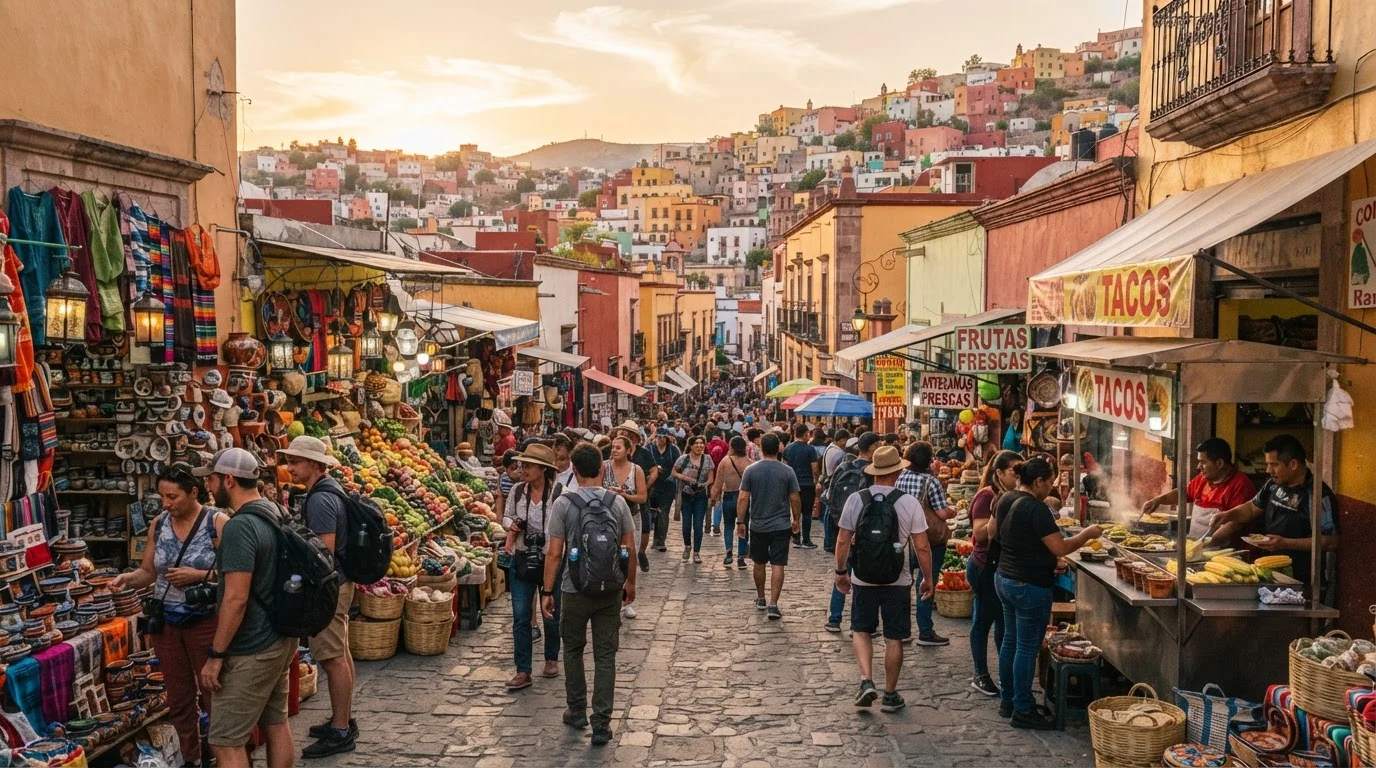
Mexico is one of the most accessible high-value destinations for US travelers - short flight times, no passport required for many US citizens driving to border regions, and a wide range of price environments. Oaxaca, Mérida, and the colonial cities of the interior tend to be significantly more affordable than beach resort corridors like Los Cabos or the Riviera Maya, where pricing often mirrors US tourist expectations.
In South America, Colombia and Peru have emerged as standout value destinations, with strong tourism infrastructure, diverse geography, and daily costs that remain accessible for budget travelers. Argentina's currency situation has historically created purchasing-power complexity - conditions there can shift quickly, so travelers should verify current exchange conditions before planning. International trip planning involves additional layers like entry rules and health requirements that domestic trips don't - worth reviewing before your first cross-border adventure.
Mexico's interior cities often cost a fraction of resort corridors - same country, dramatically different price environments.
Shoulder Season: The Timing Factor That Multiplies Value
Destination choice alone doesn't determine purchasing power - timing does too. Even inherently affordable destinations experience significant price spikes during peak travel periods, when accommodation rates can double or triple and availability shrinks. Traveling during shoulder season - the weeks just before or after peak - often preserves favorable weather while unlocking meaningfully lower prices.
In Southeast Asia, this might mean visiting in April or October rather than December or July. In Southern Europe, late September through October offers warm weather, reduced crowds, and lower hotel rates compared to August. Understanding what off-season actually means for a specific destination helps you interpret travel calendars accurately - because "off-season" in one place might mean monsoons, while in another it simply means fewer tourists and lower prices.
Shoulder season often delivers peak-season conditions at significantly lower prices - timing is a budget lever, not just a preference.
Hidden Costs That Erode Purchasing Power Everywhere
Even in a high-value destination, certain costs quietly eat into your advantage if left unmanaged. Foreign transaction fees charged by credit or debit cards, poor exchange rates at airports and tourist-area exchange booths, and dynamic currency conversion (where a vendor offers to charge you in dollars rather than local currency) can all add up to meaningful losses over the course of a trip.
Budget travelers who've done the hard work of choosing an affordable destination sometimes undermine that advantage through fee-heavy spending habits. Understanding what to watch for - and using financial tools designed for international use - helps preserve the purchasing power you've deliberately sought out. The currencies and fees guide breaks this down in practical terms. It's also worth asking whether loyalty points or cash back make more sense for how you actually spend on travel.
Foreign transaction fees and bad exchange rates can quietly cost more than travelers realize - sometimes negating destination savings entirely.
Research Local Price Norms Before You Go
Before arriving in a new destination, spend time in travel forums and destination-specific communities to understand what locals and experienced travelers actually pay for meals, transit, and accommodation. Knowing a fair local price range helps you recognize tourist pricing and negotiate or navigate accordingly. This pre-trip research often pays for itself many times over during the actual trip.
Making the Most of Wherever You Go
Choosing a high-value destination is only part of the equation. Once you've landed somewhere with favorable purchasing power, a few behavioral habits determine whether that advantage holds through the trip. Eating where locals eat rather than in tourist-facing restaurants, using local public transit over taxis, and avoiding airport currency exchange booths all preserve the gains you've built into your destination choice. To understand how fees and conversion rates can erode your budget, the guide to currencies and exchange rates is worth reading before you leave home.
Timing matters too. Even the most affordable destinations have price spikes during peak season. Shoulder-season planning can mean dramatically lower accommodation rates and fewer crowds, without sacrificing the core experience. Similarly, slow travel - spending a week or more in one place - often cuts per-day costs significantly compared to moving between cities every few days. It's one of the most underused tools in the budget traveler's kit.
None of this requires sacrifice. It requires strategy - which is exactly what budget-conscious travelers are already wired to do.