

Key Takeaways
- Tire rotation, balancing, and alignment are three separate services with different purposes and intervals.
- Rotation evens out tread wear across all four tires, extending overall tire life.
- Balancing eliminates vibration caused by uneven weight distribution in the wheel-tire assembly.
- Alignment corrects the angles at which tires contact the road, protecting handling and tread.
- Skipping any one of these services can accelerate tire wear and lead to costlier repairs.
Our Verdict
Rotation, balancing, and alignment each solve a distinct problem - none is a substitute for the others. Keeping up with all three on their recommended schedules is one of the most cost-effective habits a driver can maintain, protecting both tire investment and vehicle safety.
| Best for | Recommended |
|---|---|
| Drivers wanting to maximize tire lifespan | Regular tire rotation every 5,000-7,500 miles |
| Anyone experiencing steering wheel vibration | Wheel balancing service |
| Drivers who hit a pothole or curb, or notice vehicle pulling | Wheel alignment check |
| All drivers seeking comprehensive tire care | All three services on their recommended intervals |
Three Services, Three Different Jobs
Tire rotation, balancing, and alignment are routinely bundled together in service conversations - and routinely confused with one another. They sound similar, they all involve tires, and shops often recommend them around the same time. But each one addresses a fundamentally different problem, and understanding the distinction helps you make informed decisions about your vehicle's upkeep.
Think of it this way: rotation is about where each tire sits on the vehicle, balancing is about how evenly weight is distributed within the wheel-tire assembly, and alignment is about the angle at which each tire meets the road. Conflating them can leave a real problem undiagnosed. For a broader view of where these services fit into your overall upkeep schedule, see your car's full maintenance schedule explained.
Tire Rotation: Equalizing Wear Across All Four Tires
Front and rear tires wear at different rates. On front-wheel-drive vehicles, the front tires handle both steering and propulsion, so they wear significantly faster. On rear-wheel-drive vehicles, the rear tires bear the brunt of power delivery. Even all-wheel-drive vehicles develop uneven wear patterns due to weight distribution and turning forces.
Rotation moves each tire to a different position - front to rear, side to side, or diagonally depending on the vehicle and tire type - so that wear evens out over time. The result is a set of tires that wears out together rather than two tires failing prematurely.
Typical interval: Most manufacturers recommend rotation every 5,000 to 7,500 miles, though checking your owner's manual is always the most reliable guide. Many drivers align rotations with oil changes for convenience.
What happens if you skip it: Uneven wear shortens the life of your most-stressed tires considerably. You may end up replacing two tires much sooner than the other two - or even buying a full new set before the tread life on all four is exhausted. As noted in our article on why skipping routine maintenance costs more, small deferrals frequently result in disproportionately large expenses.
Bundle Rotation With Oil Changes
Many drivers align tire rotations with oil changes - typically every 5,000 to 7,500 miles - so the interval is easy to remember and the visit to the shop is more efficient. Ask your service advisor whether your rotation interval matches your oil change schedule based on your specific vehicle and driving habits.
Wheel Balancing: Smoothing Out Vibration
Even a brand-new tire and wheel assembly isn't perfectly uniform in weight. Small variations in rubber thickness, valve stem position, and wheel manufacturing tolerances create slight imbalances. When that assembly spins at highway speeds, those imbalances produce vibration - felt most noticeably through the steering wheel or seat at certain speeds.
Balancing involves mounting the wheel-tire assembly on a machine that spins it and identifies heavy spots. A technician then attaches small lead or zinc weights to the wheel rim to counteract those spots, bringing the assembly into balance.
Typical interval: Balancing is recommended every 12,000 to 15,000 miles, whenever a new tire is installed, or any time you notice unexplained vibration. It's also worth checking after a significant pothole impact.
What happens if you skip it: Persistent imbalance accelerates wear on tires, suspension components, and wheel bearings. The vibration that feels like a minor annoyance can quietly shorten the life of steering and suspension parts - turning a low-cost balance job into a much more expensive repair. See how neglected maintenance leads to larger repairs for a broader look at this pattern.
Wheel Alignment: Correcting the Angles
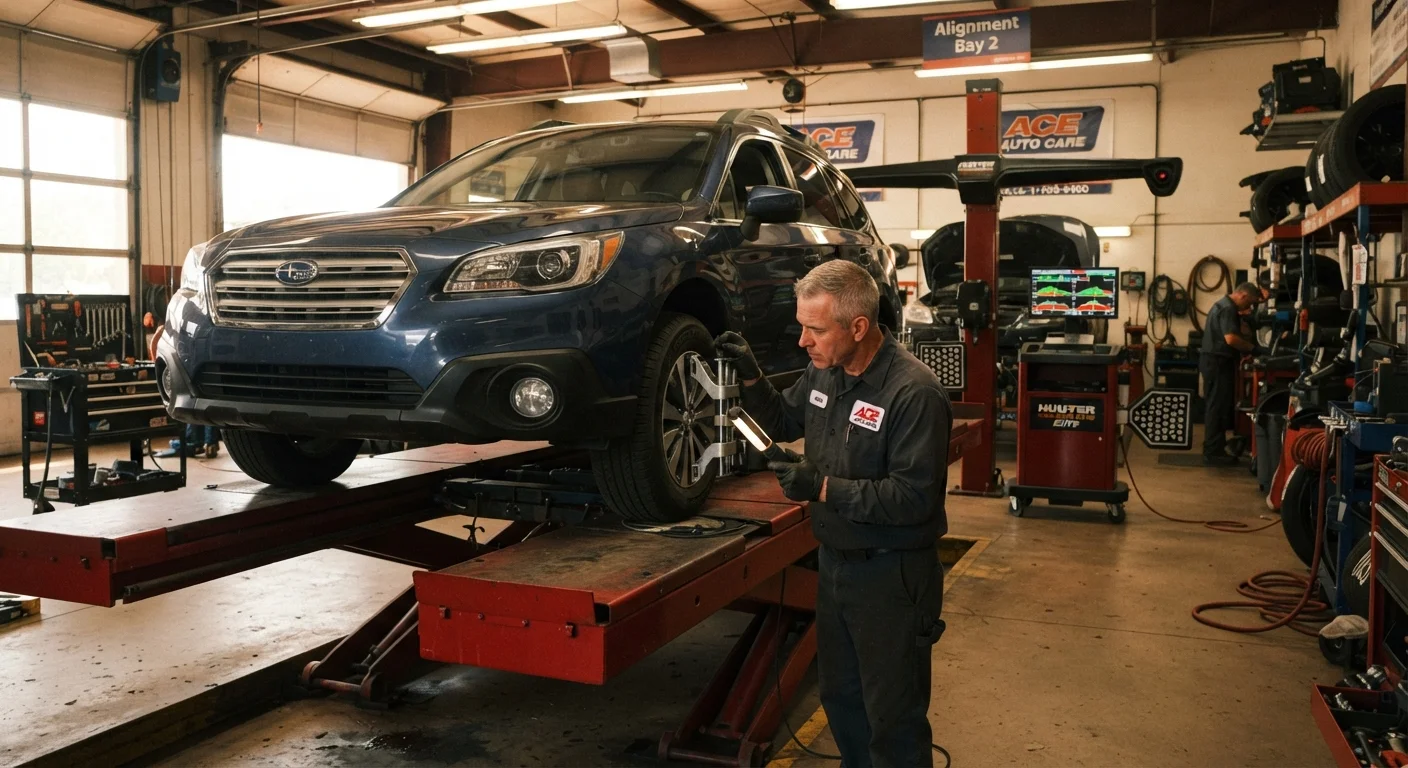
Alignment refers to the geometric angles at which your tires contact the road - primarily camber (the inward or outward tilt of the tire when viewed from the front), toe (whether tires point slightly inward or outward when viewed from above), and caster (the angle of the steering axis). When these angles fall outside manufacturer specifications, tires scrub against the road surface rather than rolling cleanly, creating rapid and uneven tread wear.
Alignment is adjusted using specialized equipment that measures each wheel's angles and allows a technician to make precise corrections to suspension and steering components. It does not involve the tires themselves - it involves the geometry of the suspension system holding them.
Typical interval: Alignment checks are generally recommended once a year or whenever you notice the vehicle pulling to one side, after a significant impact (pothole, curb strike, or minor collision), or when new tires are installed.
What happens if you skip it: Misalignment can wear out a new set of tires in a fraction of their expected lifespan. It also affects handling precision and, in more severe cases, vehicle stability. Driving safety fundamentals always include keeping tires in proper contact with the road.
| Tire Rotation | Wheel Balancing | Wheel Alignment | |
|---|---|---|---|
| What it addresses | Uneven tread wear across positions | Vibration from weight imbalance | Incorrect tire-road contact angles |
| Primary benefit | Extended tire lifespan | Smoother ride, less vibration | Even wear, precise handling |
| Typical interval | Every 5,000-7,500 miles | Every 12,000-15,000 miles | Annually or after impacts |
| Trigger symptoms | One tire wearing faster than others | Steering wheel or seat vibration | Vehicle pulling, rapid tread wear |
| Requires shop equipment | No (DIY possible with proper tools) | Yes (balancing machine required) | Yes (alignment rack required) |
| Risk of skipping | Premature tire replacement | Suspension and bearing wear | Rapid, uneven tire wear |
Putting It All Together
These three services work best as part of a consistent maintenance rhythm rather than as reactive fixes. Rotation is the most frequent task and is easy to bundle with oil changes. Balancing should follow any new tire installation and when vibration appears. Alignment deserves an annual check and an immediate look after any significant road impact.
If you're weighing which of these you can do yourself versus which require shop equipment, the answer is straightforward: rotation is the one service some experienced DIYers tackle with proper jack stands and torque tools, while balancing and alignment require specialized machines that aren't practical for home garages. Our DIY car maintenance vs. shop guide breaks down exactly where the line falls. Together, these three services represent some of the highest-value preventive maintenance a driver can maintain - protecting both tire investment and the suspension components beneath them.