

Key Takeaways
- A brief squeal when brakes are cold or wet is usually harmless and stops quickly.
- Continuous squealing while braking almost always signals that brake pads are worn and need replacement.
- Grinding sounds indicate metal-on-metal contact - a safety issue requiring immediate inspection.
- Pulsing or vibrating during braking often points to warped rotors rather than pad wear.
- Most brake pads include built-in wear indicators designed to squeal when replacement is due.
- Delaying brake repairs typically escalates costs and can compromise stopping ability.
Brake Squeal
Brake squeal is a high-pitched noise produced when your vehicle's braking components vibrate during friction. It can stem from something as minor as morning moisture on the rotors or as serious as worn-out brake pads approaching metal-on-metal contact. Understanding the type and timing of the noise helps you gauge urgency.
Brake noise is technically caused by resonance - vibration frequencies in the rotor, pad, and caliper assembly that produce audible sound waves. Not all resonance indicates damage.
The Built-In Warning System You Shouldn't Ignore
Modern brake pads are engineered with a deliberate safety feature: a small metal tab called a wear indicator. When pad material wears down to roughly 2-3 mm of remaining thickness, this tab makes contact with the rotor and produces a high-pitched squeal. It's not a malfunction - it's a designed alert telling you that service is due.
The key distinction is when the noise occurs. If squealing happens consistently every time you press the brake pedal - especially at moderate or highway speeds - the wear indicator is almost certainly involved. This kind of squeal typically grows louder and more frequent over time, and ignoring it leads to the next stage: grinding.
Don't Wait for Grinding to Act
Once wear-indicator squealing begins, you typically have limited mileage before pads wear through entirely. Scheduling an inspection within one to two weeks of the noise appearing keeps repair costs contained. Grinding sounds are a sign the window has already closed - act immediately.
Grinding is the sound of metal brake pad backing pressing directly against the rotor. At this point, you're no longer just replacing pads - rotors are likely scored and will need resurfacing or full replacement, which can double or triple the repair bill.
Noise That's Usually Nothing to Worry About
Not every squeal signals trouble. Several common, benign causes produce brake noise that resolves on its own:
- Morning moisture: Overnight humidity forms a thin oxide layer on iron rotors. The first one or two brake applications of the day scrape it clear, creating a brief squeal or light grinding that disappears quickly.
- Dust and debris: Fine road grit or brake dust trapped between pad and rotor can cause temporary squealing that clears itself within normal driving.
- Cold temperatures: Pads and rotors contract in cold weather, temporarily changing the resonance characteristics of the braking system.
- New pads breaking in: Freshly installed pads require a bedding period - typically several hundred miles - before they fully conform to the rotor surface.
The reliable test: if noise disappears after a couple of stops and doesn't return during normal driving, it's likely environmental. If it persists or accompanies other symptoms, keep reading.
Semi-Metallic Pads Are Naturally Noisier
If you drive a truck, SUV, or performance vehicle, it may be fitted with semi-metallic brake pads from the factory. These compounds offer strong heat dissipation and durability but produce more noise than ceramic or organic alternatives. Some level of brake noise can be normal for these vehicles, even when pads are in good condition. A technician can confirm which pad type your vehicle uses.
Pulsing, Vibration, and Other Warning Signs
Brake noise isn't the only symptom worth understanding. A pulsing or shuddering sensation through the brake pedal - especially at highway speeds - typically indicates warped rotors. Rotors can warp from repeated hard stops, extreme heat cycles, or improper installation. The rotor's uneven surface causes the pad to make inconsistent contact, creating that rhythmic pulsation you feel through your foot.
A soft or spongy pedal that sinks toward the floor is a different concern entirely - often related to air in the brake lines or low hydraulic fluid - and warrants immediate professional attention. Similarly, if your vehicle pulls to one side while braking, a sticking caliper or uneven pad wear is the likely culprit.
If your dashboard shows a brake warning light alongside any of these symptoms, treat it as urgent. Our guide to dashboard warning lights explains what the brake indicator specifically signals and which lights require you to stop driving immediately.
How to Respond - and What a Brake Inspection Covers
Brake pad thickness is measured in millimeters. Most new pads start at 10-12 mm. Replacement is generally recommended at or before 3 mm - the point where wear indicators begin making contact. A qualified technician will measure pad depth, inspect rotor thickness and surface condition, check caliper operation, and assess brake fluid condition during a standard brake inspection.
~3 mm
Minimum safe brake pad thickness
Most brake manufacturers and automotive safety guidelines recommend replacing pads at or before 3 mm of remaining material.
2-3x
Cost increase from delayed brake repair
Allowing pads to wear completely through to metal-on-metal contact typically requires rotor replacement in addition to pads, multiplying the repair cost.
12,000 mi
Recommended brake inspection interval
Many automotive service guidelines suggest inspecting brake pad wear at every tire rotation or roughly every 12,000 miles, whichever comes first.
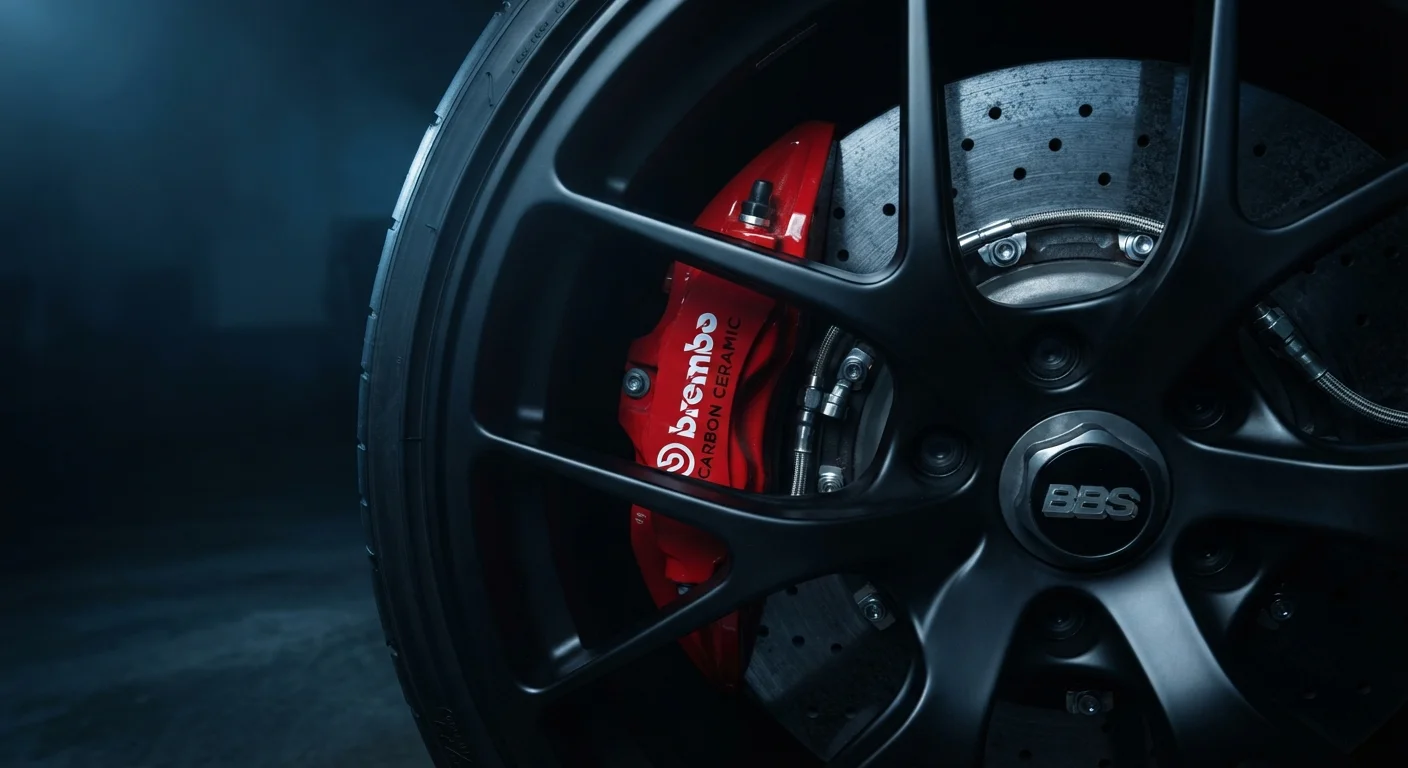
If you're unsure about your brake health, a visual check through the wheel spokes can offer a rough baseline: the pad material should be clearly visible against the rotor. If you can barely see any pad, or if the rotor surface shows deep grooves, schedule an inspection without delay.
Routine brake maintenance - checking pad wear every 12,000 miles or at each tire rotation - is far less expensive than emergency repairs. Most technicians can inspect brakes during a standard service appointment, so there's rarely a reason to let noise go undiagnosed for long.