

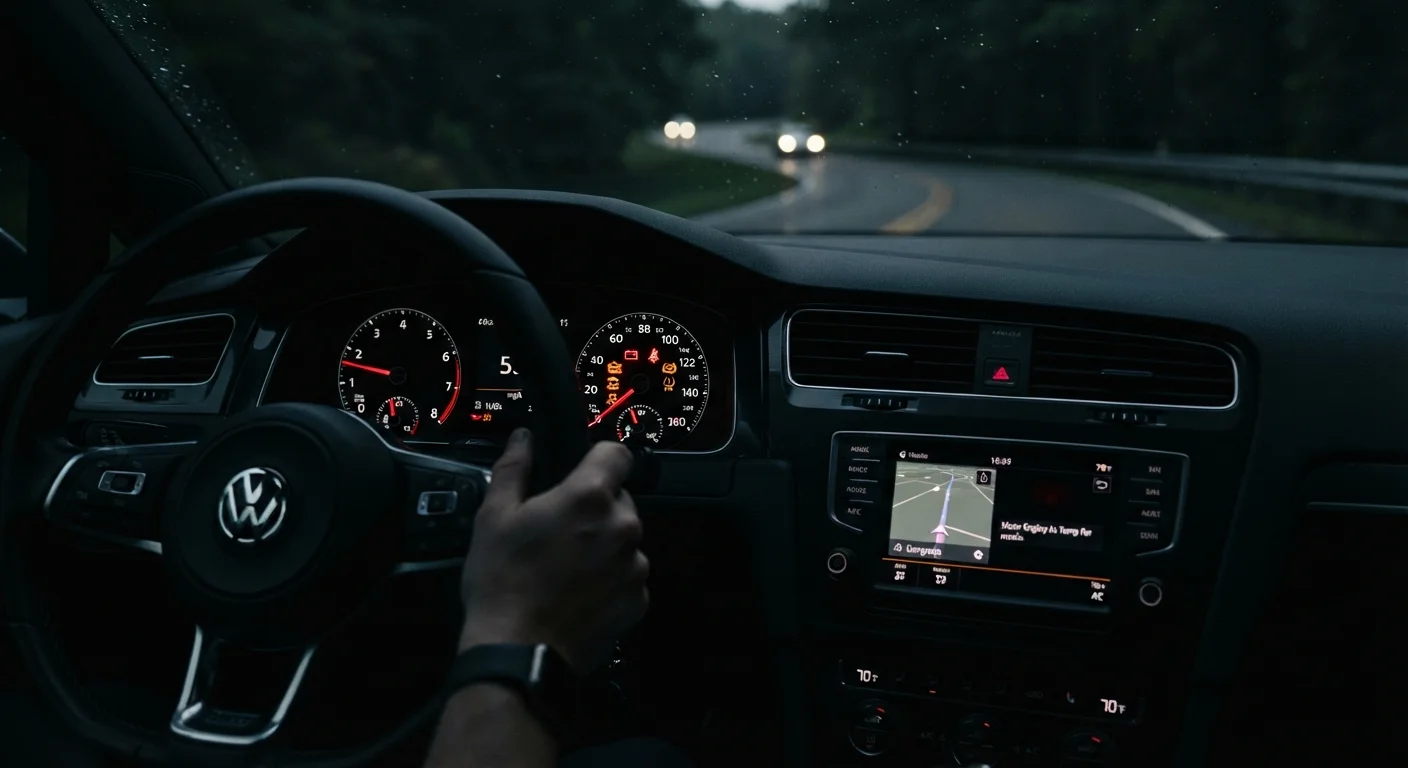
| Warning light colors | Red = immediate action; Amber/Yellow = attention needed soon; Green/Blue = system active |
| OBD-II standard in effect | All U.S. passenger vehicles sold since 1996 (U.S. Environmental Protection Agency) |
| TPMS federal mandate | Required on all new U.S. vehicles from model year 2008 (NHTSA) |
| Safe tire pressure drop threshold | TPMS typically triggers at 25% below recommended PSI (NHTSA) |
| Flashing check engine light | Signals active misfire - reduce speed and seek service promptly |
| Temperature gauge red zone | Pull over safely as soon as possible; continued driving risks engine damage |
How the Color System Works
Modern vehicles use a color-coded warning system to communicate urgency at a glance. Understanding the hierarchy prevents unnecessary panic - and prevents dangerous complacency.
- Red lights signal conditions that require immediate or very prompt attention. Continuing to drive may cause serious mechanical damage or create a safety hazard.
- Amber or yellow lights indicate a system fault or condition that needs attention, typically within a short timeframe rather than right now. You can generally complete a trip safely, but schedule service soon.
- Green and blue lights are informational - headlights on, turn signal active, high beams engaged. They confirm a system is operating, not that something is wrong.
This reference covers the most common lights. For every symbol not listed here, your owner's manual is the authoritative source. See also our maintenance schedule guide for how warning lights connect to your vehicle's broader service intervals.
| Warning light colors | Red = immediate action; Amber/Yellow = attention needed soon; Green/Blue = system active |
| OBD-II standard in effect | All U.S. passenger vehicles sold since 1996 (U.S. Environmental Protection Agency) |
| TPMS federal mandate | Required on all new U.S. vehicles from model year 2008 (NHTSA) |
| Safe tire pressure drop threshold | TPMS typically triggers at 25% below recommended PSI (NHTSA) |
| Flashing check engine light | Signals active misfire - reduce speed and seek service promptly |
| Temperature gauge red zone | Pull over safely as soon as possible; continued driving risks engine damage |
Critical Red Lights: Act Immediately
These lights indicate conditions where continued driving risks engine damage, brake failure, or loss of vehicle control.
Engine Temperature Warning
A thermometer symbol (often with wavy lines) in red means the engine coolant has reached a dangerously high temperature. Pull over safely as soon as possible, turn off the engine, and do not open the radiator cap on a hot engine. Low coolant, a failed water pump, or a broken thermostat are common causes.
Oil Pressure Warning
An oil can icon in red means oil pressure has dropped critically low - not that you need an oil change. Stop driving as soon as it is safe to do so. Running an engine with inadequate oil pressure causes rapid, severe internal damage.
Battery / Charging System
A battery symbol in red indicates the charging system is not maintaining voltage. The vehicle may continue running on battery reserve for a limited time, but electrical systems will begin failing. Head directly to a service location. Our article on car battery lifespan and warning signs covers the early symptoms to watch for before this light appears.
Brake System Warning
A circle with an exclamation mark or the word BRAKE in red can mean the parking brake is engaged (check first), brake fluid is low, or a hydraulic fault exists in the brake system. If the parking brake is released and the light remains on, have it inspected promptly. For related symptoms like noise, see our guide on brake squealing and when it's serious.
Amber Lights: Schedule Service Soon
These lights rarely require you to pull over immediately, but ignoring them typically leads to larger repair bills and, in some cases, secondary safety issues.
Check Engine Light (CEL)
The engine outline or "Check Engine" text is triggered by your vehicle's OBD-II system detecting a fault. A steady light means a non-emergency fault - get a diagnostic scan within a few days. A flashing CEL indicates an active engine misfire that can damage the catalytic converter; reduce speed and seek service promptly. Many auto parts retailers offer free OBD-II code reads as a public service.
Check Engine Light (CEL)
A dashboard indicator triggered by the vehicle's onboard diagnostics (OBD-II) system when it detects a fault in the engine, emissions, or related systems. It does not specify the problem without a diagnostic scan.
OBD-II
On-Board Diagnostics, second generation - a standardized system in virtually all vehicles sold in the U.S. after 1996 that monitors engine and emissions performance and stores fault codes when problems arise.
Malfunction Indicator Lamp (MIL)
The technical name for the check engine light. When it flashes rather than glows steadily, it typically signals a severe misfire that can damage the catalytic converter.
Traction Control System (TCS)
A safety system that reduces wheel spin during acceleration on slippery surfaces by modulating engine power or applying braking to individual wheels.
TPMS
Tire Pressure Monitoring System - a federally mandated feature on U.S. vehicles since model year 2008 that alerts the driver when one or more tires drops significantly below the recommended pressure.
ABS
Anti-lock Braking System - prevents wheel lockup during hard braking so the driver retains steering control. An ABS warning light means this safety function may not operate as designed.
Tire Pressure (TPMS)
An exclamation mark inside a tire cross-section means one or more tires is significantly underinflated. Check all four tires with a gauge and inflate to the pressure listed on your door jamb sticker - not the maximum listed on the tire sidewall. Underinflated tires reduce fuel economy, handling precision, and tire longevity. Before any long drive, verify tire condition as part of a pre-trip vehicle safety check.
ABS Warning Light
The letters ABS in a circle indicate a fault in the anti-lock braking system. Standard braking still functions, but the ABS safety feature that prevents wheel lockup may not activate during emergency stops. Drive cautiously and schedule an inspection.
Traction Control / Stability Control
A car with wavy lines (sometimes labeled ESC or TCS) that illuminates briefly during acceleration on a slippery surface is operating normally. If it stays on continuously, a sensor or system fault may exist - have it scanned.
Your Owner's Manual Is the Definitive Reference
Warning light symbols and their specific meanings can vary between manufacturers and model years. The descriptions in this article reflect common industry conventions, but your vehicle's owner's manual contains the exact definitions for your car. When in doubt, look it up there first - or consult a qualified mechanic.