

Key Takeaways
- Hydroplaning can begin at speeds as low as 35 mph on standing water, even in modern vehicles.
- Your instinct to brake hard during a skid is often the wrong response - smooth, gradual inputs are safer.
- Worn tires dramatically increase hydroplaning risk; tread depth is a critical rain-safety factor.
- Increasing following distance and reducing speed are the two most effective wet-weather adjustments.
- Headlights should be on in rain - not just for visibility, but because many states require it by law.
Hydroplaning
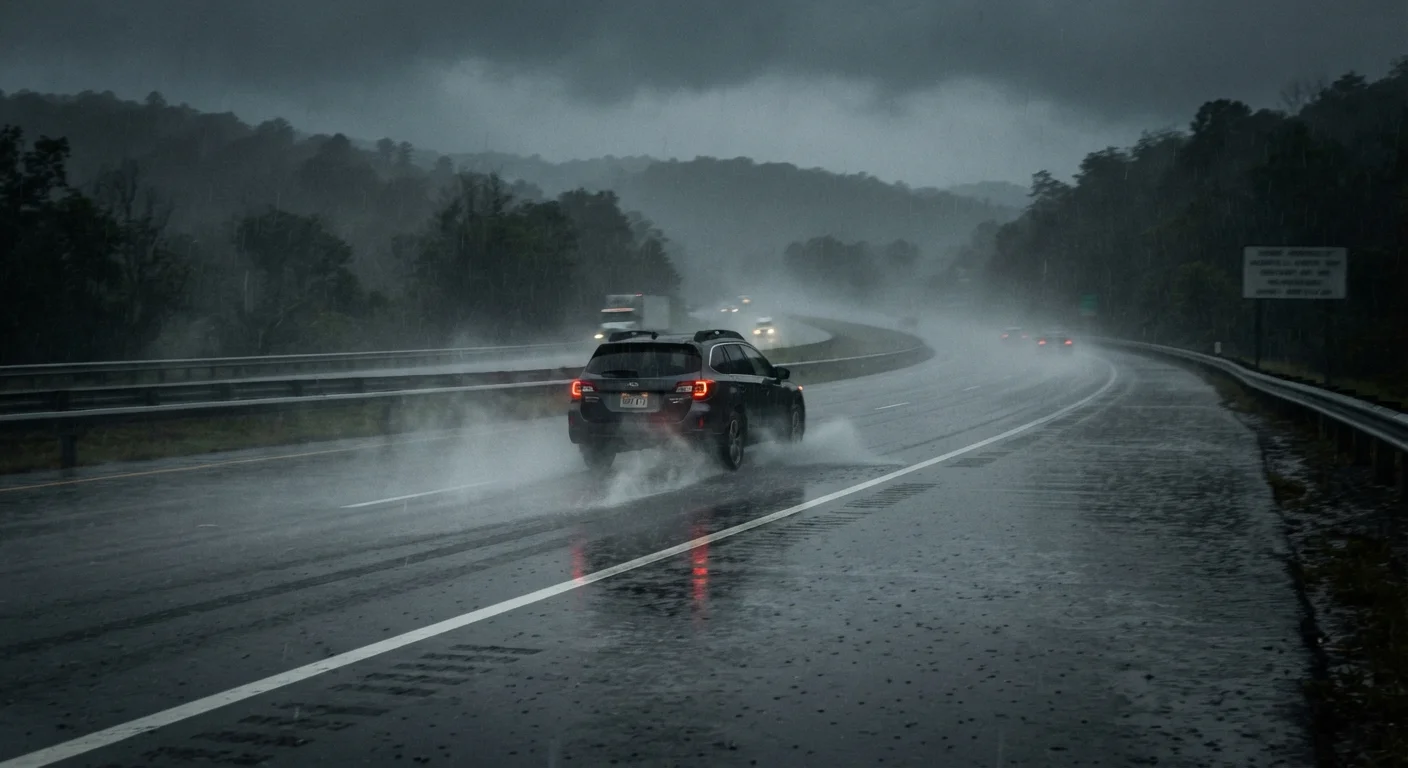
Hydroplaning occurs when a layer of water builds up between a vehicle's tires and the road surface faster than the tires can displace it. At that point, the tires lose direct contact with the pavement, and the driver temporarily loses the ability to steer, brake, or accelerate effectively. It can happen suddenly, even at relatively moderate speeds, and often catches drivers completely off guard.
Hydroplaning risk increases with speed, tire tread depth, and water depth on the road surface. Tires with worn tread have significantly reduced ability to channel water away from the contact patch.
Why Rain Rewrites the Rules of the Road
Driving in rain feels familiar - most drivers have done it hundreds of times. That familiarity is part of the problem. The same road you navigate every day behaves differently when wet, and many of the reflexes drivers have built up over years can actively work against them when conditions change.
Wet pavement reduces friction between tires and road, extending the distance required to stop. Stopping distance increases substantially even in light rain, and in heavy rain with standing water, the physics shift even more dramatically. A driver traveling at highway speed with worn tires on a flooded road section has very little margin for error.
Rain also compounds other hazards. Reduced visibility, glare from headlights on wet asphalt, and the way water collects in low-lying road sections all change the driving environment in ways that demand a conscious, deliberate response - not an automatic one.
~75%
Of weather-related crashes occur on wet pavement
According to the U.S. Department of Transportation Federal Highway Administration, the majority of weather-related crashes involve wet roads rather than snow or ice.
35 mph
Speed at which hydroplaning can begin
Tire and safety research consistently identifies speeds around 35 mph as a threshold where hydroplaning risk becomes significant on roads with standing water.
2x+
Recommended following distance increase in rain
Safety organizations broadly advise at least doubling following distance in wet conditions to account for extended stopping distances on slick surfaces.
The Physics of Hydroplaning - and Why Your Instincts Fail
Hydroplaning is the most misunderstood rain hazard. When water accumulates on the road faster than your tires can displace it, the tire rides up onto a thin film of water and loses contact with the pavement entirely. Steering, braking, and acceleration inputs become largely ineffective until traction is restored.
The instinctive response for most drivers is to hit the brakes. This is typically the wrong move. Hard braking while hydroplaning can lock the wheels, making the skid worse. The correct response is counter-intuitive: ease off the accelerator smoothly, avoid sudden steering inputs, and allow the car to decelerate naturally until the tires regain grip.
This same principle applies to rain-related skids more broadly. Overcorrecting the steering - jerking the wheel - is a reflex that often causes a vehicle to spin rather than recover. Smooth, measured inputs give the vehicle the best chance of stabilizing. Understanding this before you're in the situation is what allows you to override the instinct in the moment.
Cruise control compounds the risk. If hydroplaning begins while cruise control is engaged, the system may attempt to maintain speed by applying power - exactly the opposite of what the situation requires. Disable cruise control any time road conditions are wet.
What Your Tires and Vehicle Can - and Cannot - Do
Modern vehicles come equipped with traction control, anti-lock braking systems (ABS), and in many cases electronic stability control. These systems can help manage skids and loss of traction, but they do not eliminate the laws of physics. No technology currently available can fully compensate for tires that are worn, under-inflated, or simply overwhelmed by the volume of water on the road.
Tire tread depth is the most direct factor drivers can control. The grooves in a tire's tread pattern exist specifically to channel water away from the contact patch - the area where the tire meets the road. As tread wears down, that channeling capacity decreases. At the legal minimum tread depth of 2/32 of an inch, a tire's wet-weather performance is substantially degraded compared to when it was new. Many safety organizations recommend considering replacement at 4/32 of an inch for drivers in climates with frequent rain.
Tire pressure also matters. Under-inflated tires deform more under load, reducing the effectiveness of the tread pattern and increasing the risk of hydroplaning. Checking tire pressure monthly - and before any long trip - is a basic maintenance task with meaningful safety implications. For a broader look at vehicle upkeep that supports safe driving, the Car Maintenance hub covers regular inspection schedules and what to watch for.
Check Tires Before the Rainy Season
A quick tread-depth check takes under a minute: insert a quarter into a tread groove with Washington's head pointing down. If you can see the top of his head, the tread is at or below 4/32 of an inch - a level where wet-weather performance is noticeably reduced. Also verify that all four tires are inflated to the pressure listed on the driver's door jamb, not the maximum printed on the tire sidewall.
Practical Adjustments That Make a Real Difference
The most effective rain-driving strategies are straightforward, but they require drivers to consciously override habits built in dry conditions.
- Reduce speed. Even a modest reduction - 5 to 10 mph below the posted limit in heavy rain - meaningfully reduces hydroplaning risk and extends the time available to react.
- Increase following distance. Double the standard 3-second following gap in wet conditions. Wet stopping distances are longer, and the driver ahead may brake suddenly for a hazard you can't yet see.
- Turn on headlights. Many states legally require headlights when windshield wipers are in use. More importantly, headlights make your vehicle visible to others in reduced visibility - not just help you see ahead.
- Avoid sudden inputs. Accelerating, braking, and steering should all be smoother and more gradual in wet conditions. Abrupt inputs transfer weight suddenly and can unsettle the vehicle.
- Watch for standing water. Water pools in low spots, road seams, and lane edges. Driving through deep standing water at speed is a leading trigger for hydroplaning - and in flash-flood situations, even shallow-looking water can carry serious force.
Rain amplifies the value of defensive driving habits - particularly anticipating what other drivers around you may do. In poor visibility, other drivers are also operating with reduced information. Staying aware of your surroundings and leaving margin for their mistakes is especially important in a downpour. Similarly, the same situational awareness skills that experienced drivers use in ordinary traffic become even more valuable when conditions degrade.