

Key Takeaways
- Skilled drivers scan 12-15 seconds ahead, not just the bumper in front of them.
- Anticipating traffic shifts requires reading driver behavior, not just vehicle position.
- Maintaining proper following distance gives you time to react before hazards escalate.
- Repositioning within your lane can significantly reduce exposure to risky situations.
- Situational awareness degrades sharply when fatigue or distraction is present.
The Gap Between Reactive and Anticipatory Driving
Most drivers operate reactively - they respond to what's happening directly in front of them. Experienced drivers operate anticipatorily - they read what's likely to happen 10 to 15 seconds down the road and adjust before a problem arrives. That gap in approach explains much of the difference in crash rates between novice and seasoned drivers.
Situational awareness in traffic isn't a passive skill. It's an active, continuous process of scanning, interpreting, and positioning. Drivers who do it well are constantly asking: What is this traffic about to do? Understanding that question - and how to answer it - is where safer driving begins.
For a broader look at the mindset behind proactive driving, see our article on defensive driving principles.
Core Situational Awareness Practices Experienced Drivers Use
The following habits are consistently demonstrated by drivers with strong safety records. Each one builds on the next, creating a layered awareness that keeps you ahead of traffic rather than scrambling to catch up.
Scan far ahead, not just the vehicle immediately in front of you.
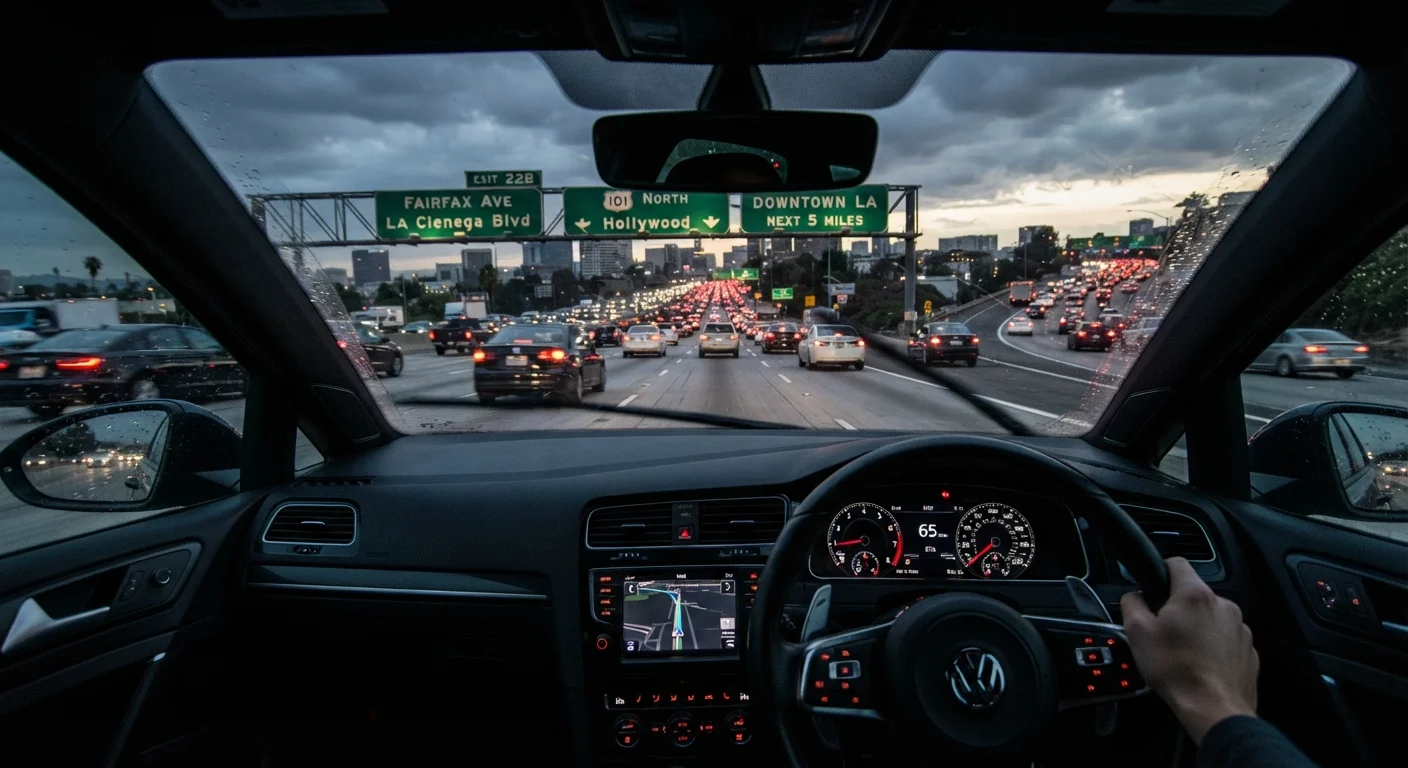
Most rear-end collisions happen because drivers focus on the closest vehicle and have no time to react when traffic ahead compresses suddenly. Scanning 12-15 seconds ahead - roughly a quarter mile at highway speeds - gives your brain time to process brake light patterns, merging vehicles, and lane shifts before they become urgent.
Read driver behavior, not just vehicle position.
Vehicles signal intent through subtle behavioral cues long before turn signals activate. A car drifting toward a lane line, a driver checking mirrors repeatedly, or a truck decelerating without braking - these all communicate likely next moves. Experienced drivers interpret these cues and prepare accordingly.
Maintain a following distance that matches conditions, not just traffic.
The commonly cited three-second following rule is a minimum under ideal conditions. Wet roads, heavy vehicles, reduced visibility, or unfamiliar territory all warrant more space. Adequate following distance is the primary buffer between a close call and a collision.
Choose your lane position deliberately, not by default.
Many drivers simply occupy the center of their lane without thinking about what that position communicates to others or how it limits their escape routes. In heavy traffic, positioning slightly left of center in your lane increases visibility past the vehicle ahead. In construction zones or near large trucks, right-of-center positioning increases clearance from the most common hazards.
Track vehicles in your blind spots and avoid lingering in others'.
Blind spots are not static zones - they shift with speed and lane position. Spending extended time in another driver's blind spot dramatically increases side-impact risk, especially around large commercial trucks whose blind zones extend much farther than those of passenger cars. Pass through blind spots deliberately and quickly, and keep mental note of where nearby vehicles are positioned.
Pre-scan intersections before entering, even on a green light.
Red-light violations and intersection conflicts are among the most common causes of serious crashes. Briefly scanning cross-traffic before proceeding on a green - especially at high-speed intersections - adds a critical half-second of reaction time that can prevent a T-bone collision. Right-of-way rules at intersections are more nuanced than many drivers realize.
Start Applying These Skills Today
You don't need advanced training to begin improving your situational awareness. Small, intentional habit changes - starting on your very next drive - can meaningfully reduce your exposure to preventable incidents.
Situational awareness also degrades under fatigue. If you're feeling drowsy, your scanning narrows, reaction time slows, and anticipation collapses into pure reaction. Recognize the early warning signs of driving fatigue before they compromise your awareness on the road.
These skills are especially valuable in high-complexity environments. If you regularly drive through work zones, our guide on navigating construction zones safely applies many of these same principles to one of the most unpredictable traffic settings.