

Key Takeaways
- Drowsy driving impairs reaction time at levels comparable to a blood-alcohol concentration of 0.08%.
- Many early fatigue signals are behavioral and cognitive, not just physical - making them easy to overlook.
- Pulling off the road and resting is the only reliable countermeasure once genuine drowsiness sets in.
- Night driving and long highway stretches significantly increase fatigue risk for all drivers.
- Caffeine and opening windows provide temporary alertness only - they do not restore safe driving ability.
Why Drowsy Driving Stays Under the Radar
Fatigue behind the wheel is one of the most underreported hazards in American driving. According to the National Highway Traffic Safety Administration (NHTSA), drowsy driving contributes to tens of thousands of crashes annually - and those figures are widely considered an undercount, since fatigue is difficult to confirm at a crash scene the way alcohol is.
Part of the problem is perception. Most drivers believe they'll know when they're too tired to drive safely. Research suggests the opposite: as fatigue deepens, the brain's ability to accurately assess its own impairment declines. That's the insidious nature of drowsiness - it erodes judgment before it announces itself clearly.
The warning signs are real, but they tend to be subtle at first. Knowing what to look for - before you're too far gone to act - is what separates a safe stop from a preventable tragedy. If you're planning a long drive, reviewing a pre-trip safety checklist is a smart first step, but understanding your own fatigue signals is just as critical.
Plan Rest Stops Before You Need Them
On any drive exceeding two hours, build in at least one planned stop - ideally every 100 miles or two hours. Scheduling breaks proactively means you're not relying on fatigue symptoms to prompt the decision. This is especially important for solo drivers on overnight or early-morning journeys, when circadian rhythms naturally suppress alertness.
Warning Signs Drivers Most Often Miss
Drifting Out of Your Lane Without Noticing
One of the most dangerous early signs of fatigue is unintentional lane drift. This happens when the brain enters micro-sleep - brief, involuntary episodes of sleep lasting a fraction of a second to several seconds - without the driver being aware. You may suddenly find yourself crossing lane markings, then correcting sharply. Many drivers attribute this to distraction rather than fatigue, which is why it often goes unaddressed.
If your vehicle has lane-departure warning technology, repeated alerts when you haven't consciously changed lanes should be treated as a serious fatigue signal, not a nuisance to dismiss.
Unintentional lane drift is a hallmark of micro-sleep - brief unconscious episodes the driver never remembers.
Missing Exits or Forgetting the Last Few Miles
Highway hypnosis - or more accurately, the memory gap that drowsiness creates - causes drivers to arrive at a point on the road with no clear recollection of how they got there. If you realize you've passed your exit or can't recall the last several miles, your brain was not fully engaged with driving. This is a cognitive fatigue sign, not merely inattentiveness.
This symptom is particularly common on long, monotonous highway stretches where situational awareness naturally degrades without active effort.
Memory gaps covering multiple miles are a cognitive sign of fatigue, not just distraction.
Blinking More Frequently or Eyes Feeling Heavy
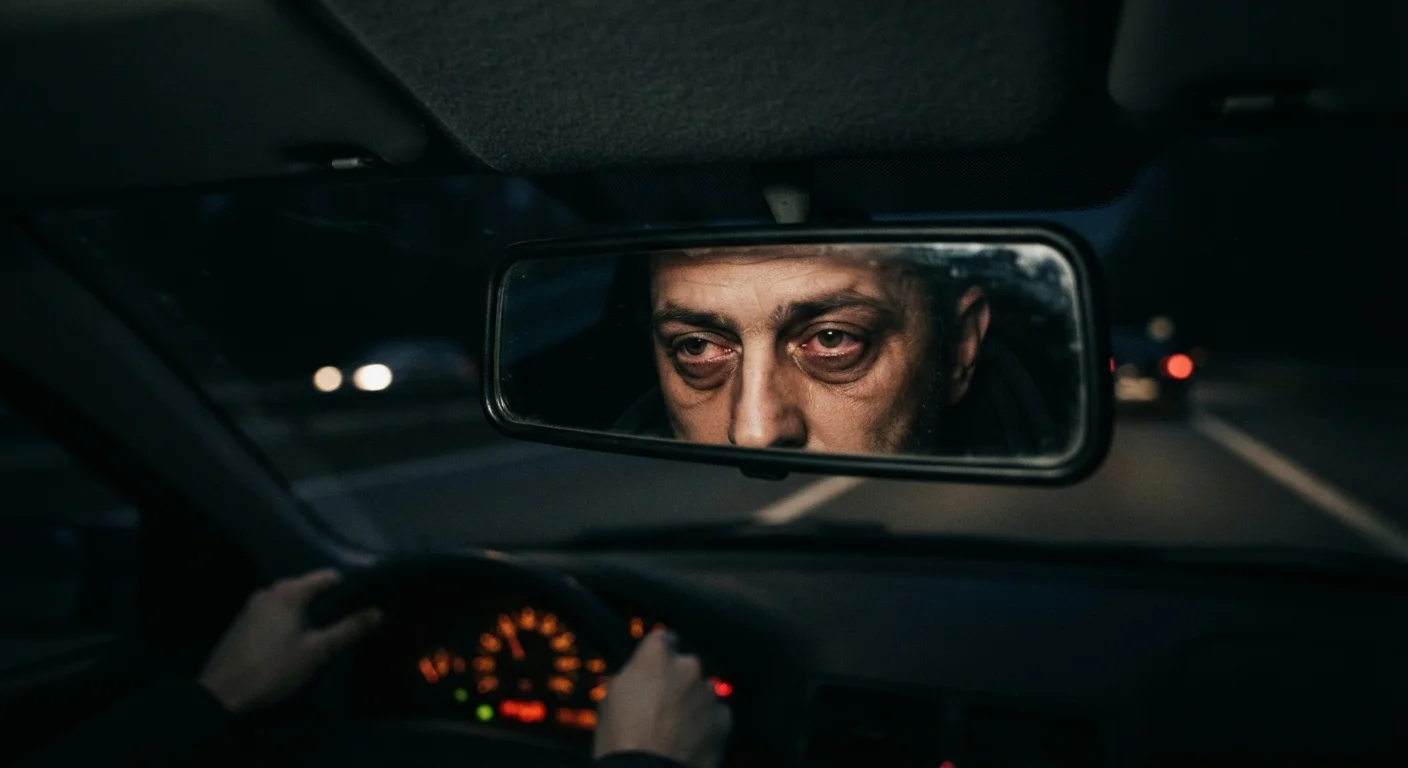
The eyes are among the first physiological systems to show fatigue. Increased blink rate, slow closing between blinks, difficulty keeping eyes fully open, and a burning or stinging sensation all signal that the body is fighting to stay awake. Drivers often interpret this as eyestrain from glare or screen use earlier in the day - and while that may be a contributing factor, it doesn't change the risk behind the wheel.
Reduced visibility conditions - such as those detailed in driving in heavy rain - compound the danger when eyes are already struggling to stay open.
Frequent blinking and heavy eyelids are early physical signs that the body is fighting sleep.
Difficulty Holding Your Head Up
Head nodding - where the chin dips toward the chest and then jerks back - is an unmistakable sign of severe drowsiness. But earlier stages are more subtle: a persistent feeling that the head is heavy, difficulty maintaining a straight-ahead gaze, or frequently rolling the neck to re-engage. Many drivers push through this, believing movement itself will restore alertness. It won't - it only delays the inevitable impairment.
Head nodding signals severe sleep deprivation - but neck heaviness and rolling are earlier warnings worth heeding.
Slower Reaction to Traffic Changes
Fatigue degrades reaction time in ways that closely parallel alcohol impairment. A driver who has been awake for 18 hours may perform comparably to someone with a blood-alcohol concentration of 0.05%, according to research cited by the AAA Foundation for Traffic Safety. You may notice you're braking later than usual, that the car ahead seems to have stopped suddenly when it actually slowed gradually, or that gap judgments feel off. These are signs your processing speed has dropped - a serious hazard in any traffic condition.
After 18 hours awake, reaction time can decline to levels comparable to a 0.05% blood-alcohol concentration.
Irritability or Difficulty Concentrating on Simple Tasks
Behavioral and emotional changes are often overlooked because drivers attribute them to stress, boredom, or frustration with traffic rather than fatigue. If you find yourself snapping at passengers, struggling to follow conversation, having trouble reading road signs you'd normally process easily, or making minor errors like missing turns you know well - these are cognitive fatigue signals. The brain's executive functions, including attention and emotional regulation, are among the first to degrade under sleep pressure.
Irritability and trouble reading familiar signs are behavioral fatigue signals that most drivers blame on stress.
Fatigue Risk Peaks at Predictable Times
The human body experiences two natural dips in alertness tied to circadian rhythms: roughly between 2-5 a.m. and again between 1-3 p.m. Drowsy driving risk is significantly elevated during these windows, even for drivers who feel subjectively rested. If a long drive falls during either period, plan accordingly - ideally by scheduling a stop or handing off driving duties.
What to Do When You Recognize the Signs
Recognizing fatigue is only half the challenge - acting on it promptly is the other. The only proven remedy is sleep. A short nap of 20 minutes in a safe, parked location has been shown to temporarily restore alertness more effectively than caffeine alone, though neither replaces genuine rest.
Avoid relying on stimulants, loud music, or cold air as substitutes for stopping. These tactics may mask the feeling of drowsiness for a brief window, but they do not restore reaction time, lane-tracking ability, or decision-making speed. Fatigue also compounds other hazards: fatal crash rates are already disproportionately higher at night, and drowsiness makes that risk gap even wider.
If you notice multiple signs from the list above appearing together, do not push through. Exit at the nearest safe location - a rest area, parking lot, or well-lit service station - and rest before continuing. Sharing the drive with an alert co-driver, if available, is another effective strategy on long trips.
Good situational awareness is a foundational skill for safe driving - but as experienced drivers know, that awareness is only as reliable as the mind behind the wheel.