

Key Takeaways
- Mobility is your active, controlled range of motion; flexibility is your passive range - both are distinct physical qualities.
- High flexibility does not guarantee good mobility; strength and neuromuscular control are also required.
- Training both qualities together produces more functional, durable movement patterns than focusing on one alone.
- Simple daily practices - like dynamic warm-ups and static stretching - can meaningfully improve each quality over time.
- Always consult a qualified healthcare professional before beginning a new exercise program, especially if you have existing injuries.
Option A
Mobility
The active, functional quality of movement.
Best for: Anyone looking to improve athletic performance, reduce injury risk, and move more freely in everyday life.
Option B
Flexibility
The passive range your muscles and connective tissue allow.
Best for: Those aiming to lengthen tight muscles, improve posture, and support recovery after activity.
If your goal is to move better during workouts and daily tasks
Mobility
Mobility training builds the active strength and control needed to move through a range of motion with intention - directly translating to functional performance.
If muscle tightness or poor posture is your primary concern
Flexibility
Targeted static and passive stretching lengthens chronically tight tissues, which can relieve tension, improve posture, and aid post-exercise recovery.
If you want a well-rounded, injury-resistant body
Mobility
A mobility-focused program that incorporates flexibility work addresses both range of motion and the strength to control it - the most complete approach for long-term resilience.
Defining the Terms: What Each One Actually Means
The words mobility and flexibility are frequently used as though they mean the same thing. In everyday conversation, that's forgivable. But from a physical training standpoint, conflating them can lead to incomplete practice and unrealized progress.
Flexibility refers to the passive ability of a muscle or group of muscles to lengthen. It describes how far a tissue can stretch when an external force - gravity, a strap, or a partner - is applied. A gymnast who can do the splits while relaxed has exceptional flexibility.
Mobility refers to a joint's active, controlled range of motion. It combines flexibility with the neuromuscular strength and coordination required to move through that range intentionally. A gymnast who can perform that split while also controlling every degree of descent - without assistance - demonstrates mobility.
The key distinction: flexibility is a component of mobility, but mobility requires more. You can be highly flexible yet lack the active strength to use that range, leaving you vulnerable to injury when that range is challenged during movement.
| Criterion | Mobility | Flexibility |
|---|---|---|
| Definition | Active, controlled range of motion | Passive ability of muscle to lengthen |
| Requires muscular strength | Yes | Not primarily |
| Primary training method | Dynamic movement, CARs, loaded stretching | Static and passive stretching |
| Best trained | Before or during exercise (warm-up) | After exercise (cool-down) |
| Functional carryover | High - directly supports movement tasks | Moderate - supports mobility when paired with strength |
| Injury prevention role | Reduces risk during dynamic activity | Reduces tissue tightness and posture issues |
Why the Difference Matters for How You Train
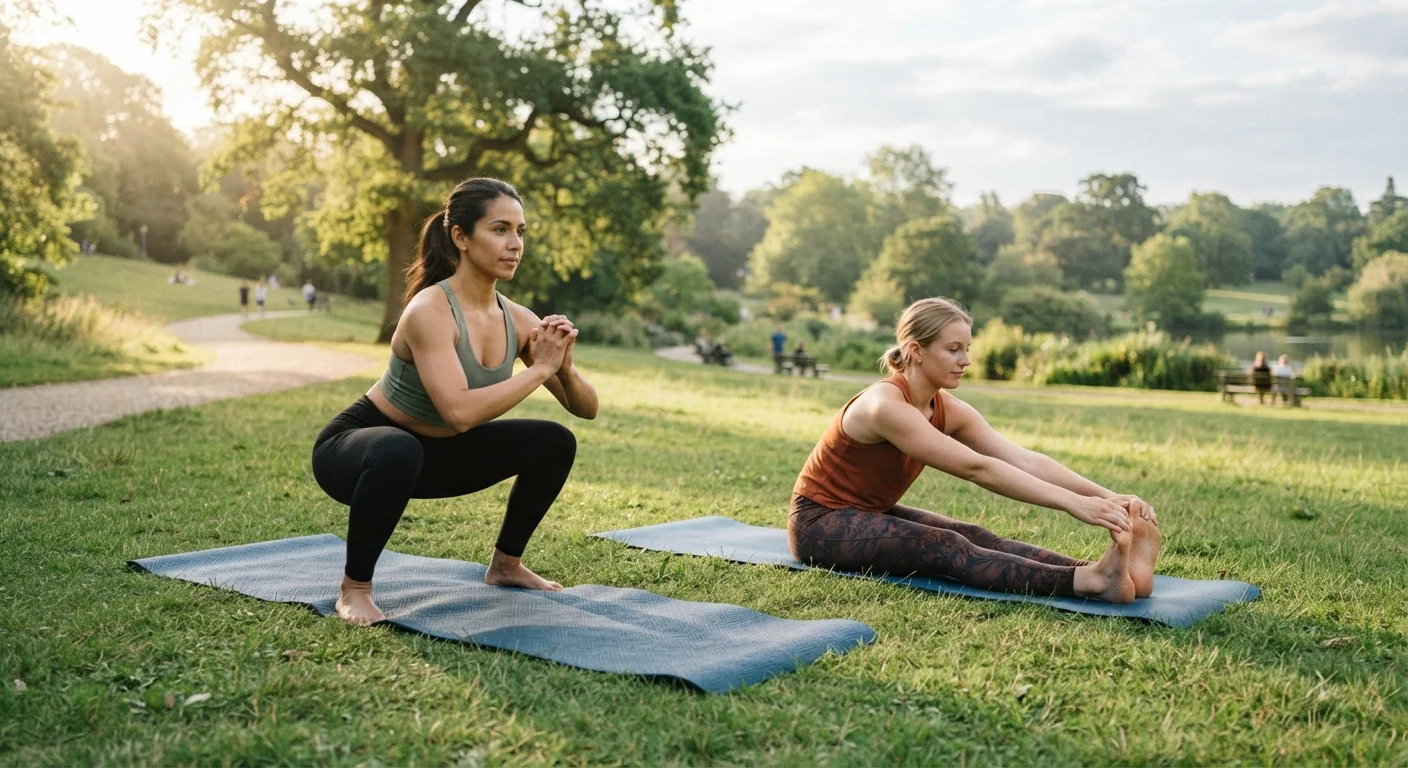
Understanding these definitions changes how you approach a warm-up, a workout, and a recovery session. Flexibility is best developed through static stretching - holding a position for an extended period (typically 20-60 seconds) that lengthens the target muscle. This is most effective after exercise, when tissues are warm and the nervous system is less guarded.
Mobility is developed through dynamic movement: controlled exercises that take joints through their full range under load or with deliberate neuromuscular engagement. Hip circles, deep squat progressions, and shoulder CARs (controlled articular rotations) are common examples. These are well-suited to warm-ups because they prepare your body for active effort.
Flexibility Without Control Can Be a Risk
Research in sports science suggests that hypermobility - unusually large passive range of motion without corresponding active control - can increase joint instability and injury susceptibility. This is particularly relevant in activities that place joints under load at end ranges, such as weightlifting or contact sports. Building strength through a full range of motion, not just stretching, is key to safe, functional movement.
Neglecting either quality creates imbalances. Someone who only stretches statically may develop passive range they cannot actively control - a mismatch that research in sports medicine has linked to increased injury risk during dynamic activity. Conversely, someone who only trains strength may find their muscles too stiff to access the range their joints could theoretically achieve.
For everyday movement - getting off the floor, reaching overhead, or simply sitting comfortably for extended periods - both qualities work in concert. Low-impact activities that develop both are accessible to a wide range of fitness levels. See our guide to low-impact exercise options for movement ideas that support joint health at any starting point.
Building Both Into Your Routine
The practical takeaway is that mobility and flexibility training are not competing priorities - they are complementary, and a sustainable movement practice benefits from both.
A simple framework: begin sessions with 5-10 minutes of dynamic mobility work (leg swings, thoracic rotations, hip openers) to prime your joints and nervous system. End sessions with 5-10 minutes of static stretching targeting the muscles you worked, which supports recovery and gradually expands passive range.
Consistency matters more than intensity. Short, frequent sessions - even daily micro-practices - produce more lasting adaptation than infrequent, extended efforts. Progress in both mobility and flexibility tends to be gradual; sustainable improvement is built over weeks and months, not days.
If you are new to structured movement practice or managing an existing condition, working with a physical therapist or certified movement professional can help you identify where your specific limitations lie and build a plan suited to your body. The approach to building good movement habits shares something with other skill-based learning: structured guidance accelerates progress far more than trial and error alone.
This article is for general informational and educational purposes only and is not a substitute for professional medical or fitness advice. Consult a qualified healthcare provider before beginning any new exercise program.