
Mediterranean Diet vs. DASH Diet: Two Evidence-Backed Eating Patterns Compared

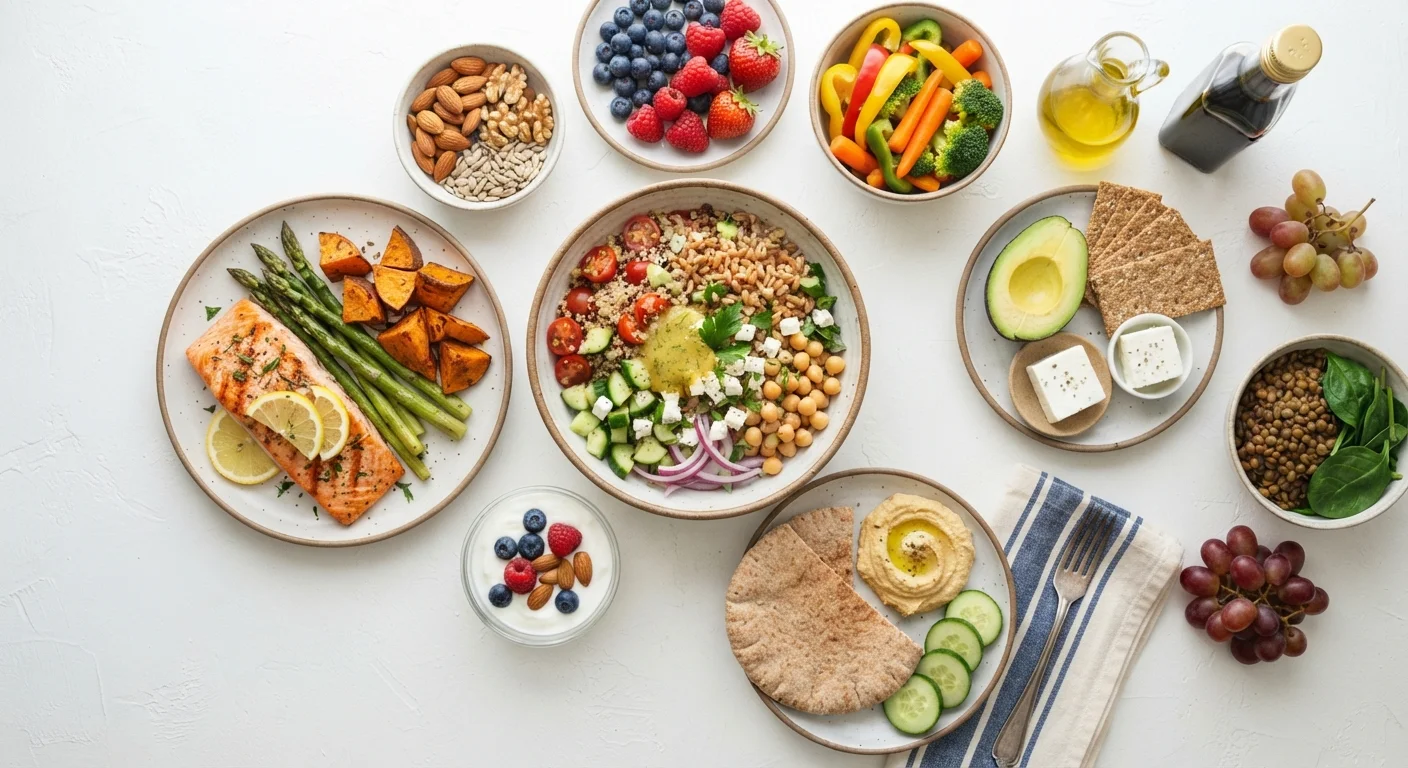
Key Takeaways
- The Mediterranean diet emphasizes olive oil, fish, and moderate wine; DASH was designed specifically to reduce blood pressure.
- Both patterns are linked to lower cardiovascular disease risk in large, long-term studies.
- DASH sets explicit sodium and nutrient targets; the Mediterranean diet offers more flexible, cultural eating guidelines.
- Neither diet requires calorie counting, but both prioritize whole foods over ultra-processed options.
- Choosing between them often comes down to personal health goals and how you prefer to structure your eating.
Our Verdict
Both the Mediterranean and DASH diets are grounded in strong evidence and overlap considerably in their core principles. The Mediterranean diet tends to suit those seeking a flexible, whole-food lifestyle with proven cardiovascular and cognitive benefits. DASH is particularly well-suited to individuals managing or aiming to prevent high blood pressure, given its specific sodium reduction framework.
| Best for | Recommended |
|---|---|
| Those focused on long-term heart and brain health with flexible food preferences | Mediterranean Diet |
| Individuals actively managing high blood pressure or sodium intake | DASH Diet |
| People who prefer structured nutrient guidelines and clear daily targets | DASH Diet |
| Those interested in a sustainable, culturally rooted eating pattern with room for healthy fats | Mediterranean Diet |
Where Each Diet Comes From
The Mediterranean diet emerged from observational research in the 1950s and 1960s, when scientists noticed that populations in Greece, southern Italy, and Spain had unusually low rates of heart disease despite high fat consumption. It reflects the traditional eating habits of those cultures: abundant vegetables, legumes, whole grains, olive oil as the primary fat, moderate fish, limited red meat, and occasional wine with meals.
The DASH diet (Dietary Approaches to Stop Hypertension) was developed through controlled clinical trials funded by the National Heart, Lung, and Blood Institute (NHLBI) in the 1990s. Unlike the Mediterranean pattern, which evolved organically from culture, DASH was deliberately engineered to lower blood pressure. It emphasizes fruits, vegetables, whole grains, and low-fat dairy while setting explicit limits on sodium, saturated fat, and added sugars.
Both are now considered among the most well-researched dietary patterns in nutrition science, though their evidence bases developed through different methodologies.
Core Principles Side by Side
Despite their different origins, the two patterns share meaningful common ground - and some genuinely important differences.
| Mediterranean Diet | DASH Diet | |
|---|---|---|
| Primary design goal | Overall cardiovascular and longevity health | Lower blood pressure specifically |
| Fat approach | High healthy fats (olive oil, nuts, fish) | Lower total fat, limits saturated fat |
| Dairy | Limited, optional (cheese, yogurt) | Emphasized - low-fat dairy daily |
| Sodium guidance | No explicit sodium target | Strict limits: 1,500-2,300 mg/day |
| Alcohol | Moderate wine generally included | Alcohol limited or discouraged |
| Flexibility | High - cultural, intuitive guidelines | Moderate - structured serving targets |
| Strength of evidence | Strong (RCTs + large observational studies) | Strong (multiple RCTs for blood pressure) |
One notable divergence is dairy: DASH explicitly includes low-fat dairy as a primary protein and calcium source, while the Mediterranean diet treats dairy as a modest, optional component. Another is fat quality: the Mediterranean pattern encourages generous use of olive oil and embraces healthy fats from nuts and fish, whereas DASH historically focused more on reducing overall fat, though its guidelines have evolved. For a deeper look at how current science views dietary fat, see our guide to misunderstood dietary fat.
What the Research Actually Shows
The Mediterranean diet has one of the largest evidence bases in nutrition research. The landmark PREDIMED trial - a large randomized study conducted in Spain - found that participants assigned to a Mediterranean diet supplemented with olive oil or nuts had significantly fewer major cardiovascular events than those following a low-fat control diet. Research also associates the pattern with reduced risk of type 2 diabetes, cognitive decline, and overall mortality, though observational studies have inherent limitations around causality.
DASH's evidence is particularly strong for its primary target: blood pressure. Multiple randomized controlled trials have shown that the full DASH diet (especially the lower-sodium version) can reduce systolic blood pressure by roughly 8-14 mmHg in people with hypertension - comparable to some first-line medications, according to NHLBI summaries. It also shows benefit for LDL cholesterol and insulin resistance.
Consider Combining the Best of Both
Some researchers and clinicians have explored a hybrid approach called the MIND diet (Mediterranean-DASH Intervention for Neurodegenerative Delay), which blends elements of both patterns with a focus on brain health. While the evidence for MIND is still accumulating, the underlying principle - drawing on the strengths of both patterns - is nutritionally sound. Discuss any hybrid approach with a healthcare provider or dietitian.
It's worth noting that neither diet has been studied as extensively in diverse U.S. populations or across all age groups, and individual responses to dietary patterns vary. If you're considering either approach for a specific health condition, a registered dietitian can help translate general evidence into personalized guidance.
Practical Differences in Day-to-Day Eating
For many people, the real question isn't which diet is theoretically superior - it's which one is more livable. The Mediterranean diet offers considerable flexibility: there are no strict portion formulas or sodium milligram targets, and it accommodates cultural and social eating relatively well. Alcohol (typically red wine) is permitted in moderation for adults who already drink, though public health guidance on alcohol continues to evolve, and abstaining is always a valid choice.
DASH, by contrast, provides more explicit structure. Guidelines specify daily and weekly servings by food group and set a sodium ceiling - typically 2,300 mg per day, with a stricter 1,500 mg target for those with elevated blood pressure. This precision can be helpful for people who want clear benchmarks, but it may feel restrictive to others.
If a plant-forward eating style appeals to you, both diets have strong plant-food foundations. Our introduction to plant-based eating covers how to build that nutritional base from scratch, which complements either pattern well.
This article is for general informational and educational purposes only and does not constitute medical or dietary advice. Always consult a qualified healthcare professional or registered dietitian before making significant changes to your diet, especially if you have an existing health condition.