

Key Takeaways
- The glycemic index ranks carbohydrates by how fast they raise blood sugar, on a scale of 0-100.
- GI values are tested in controlled lab settings and may not reflect how food behaves in a real meal.
- Glycemic load accounts for portion size and is generally a more practical measure than GI alone.
- Cooking method, ripeness, and food combinations all change a food's actual blood sugar impact.
- GI is a useful starting point, but no single number replaces an overall balanced dietary pattern.
- People with diabetes or blood sugar concerns should consult a registered dietitian or healthcare provider.
Glycemic Index (GI)
The glycemic index is a numerical scale from 0 to 100 that ranks carbohydrate-containing foods based on how quickly they raise blood glucose levels compared to pure glucose. Foods rated 55 or below are considered low-GI, 56-69 are medium, and 70 or above are high. It was developed as a research tool to help understand how different carbohydrates affect blood sugar, and it is often used in dietary guidance for blood sugar management.
GI values are measured under standardized laboratory conditions using a fixed portion of digestible carbohydrate (typically 50g), which is one reason real-world results can differ significantly from published tables.
What the Glycemic Index Actually Measures
The glycemic index (GI) was introduced in the early 1980s by Dr. David Jenkins and colleagues at the University of Toronto as a way to compare how different carbohydrate foods affect blood glucose. The scale runs from 0 to 100, anchored to pure glucose or white bread as the reference point at 100.
To assign a GI value, researchers give study participants a measured portion of food containing 50 grams of digestible carbohydrate, then track blood glucose over two hours. The resulting curve is compared to the reference food, and a number is assigned. Foods digested and absorbed quickly - like white rice or watermelon - produce a sharper glucose spike and earn a higher GI. Foods absorbed more slowly - like lentils or barley - produce a more gradual rise and score lower.
Understanding GI starts with recognizing what it does not measure: calories, protein, fat, vitamins, or overall nutritional quality. It is a single-dimension snapshot of one metabolic effect of one macronutrient under controlled conditions.
GI Was Designed as a Research Tool
The glycemic index was originally developed to help researchers and clinicians compare carbohydrate foods in a standardized way - not as a consumer decision-making framework. Many of its limitations become apparent when it is applied outside the controlled laboratory setting where values are generated. This context matters when evaluating popular claims about low-GI diets.
Where the Glycemic Index Falls Short
Despite its usefulness as a research tool, the GI has real-world limitations that make it an imprecise guide for everyday eating.
- Portion size is ignored. A high-GI food eaten in a small amount may raise blood sugar less than a low-GI food eaten in a large serving. This is why the concept of glycemic load (GL) - which multiplies GI by the grams of carbohydrate per serving - is often more informative.
- Meals are mixed. GI values are measured for single foods eaten in isolation. When fat, protein, fiber, and acid (such as vinegar or lemon juice) are present in the same meal, they slow gastric emptying and blunt glucose absorption, altering the effective GI of everything you eat.
- Food preparation matters. Cooking method, particle size, and even temperature change GI. Al dente pasta has a meaningfully lower GI than the same pasta cooked soft. Cooled, cooked potatoes develop resistant starch - a form of carbohydrate that is not readily digested - lowering their glycemic impact compared to freshly boiled potatoes.
- Ripeness shifts the numbers. A less-ripe banana has a much lower GI than a fully ripe one, because starches convert to simpler sugars as fruit matures.
- Individual variation is large. Emerging research demonstrates that blood sugar responses to the same food differ substantially from person to person, influenced by gut microbiome composition, physical activity levels, and metabolic health.
For a fuller picture of how carbohydrate quality fits into the bigger dietary puzzle, see our guide on fiber's underappreciated role in long-term health, which covers how dietary fiber modifies blood sugar response.
~70
Average GI of white bread (reference food)
White bread is commonly used as the reference point in many GI testing protocols, illustrating how processed grain products rank near the top of the scale.
29
GI of cooked lentils
According to the University of Sydney's GI database, lentils consistently rank among the lowest-GI carbohydrate foods, largely due to their high fiber and protein content.
~800
Number of foods in the Sydney GI database
The University of Sydney maintains one of the most comprehensive publicly accessible databases of tested GI values, covering a wide range of global foods.
How to Use GI Sensibly - Without Obsessing Over Numbers
The glycemic index works best as a directional guide, not a rigid scoring system. Here is how to apply it without overcomplicating your eating habits.
Practical First Step With GI
Rather than memorizing GI values, try a simple habit: replace one refined grain in a typical day with a whole-grain or legume-based alternative. This kind of incremental swap tends to lower the overall glycemic profile of your diet without requiring detailed food tracking or numerical targets.
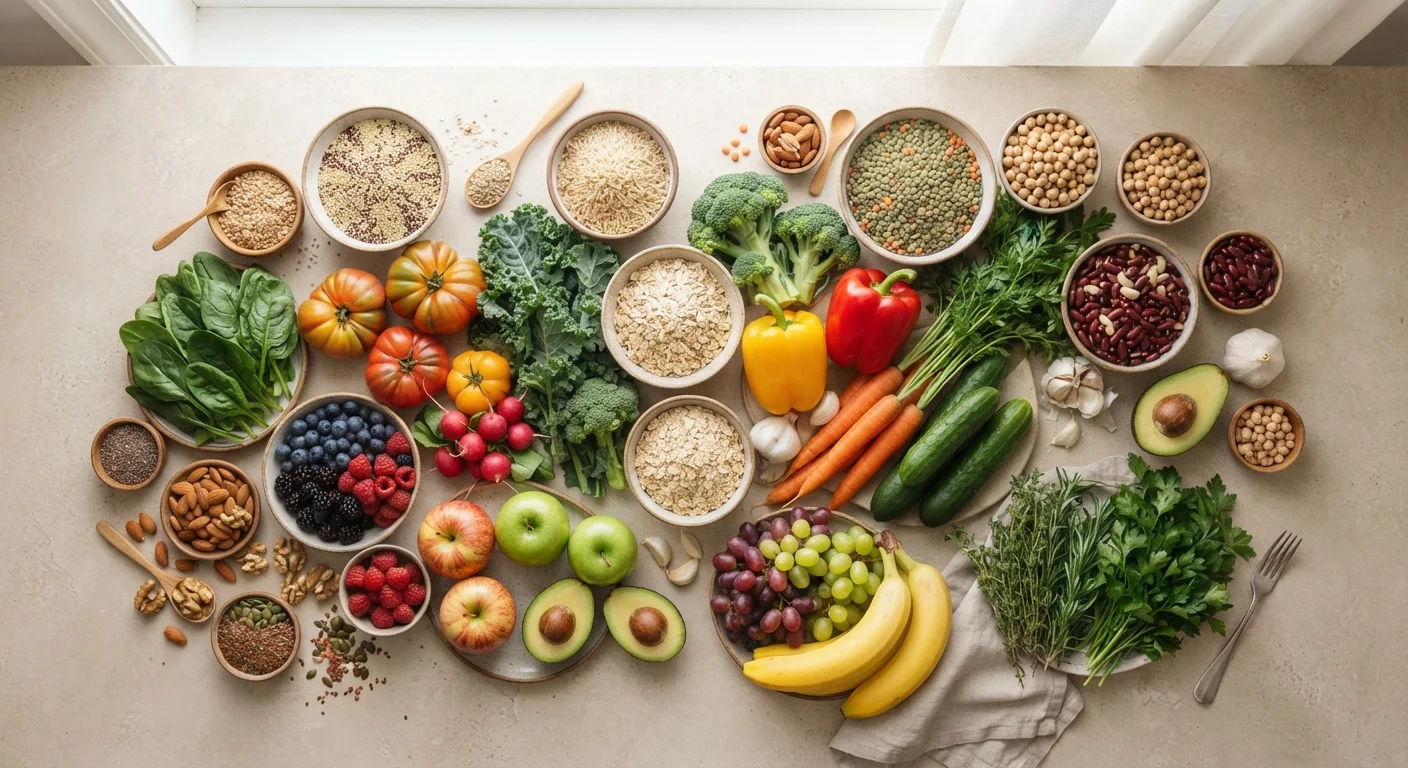
Focus on food patterns, not single foods. A diet built around vegetables, legumes, whole grains, and lean protein will naturally trend toward lower-GI choices - without requiring a lookup table at every meal.
Use GI to make swaps, not judgments. If you notice two similar foods where one has a substantially lower GI and both are nutritious, the lower-GI option is a reasonable preference. Swapping white bread for a dense whole-grain variety, or instant oats for rolled oats, represents this logic in action.
Pair carbohydrates strategically. Eating carbohydrates alongside fiber, protein, or a small amount of healthy fat naturally lowers the meal's overall glycemic impact without any need to calculate a number.
For anyone navigating food labels to identify carbohydrate content or fiber levels, our article on reading a nutrition label without getting lost offers a practical walkthrough of the Nutrition Facts panel.
This article is for general informational and educational purposes only and is not a substitute for professional medical or dietary advice. If you have diabetes, prediabetes, or any condition affecting blood sugar, please consult a qualified healthcare provider or registered dietitian before making significant changes to your diet.