

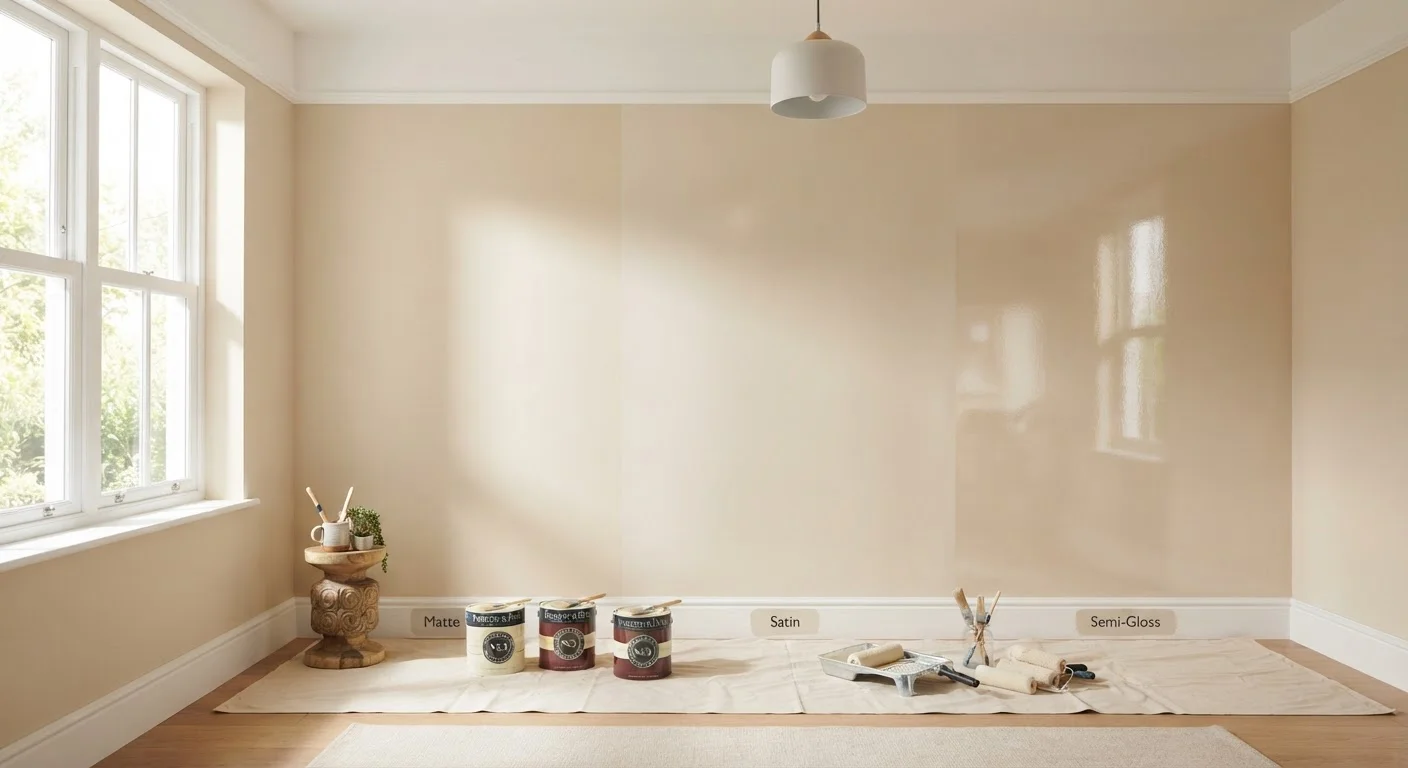
| Most durable interior finish | Semi-gloss |
| Best finish for hiding wall flaws | Flat/Matte |
| Recommended finish for ceilings | Flat/Matte |
| Recommended finish for kitchens & bathrooms | Semi-gloss |
| Best all-purpose finish for living spaces | Eggshell |
| Finish for high-traffic areas & children's rooms | Satin |
Why Paint Finish Matters More Than Color
Most homeowners spend significant time selecting a paint color, then grab whichever finish is on the shelf. That's a mistake. The sheen level - how much light a dried paint surface reflects - affects durability, cleanability, and how prominently wall imperfections show up. A finish that works beautifully in a bedroom can fail completely in a kitchen or bathroom.
Understanding paint finishes before you buy saves you time, money, and a frustrating repaint. Here's a practical breakdown of each finish and where it actually belongs.
| Most durable interior finish | Semi-gloss |
| Best finish for hiding wall flaws | Flat/Matte |
| Recommended finish for ceilings | Flat/Matte |
| Recommended finish for kitchens & bathrooms | Semi-gloss |
| Best all-purpose finish for living spaces | Eggshell |
| Finish for high-traffic areas & children's rooms | Satin |
The Four Core Finishes Explained
Paint finishes are typically organized by sheen level, from flat to high-gloss. The four most common interior options are:
- Flat/Matte: Zero to minimal reflectivity. Absorbs light, hides surface flaws well, but is difficult to wipe clean without leaving marks. Best for low-traffic ceilings and adult bedrooms.
- Eggshell: Slight sheen resembling an eggshell surface. More washable than flat, holds up in moderate-traffic areas, and still looks refined. A reliable all-purpose finish for living rooms and dining rooms.
- Satin: Noticeably smooth and pearl-like. Handles moisture and repeated cleaning well. Ideal for hallways, children's rooms, and family spaces that see daily wear.
- Semi-Gloss: High reflectivity with strong durability. Resists moisture and staining effectively, making it the go-to choice for kitchens, bathrooms, and trim work.
Sheen
The degree of light reflectivity in a dried paint surface. Higher sheen means more light is reflected, resulting in a glossier, harder-looking finish.
Flat/Matte Finish
A non-reflective paint finish that absorbs light. It effectively hides surface imperfections but is the least washable of all finish types.
Eggshell Finish
A low-sheen paint finish with slightly more reflectivity than flat. It strikes a balance between a refined appearance and moderate washability.
Satin Finish
A mid-level sheen paint finish with a smooth, pearl-like appearance. It is more durable and moisture-resistant than eggshell, making it suitable for busier rooms.
Semi-Gloss Finish
A high-sheen paint finish that reflects significant light and offers strong resistance to moisture, staining, and repeated cleaning. Most commonly used in kitchens, bathrooms, and on trim.
VOC (Volatile Organic Compound)
Chemical compounds in paints and coatings that evaporate at room temperature and can contribute to indoor air quality concerns. Low-VOC and zero-VOC paints are widely available alternatives.
A fifth option - high-gloss - exists but is rarely used on full interior walls. It shows every imperfection and is typically reserved for cabinetry, furniture, and accent trim where a lacquer-like finish is intentional.
Room-by-Room Finish Guide
Matching the right finish to each room is the most practical decision you can make before opening a can.
Kitchens and Bathrooms
These rooms need moisture resistance and easy cleanability above all else. Semi-gloss is the standard recommendation for walls in both spaces. Its harder surface film sheds grease, steam, and humidity without absorbing them. If you're planning a full bathroom renovation, see our bathroom remodel planning checklist for guidance on coordinating finishes with tile and fixture choices.
Hallways and High-Traffic Areas
Satin finish holds up best in entry halls, stairwells, and mudrooms. Walls in these zones get touched, brushed, and scuffed regularly. Satin's slightly harder surface cleans up with a damp cloth without losing color or finish integrity.
Living Rooms and Dining Rooms
Eggshell is the workhorse finish for these spaces. It looks elegant without obvious sheen, handles light cleaning, and doesn't overemphasize wall texture the way flat paints can in rooms with imperfect drywall.
Bedrooms
Adult bedrooms see relatively low traffic and benefit from flat or matte finishes, which absorb light and create a soft, restful atmosphere. For children's rooms, move up to satin - scuff marks and fingerprints are far more frequent and satin handles both better.
Ceilings
Flat or matte finish is almost universally used on ceilings. Sheen on a ceiling amplifies any texture irregularity and catches overhead light in unflattering ways. Ceiling-specific flat paints are formulated to be extra spatter-resistant and to roll on without sagging.
Trim, Doors, and Cabinets
Semi-gloss or satin is standard for trim work throughout the home. Semi-gloss provides a clean visual contrast against eggshell or satin walls and holds up to the repeated contact that door frames, baseboards, and window sills receive. If you're also refinishing floors, the principle is similar - protective finish application technique matters enormously. Our article on hardwood floor refinishing and finish protection explores that in depth.
Sheen and Surface Imperfections
The shinier the finish, the more it will highlight dents, bumps, and uneven drywall. If your walls have texture irregularities, stick to eggshell or flat in low-traffic areas rather than stepping up to satin or semi-gloss. Proper surface prep - patching, sanding, and priming - is especially important before applying higher-sheen paints.
Practical Tips Before You Paint
A few considerations can save a repaint and help the finish perform as intended:
- Prep the surface properly. Higher-gloss finishes amplify imperfections. Patch holes, sand rough areas, and prime new drywall before applying eggshell or above.
- Use primer when switching sheens. If you're going from flat to semi-gloss (or vice versa), prime the surface first. Skipping primer can lead to uneven absorption and blotchy results.
- Test on the wall, not just the chip. Paint a 12-by-12-inch sample patch and observe it in both natural and artificial light at different times of day before committing to a full room.
- Check local VOC regulations. Some municipalities have restrictions on volatile organic compound (VOC) content in paints. Low-VOC and zero-VOC formulations are widely available and perform comparably to traditional paints in most finishes.
- Plan a logical painting order. Ceiling first, then walls, then trim. This sequence minimizes drips onto finished surfaces and reduces time spent cutting in twice. While you're organizing your approach, a room-by-room home audit can help you coordinate painting with other updates happening in the same space.