

Key Takeaways
- Sorting everything into categories before buying storage prevents wasted money on the wrong solutions.
- Zoning your garage by activity - tools, sports, seasonal - dramatically reduces daily friction.
- Vertical wall space is the most underused resource in the average American garage.
- Consistent maintenance habits, not one-time purges, keep a garage functional year after year.
- Clear labeling ensures every household member can find and return items correctly.
Why Garages Become Dumping Grounds
The garage is the only room in most homes with no social pressure attached to it. Guests rarely see it, so clutter accumulates without consequence - until the space stops working entirely. Seasonal decorations, outgrown sports equipment, half-finished projects, and mystery boxes from three moves ago all compete for floor space that was originally meant for your car.
Understanding the root cause matters. Garages fail organizationally for two reasons: there's no defined place for incoming items, and there's no regular system for reviewing what stays. If you feel overwhelmed before you've even started, the guide to starting home organization when you don't know where to begin offers a practical first framework.
Don't buy a single bin or shelf before you've completed the purge and category sort. Storage purchased before you know your actual inventory almost always ends up being the wrong size or quantity.
Premature purchasing is the most common garage organization mistake - it locks you into a system before the real problem is fully visible.
Install your heaviest wall shelving into studs, not just drywall anchors. Confirm stud locations with a stud finder before drilling, especially on shared walls.
Anchoring into drywall alone can fail under load, creating a safety hazard and damaging stored items. Local building codes may also have requirements for permanent wall-mounted systems.
Step 1: The Great Purge
Before a single shelf goes up, everything must come out. Pull every item onto the driveway and sort into four piles: Keep, Donate/Sell, Trash, and Belongs Elsewhere. Be honest about items you haven't touched in two or more years - storage space is finite, and holding onto rarely used items displaces things you actually need.
Work in the morning when energy is highest, and plan for a full weekend. Sort by category - all hand tools together, all sports gear together, all holiday items together - so you can see exactly how much of each category you own. This step reveals the true scope of the project and prevents over-purchasing storage later.
Handle Hazardous Items Carefully
Old paint, pesticides, solvents, and batteries require proper disposal - do not place them in household trash. Most counties operate hazardous waste drop-off events or permanent collection sites. Check your local municipality's website for schedules and accepted materials before your purge day.
Step 2: Create Functional Zones
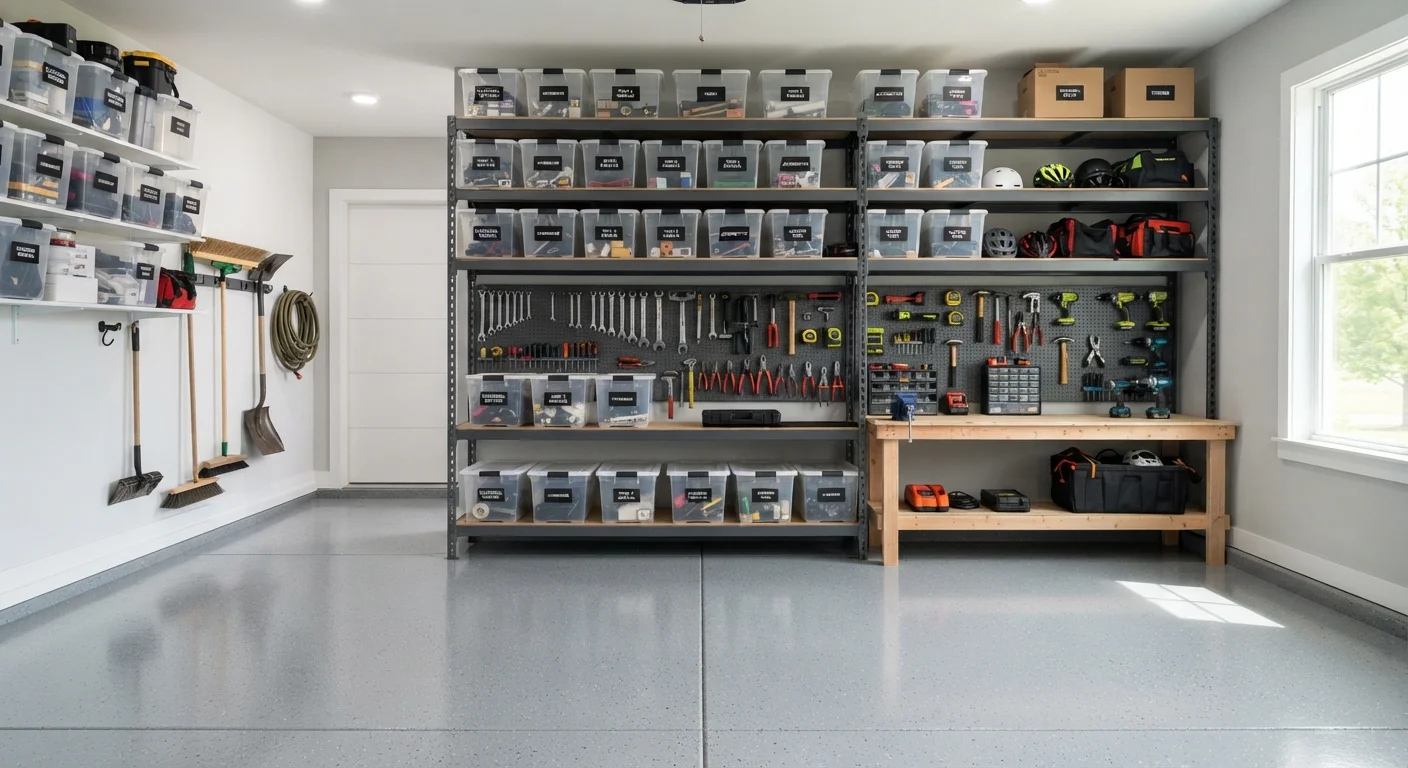
Zoning is the single highest-impact decision you'll make. Divide your garage floor plan into dedicated activity areas before any storage goes in. Common zones include: a workshop area (tools, workbench), a sports and recreation zone (bikes, balls, camping gear), a garden and yard care area (hoses, pots, fertilizers), a seasonal storage zone (holiday bins, winter gear), and a vehicle zone - which should always be protected.
Position zones by frequency of use. Items grabbed daily, like trash bins and dog leashes, belong near the entry door. Seasonal items that come out twice a year can live in overhead or deep shelving. A well-zoned garage functions like a well-organized pantry: everything has a logical address.
If you're tackling the broader home at the same time, the room-by-room home organization audit can help you identify where garage overflow is actually originating from inside the house.
Step 3: Choose the Right Storage Systems
Once zones are mapped and categories are known, storage selection becomes straightforward. The hierarchy to follow: walls first, ceiling second, floor last. Most garages have eight or more feet of vertical wall space that goes completely unused.
- Wall-mounted shelving: Adjustable bracket systems anchored into studs handle heavy loads and can be reconfigured as needs change.
- Pegboards and slat walls: Ideal for hand tools, garden trowels, extension cords, and small items that are hard to bin.
- Overhead ceiling racks: Best for bulky, lightweight items - camping tents, holiday wreaths, foam pool noodles.
- Freestanding shelving units: Use for bins of categorized items; keep them away from walls with moisture issues.
- Cabinet units: Protect chemicals, power tools, and items that shouldn't be handled by children.
25%
Households that can't park in their garage
According to a survey by the U.S. Department of Energy, roughly one in four American households with a garage cannot fit a car inside due to stored items.
~$2,000
Estimated value of items discarded during a typical garage purge
Professional organizers commonly report homeowners discovering hundreds to thousands of dollars in duplicated, forgotten, or replaceable items during a first-time garage sort.
For the vehicle zone itself, floor-mounted storage should leave clear egress on all sides of the car. Striped floor tape can mark parking boundaries and keep zone edges visible.
Step 4: Label, Contain, and Commit
Unlabeled bins are the downfall of otherwise well-organized garages. Use clear bins where possible - visibility eliminates the need to open everything to find what you need. When opaque bins are used for aesthetic reasons, apply large, readable labels on both the front and the short side so they're identifiable from any angle.
Standardize bin sizes within each zone. Mixing random containers wastes shelf depth and makes stacking impossible. Group labels consistently: use category names rather than overly specific descriptions. A bin labeled Camping - Cooking ages better than one labeled Susan's camping pot set.
Commit to a home for every item before putting it back. Items without a designated home will drift back to the floor within weeks. This is exactly the pattern described in why organizing projects stall - the problem is rarely storage capacity, it's the absence of assigned addresses.
Maintaining the System Long-Term
Organize once, maintain always. Schedule a 15-minute garage reset every two weeks - return anything that's drifted, toss obvious trash, and flag items that no longer have a logical home. A brief annual review each spring is enough to handle seasonal swaps and reassess whether zones still match how your household actually lives.
Build in a one-in, one-out rule for sports equipment and tools: when a new item arrives, an old one leaves. This single habit prevents the slow accumulation that turns a functional garage back into a dumping ground. The same discipline applies to other storage-limited spaces - the strategies for organizing a small kitchen without a pantry cover this concept well for indoor spaces.
Finally, involve every household member. A system only one person understands will only be maintained by that one person. Walk everyone through the zones, explain the logic, and make the labels legible enough that returning an item correctly requires zero guesswork.