

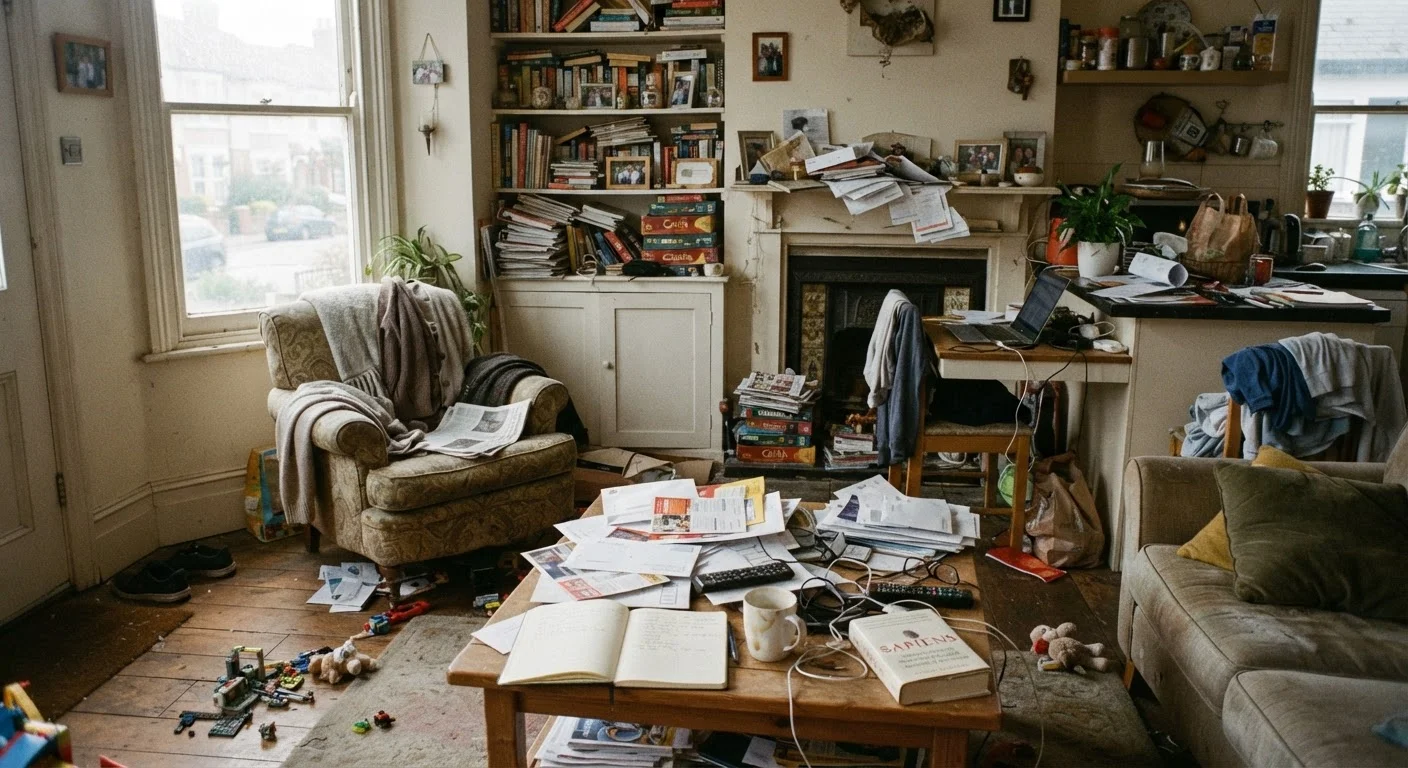
Key Takeaways
- Disorganization costs Americans measurable time every week searching for misplaced items.
- The mental load of clutter contributes to elevated stress and reduced focus at home.
- Duplicate purchases made because items can't be found quietly inflate household budgets.
- Disorganized homes can create friction in relationships and reduce overall household productivity.
- Small, consistent organizing habits can interrupt the cycle before costs compound.
Confronting costs motivates meaningful household change
Naming the real impact of disorganization - in time, money, and stress - gives households a concrete reason to prioritize organizing beyond aesthetics. Motivation rooted in actual costs tends to produce more durable change than motivation driven by shame.
Small changes deliver disproportionate daily relief
Organizing even one high-friction area - an entryway, a kitchen counter, a bathroom cabinet - can meaningfully reduce daily scrambling. Improvement doesn't require a whole-home overhaul to deliver tangible results.
Household systems reduce mental load over time
Once items have consistent homes, the cognitive work of tracking them diminishes. This frees up mental bandwidth for more meaningful decisions and reduces the low-level anxiety of wondering where things are.
Better visibility stops duplicate spending
An organized pantry, medicine cabinet, or supply closet makes it easy to see what's already on hand before purchasing more. Over a year, this visibility can represent a measurable reduction in unnecessary spending.
Organized spaces support calmer household relationships
Much household conflict around chores and shared space is fueled by competing systems - or the absence of any system. Clear, agreed-upon organization reduces the friction that triggers repeated arguments.
Significant time lost searching for misplaced items
Disorganized households spend meaningful cumulative time locating everyday items. This daily friction adds up across a week, month, and year into a substantial, largely invisible time cost.
Duplicate purchases inflate household budgets silently
When items can't be found, they often get repurchased. Pantry staples, cleaning supplies, tools, and medications are among the most commonly re-bought categories in disorganized homes.
Clutter contributes to elevated stress and reduced focus
Environmental psychology research links visually cluttered spaces to higher perceived stress and diminished ability to concentrate. This effect tends to compound in spaces used for both work and rest.
Disorganization can strain shared household relationships
Disagreements about clutter and household responsibility are among the more common sources of low-grade domestic conflict. Without shared systems, individual tolerance differences frequently cause friction.
Expired food and supplies create waste and added cost
Disorganized pantries and storage areas make it difficult to rotate stock, leading to expired food, medications past their use-by date, and unused supplies that must eventually be discarded.
Disorganized homes are harder to clean and maintain
Clutter prevents thorough cleaning, which can allow dust, allergens, and moisture to accumulate undetected. This makes routine maintenance tasks take longer and may contribute to minor health and home-condition issues over time.
Our Verdict
Household disorganization rarely announces itself as a serious problem - it accumulates quietly through lost time, extra spending, and daily stress. While no home achieves perfect order, understanding what disorganization actually costs makes a compelling case for building intentional systems. The advantages of tackling clutter extend well beyond aesthetics.
Any household feeling the daily friction of clutter - whether living alone, raising children, or sharing space with others - will benefit from honestly assessing the non-obvious costs of disorganization and taking small, structured steps toward order.
What Household Disorganization Actually Costs You
Most people think of disorganization as a minor inconvenience - something to address eventually, after more pressing priorities. But the costs it generates are real, recurring, and often invisible until they're tallied together. This article breaks down those costs honestly, including the advantages that can emerge once you recognize the problem and begin addressing it.
It's worth noting that disorganization isn't a character flaw, and this isn't about achieving a magazine-worthy home. It's about understanding how a chaotic environment affects your time, money, mental health, and relationships - and why those effects are worth taking seriously.
Organization Looks Different in Every Household
There's no single standard for what an organized home should look like. What matters is whether the systems in place - or absent - are creating unnecessary daily friction for the people living there. Households vary by size, lifestyle, and cognitive style, and effective organization should reflect those differences. For a deeper look at different organizing philosophies, see our article on minimalism vs. organized abundance.
The Hidden Costs: A Balanced Look
Disorganization creates measurable disadvantages across several dimensions of daily life. At the same time, acknowledging why clutter accumulates - and what getting organized can realistically offer - helps frame the issue constructively.
Significant time lost searching for misplaced items
Disorganized households spend meaningful cumulative time locating everyday items. This daily friction adds up across a week, month, and year into a substantial, largely invisible time cost.
Duplicate purchases inflate household budgets silently
When items can't be found, they often get repurchased. Pantry staples, cleaning supplies, tools, and medications are among the most commonly re-bought categories in disorganized homes.
Clutter contributes to elevated stress and reduced focus
Environmental psychology research links visually cluttered spaces to higher perceived stress and diminished ability to concentrate. This effect tends to compound in spaces used for both work and rest.
Disorganization can strain shared household relationships
Disagreements about clutter and household responsibility are among the more common sources of low-grade domestic conflict. Without shared systems, individual tolerance differences frequently cause friction.
Expired food and supplies create waste and added cost
Disorganized pantries and storage areas make it difficult to rotate stock, leading to expired food, medications past their use-by date, and unused supplies that must eventually be discarded.
Disorganized homes are harder to clean and maintain
Clutter prevents thorough cleaning, which can allow dust, allergens, and moisture to accumulate undetected. This makes routine maintenance tasks take longer and may contribute to minor health and home-condition issues over time.
Interestingly, some households function reasonably well in environments others would find chaotic. Research on cognitive styles suggests that tolerance for clutter varies, and not every cluttered space creates equal friction for every person. Still, the household-level costs below affect most people regardless of personal preference.
Confronting costs motivates meaningful household change
Naming the real impact of disorganization - in time, money, and stress - gives households a concrete reason to prioritize organizing beyond aesthetics. Motivation rooted in actual costs tends to produce more durable change than motivation driven by shame.
Small changes deliver disproportionate daily relief
Organizing even one high-friction area - an entryway, a kitchen counter, a bathroom cabinet - can meaningfully reduce daily scrambling. Improvement doesn't require a whole-home overhaul to deliver tangible results.
Household systems reduce mental load over time
Once items have consistent homes, the cognitive work of tracking them diminishes. This frees up mental bandwidth for more meaningful decisions and reduces the low-level anxiety of wondering where things are.
Better visibility stops duplicate spending
An organized pantry, medicine cabinet, or supply closet makes it easy to see what's already on hand before purchasing more. Over a year, this visibility can represent a measurable reduction in unnecessary spending.
Organized spaces support calmer household relationships
Much household conflict around chores and shared space is fueled by competing systems - or the absence of any system. Clear, agreed-upon organization reduces the friction that triggers repeated arguments.
The Time Tax: Searching, Scrambling, and Re-Doing
One of the most consistent costs of a disorganized home is wasted time. Studies on workplace organization suggest that the average professional loses significant time weekly searching for misplaced items - a dynamic that maps directly onto home life. When keys, documents, tools, or children's belongings can't be located, routines stall and stress spikes.
~30 min
Average time lost daily searching for items
Various workplace and behavioral studies suggest the average person loses approximately 30 minutes per day looking for misplaced belongings, a figure that applies to home environments as well.
$2,700+
Estimated annual cost of household food waste per family
According to USDA estimates, American families discard a significant portion of purchased food - disorganized storage is a leading contributor to that waste.
Beyond searching, disorganization creates rework - redoing tasks because supplies weren't where they should be, or purchasing items already owned but buried somewhere inaccessible. For households managing children, this time drain is compounded significantly. See our strategies for organizing with kids at home for approaches that hold up under real-world conditions.
Financial Friction You May Not Have Connected to Clutter
Duplicate purchases are among the most direct financial costs of disorganization. When a household can't locate the backup batteries, the extra extension cord, or the spare set of filters, those items get repurchased - sometimes repeatedly. These aren't large sums individually, but they accumulate into a meaningful annual figure.
Expired food from poorly organized pantries and refrigerators, late fees from misplaced bills, and impulse buys made because a shopping trip couldn't be planned efficiently all follow the same pattern. For households already managing tight margins, this is worth examining alongside other budget leaks. Our related resource on budgeting basics can help put these small costs into a broader financial picture.
It's also worth contrasting this with a related phenomenon: the hidden costs of convenience services. Disorganization and convenience spending often reinforce each other - when a home is chaotic, paid shortcuts feel more necessary.
Stress, Focus, and the Mental Load of Clutter
Environmental psychology research consistently links cluttered living spaces to elevated cortisol levels and reduced ability to focus. The visual noise of clutter competes for attention, making it harder to relax or transition mentally between work and home life - a particular challenge for households where remote work has blurred those boundaries.
The mental load of tracking where things are, what needs to be replenished, and what tasks have slipped is an often-invisible burden. It's exhausting to hold a disorganized home in your head, and that exhaustion has downstream effects on mood, decision-making, and patience - particularly in households with multiple people navigating shared space.
If you're feeling overwhelmed and unsure where to begin, the getting started with home organization guide offers a realistic, low-pressure entry point. For a methodical room-by-room approach, a home organization audit can help identify where friction is highest.
Understanding which everyday habits quietly undermine organizing efforts is equally important - because systems only hold when the behaviors that created the clutter are also addressed.