

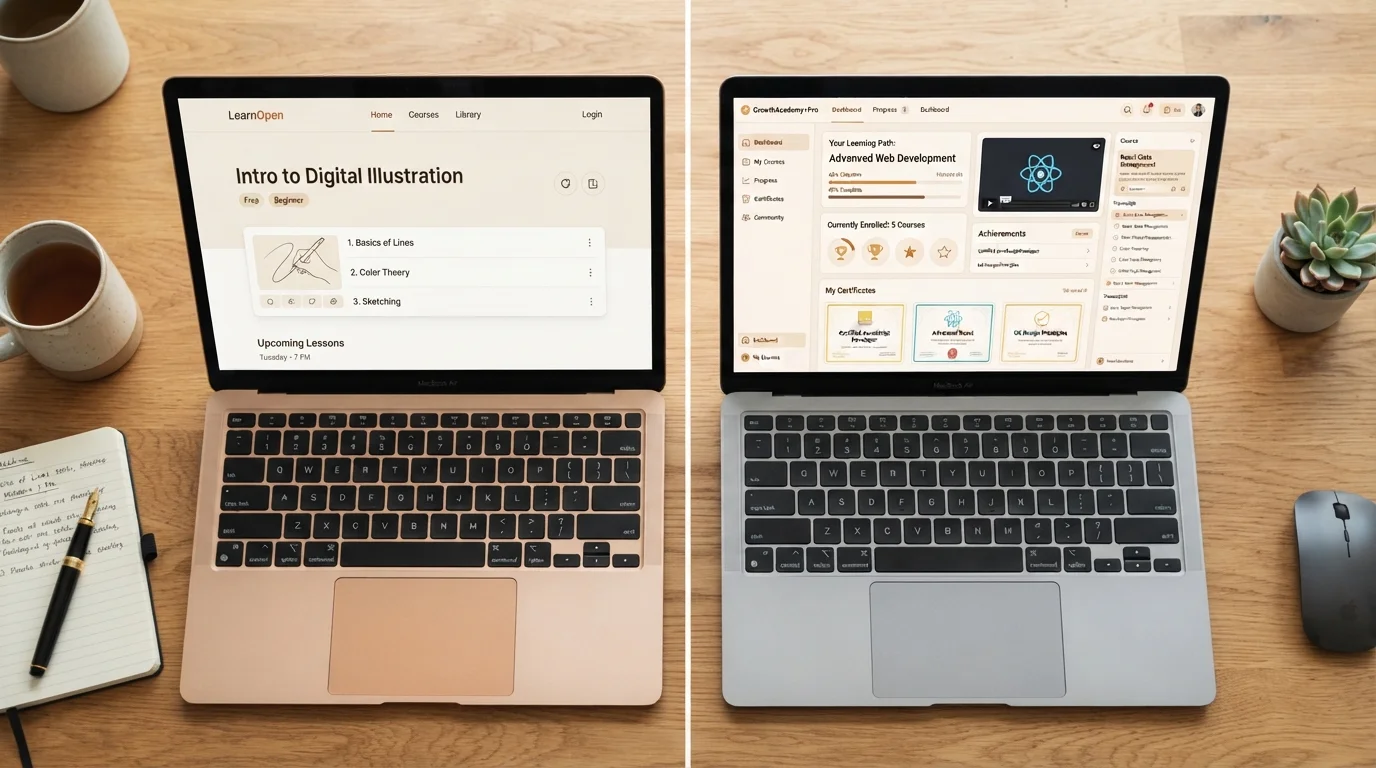
Key Takeaways
- Free courses offer broad access to knowledge but rarely provide recognized credentials or instructor feedback.
- Paid courses typically include structured curricula, accountability tools, and verifiable certificates.
- Neither option is universally better - your goal, budget, and learning style should drive the decision.
- Completion rates tend to be higher in paid courses, likely due to financial commitment and built-in deadlines.
- Combining free resources for exploration with paid courses for skill verification is a practical strategy.
Our Verdict
Free courses are a low-risk way to explore new subjects and build foundational knowledge without spending money. Paid courses deliver greater structure, credentials, and support - qualities that matter most when the learning goal has professional stakes. The right choice depends on what you need to do with the knowledge once you have it.
| Best for | Recommended |
|---|---|
| Curious learners exploring a new subject with no immediate career goal | Free courses |
| Professionals seeking verifiable credentials for career advancement | Paid courses |
| Learners on a tight budget who are highly self-motivated | Free courses |
| Those who benefit from deadlines, peer cohorts, and instructor feedback | Paid courses |
What Free Courses Actually Deliver
Free online courses - offered through platforms like public universities, nonprofit initiatives, and open courseware projects - lower the barrier to learning significantly. Anyone with an internet connection can access lectures, readings, and sometimes quizzes at no cost.
What you typically get is content access: video lessons, PDFs, and self-assessments. What you often don't get is a recognized certificate, instructor interaction, or graded assignments with feedback. Many platforms offer free auditing of a course but charge for the certificate of completion.
Free courses work especially well for exploratory learning - sampling a subject before committing time or money, refreshing knowledge you already have, or pursuing a personal interest with no professional stakes. For learners who are highly self-directed, the absence of structure is a non-issue. For others, it becomes a real obstacle to finishing.
Audit First, Then Decide
Many paid platforms allow free auditing of course materials before you commit financially. Use this window to assess the instructor's teaching style, the pace of the content, and whether the subject genuinely holds your interest. Enrolling after a trial period reduces the risk of paying for a course you won't finish.
What Paid Courses Add to the Experience
Paid courses generally cost anywhere from a few dollars to several hundred, depending on the provider, subject depth, and whether a recognized credential is included. The price difference typically reflects more than a certificate - it often funds instructor availability, peer-review assignments, live Q&A sessions, and curated project work.
The structural elements matter. Cohort-based paid courses often have fixed schedules, deadlines, and peer interaction that mirror the accountability found in traditional classrooms. Research on online learning consistently finds that accountability mechanisms - even lightweight ones like weekly due dates - improve course completion. That said, not all paid courses are created equal; a fee alone does not guarantee quality.
Paid courses also tend to signal commitment to employers more clearly than free audits. A verifiable certificate from an accredited institution or a well-regarded industry organization carries weight on a resume in ways that self-reported free learning may not. For more on how credentials are perceived, see our look at how online credentials compare with in-person degrees.
| Free Courses | Paid Courses | |
|---|---|---|
| Cost | No charge for content access | Ranges from low to several hundred dollars |
| Recognized Certificate | Rarely included; often sold separately | Typically included in course price |
| Instructor Interaction | Usually none or very limited | Often available via forums or live sessions |
| Curriculum Structure | Varies widely; often self-directed | Generally more sequenced and guided |
| Completion Accountability | Low; no deadlines in most cases | Higher; deadlines and cohorts common |
| Best Use Case | Exploration and personal enrichment | Professional development and credentialing |
Key Factors to Weigh Before Deciding
The free-vs.-paid question is really a proxy for a deeper set of questions about your learning goals and circumstances.
- Why are you learning this? Personal enrichment and professional certification are different goals that may call for different tools.
- How do you learn best? If external deadlines and instructor feedback keep you on track, a paid course's structure may be worth the cost. If you are naturally self-disciplined, free options may be sufficient. Our guide on self-paced vs. scheduled online courses explores this format question in more depth.
- What does the credential need to do? A free audit satisfies curiosity. A paid certificate from an accredited provider may carry weight with an employer or admissions committee.
- What is your budget? Paid courses are an investment. Our hub on paying for college and education costs covers funding options that may apply to professional development, too.
Before enrolling in any course - free or paid - it's worth asking structured questions about accreditation, instructor credentials, and refund policies. Our pre-enrollment checklist walks through exactly what to look for.
Getting the Most from Whichever Path You Choose
The format of a course matters far less than how you engage with it. Passive watching - regardless of whether you paid - produces shallow learning. Active engagement, note-taking, applying concepts to real problems, and seeking feedback all deepen retention.
A practical approach many learners use: start with free resources to determine genuine interest and build baseline knowledge, then invest in a paid course once you know the subject is worth pursuing seriously. This sequences cost with commitment rather than the reverse.
For learners concerned about the broader trade-offs of digital-only education, our article on the upsides and limits of learning entirely online offers a balanced perspective. And once you're enrolled, proven habits for finishing online courses strong can help you get the full value of your investment - whether or not you paid for it.