

Key Takeaways
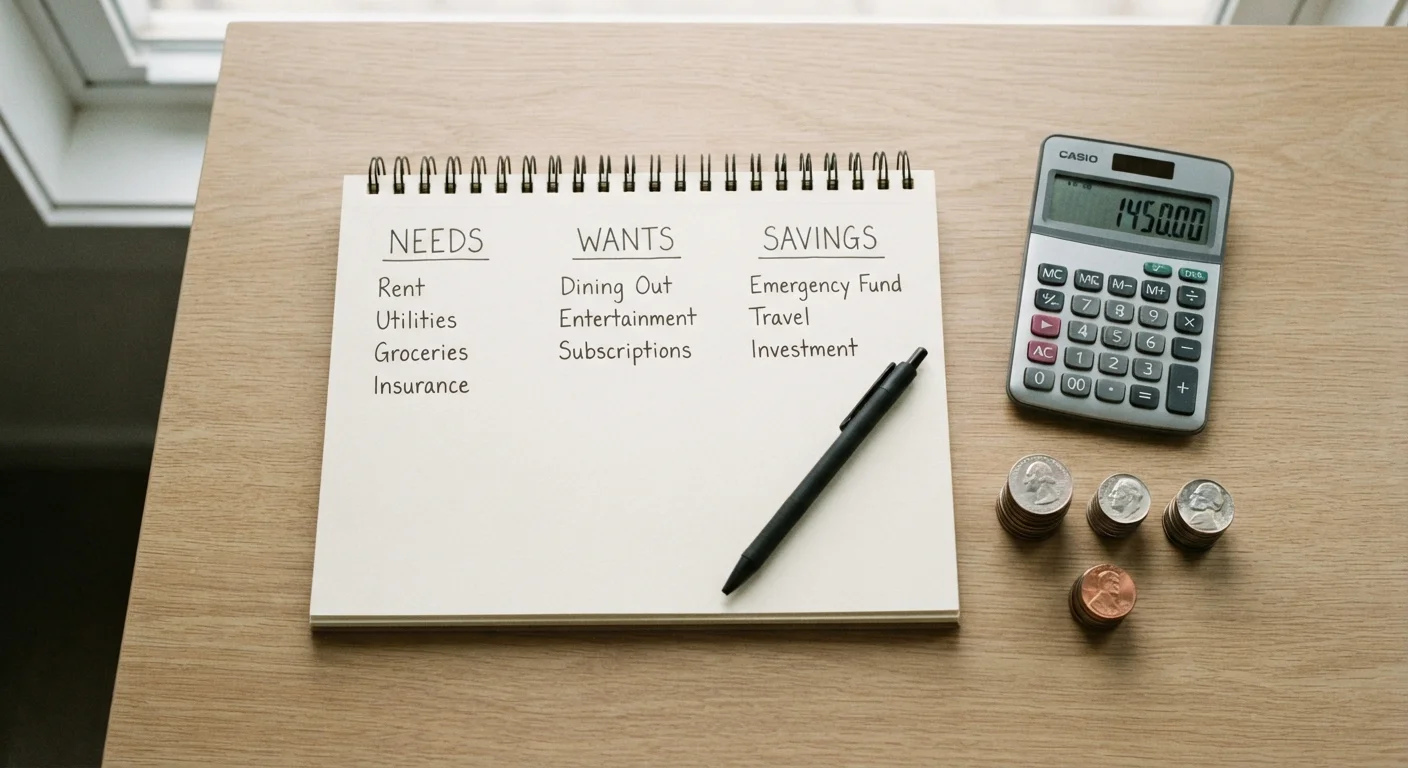
- The 50/30/20 rule splits after-tax income into needs (50%), wants (30%), and savings or debt repayment (20%).
- It works best as a high-level guide, not a line-item budget for every purchase.
- High housing costs in many U.S. cities can make the 50% needs target difficult to hit.
- The framework is flexible-adjusting the percentages to fit your income and goals is encouraged.
- Pairing the rule with a monthly review habit strengthens its effectiveness over time.
The 50/30/20 Rule
The 50/30/20 rule is a percentage-based budgeting framework that divides your after-tax income into three categories: 50% toward needs, 30% toward wants, and 20% toward savings and debt repayment. It's designed to give people a simple, memorable structure for managing money without tracking every dollar. The rule is meant as a starting point, not a rigid prescription.
The framework is widely associated with Senator Elizabeth Warren and her co-author Amelia Warren Tyagi, who outlined a version of it in their 2005 book 'All Your Worth.' It applies to net (after-tax) income, not gross income.
Breaking Down the Three Categories
The framework's power lies in its simplicity-three buckets, clear percentages, applied to the money you actually bring home. Here's what belongs in each.
50% - Needs
Needs are non-negotiable recurring expenses: rent or mortgage, utilities, groceries, health insurance premiums, minimum loan payments, and essential transportation costs. The test is straightforward-if eliminating the expense would put your housing, health, or employment at serious risk, it qualifies as a need. Car payments and insurance often land here for Americans without viable public transit alternatives. For a deeper look at how vehicle costs fit into a household budget, see the Car Ownership Costs hub.
30% - Wants
Wants cover everything that improves quality of life but isn't strictly essential: restaurant meals, streaming subscriptions, gym memberships, clothing beyond basics, and travel. This is the most subjective category-reasonable people disagree about where needs end and wants begin. That ambiguity is worth sitting with rather than resolving hastily. The needs, wants, and savings category guide explores those gray areas in detail.
20% - Savings and Debt Repayment
The final slice covers emergency fund contributions, retirement account contributions, and any debt payments above the required minimum. Financial planners generally recommend prioritizing high-interest debt before investing beyond employer match thresholds, but the exact order depends on individual circumstances. This article is general educational information, not personalized financial advice-consult a licensed financial professional for guidance specific to your situation.
~37%
Share of income median renter spends on housing
U.S. Census Bureau data consistently shows median renters spending well above the traditional 30% housing benchmark, compressing budget flexibility.
57%
Americans living paycheck to paycheck
According to a 2023 LendingClub report, more than half of U.S. adults reported spending all or most of their monthly income, leaving little room for the 20% savings target.
20%
Recommended minimum savings allocation
The 50/30/20 framework designates the final fifth of take-home pay for savings, retirement contributions, and debt repayment above minimums.
Where the 50/30/20 Rule Works Well
For someone new to budgeting, a three-category system is far easier to maintain than a 20-line spreadsheet. The rule reduces decision fatigue: you don't need to classify every grocery receipt to the cent. It also builds financial awareness without requiring perfection.
Middle-income earners with relatively stable take-home pay tend to find the percentages achievable. If your rent is moderate, your employer covers most health insurance costs, and you carry limited debt, the 50% needs target is realistic-leaving genuine room in the wants and savings columns.
The framework also adapts well to a regular review cadence. Running through your actual spending against the three buckets each month surfaces drift quickly. See our monthly budget review checklist for a structured way to do that.
Start With a Single Month of Real Data
Before setting 50/30/20 targets, pull three to four months of actual bank and credit card statements and categorize every transaction. Most people discover their real needs-wants split is significantly different from what they assumed. Basing your percentage targets on actual spending history rather than guesswork makes the framework far more useful from day one.
Limitations Worth Understanding
The 50/30/20 rule is a starting framework, not a universal solution. Several real-world conditions create friction.
Housing costs in many U.S. metros
In cities like San Francisco, New York, or Boston, rent alone can consume 40-60% of a median earner's take-home pay. When housing pushes needs past 50%, there's mathematical pressure on the wants and savings categories-often squeezing savings to near zero without any discretionary overspending.
Variable and irregular income
Freelancers, gig workers, and hourly employees with fluctuating hours face a moving target each month. Fixed percentage targets assume stable income; applying them meaningfully requires extra calculation steps.
High debt loads
For households carrying significant high-interest debt, the 20% savings-and-debt bucket can feel grossly insufficient. Redirecting wants dollars toward aggressive debt paydown often makes more mathematical sense, even if it temporarily breaks the rule.
These realities are why some budgeters compare percentage-based and fixed-amount methods before committing to one. The percentage-based vs. amount-based budgeting comparison lays out when each approach fits better.
Adapting the Rule to Your Situation
Treating the 50/30/20 split as a rigid rule misses the point. The creators framed it as a guideline-a mental model to encourage people to consciously allocate income rather than spend reactively.
Practical adaptations include:
- 60/20/20 - for earners in high-cost areas where needs genuinely dominate
- 50/20/30 - for those aggressively paying down debt or building an emergency fund
- 40/30/30 - for higher earners who can afford to prioritize savings more heavily
The key discipline is setting intentional percentages before the month begins, then comparing actual spending against them. Pairing the 50/30/20 structure with the right time cadence also matters. The weekly vs. monthly budgeting rhythm guide helps you decide how often to check in.
This article provides general financial education and is not personalized financial, tax, or investment advice. For decisions specific to your situation, consult a qualified financial professional.