

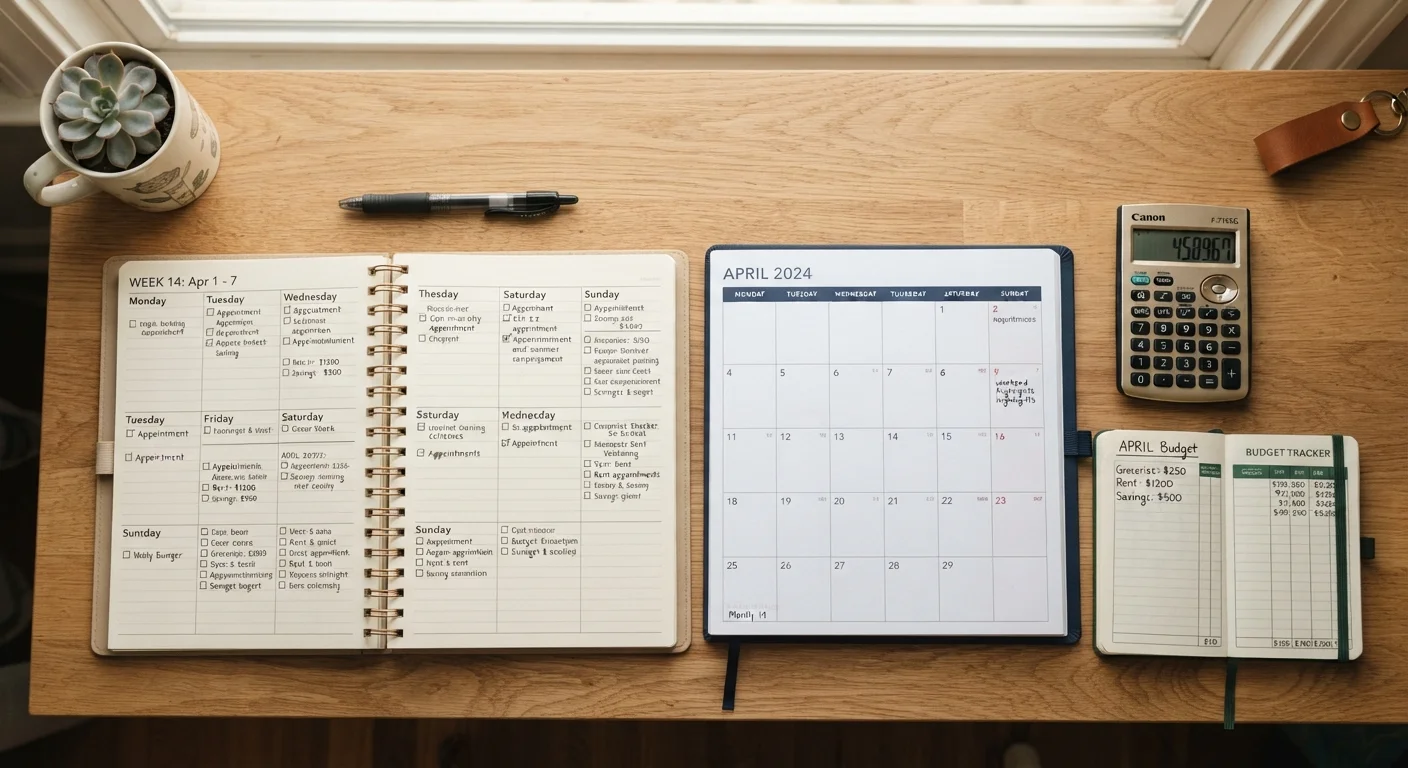
Key Takeaways
- Weekly budgeting offers tighter spending control and works well for variable or unpredictable cash flow.
- Monthly budgeting aligns naturally with most bills and salaries, making it easier to manage fixed expenses.
- Your pay schedule, spending habits, and time availability should drive which rhythm you choose.
- Neither approach is universally superior - many people combine elements of both for best results.
- Switching cadences mid-month or mid-week is fine; consistency over time matters more than the interval.
Our Verdict
Weekly budgeting gives you granular control and is better suited to people with variable income, high discretionary spending, or a history of overspending mid-month. Monthly budgeting is less time-intensive and fits naturally around salaries and recurring bills. Most households benefit from a hybrid: set a monthly plan, then do brief weekly check-ins to stay on track.
| Best for | Recommended |
|---|---|
| Those paid weekly or with variable income | Weekly budgeting |
| Salaried earners with predictable fixed expenses | Monthly budgeting |
| People who frequently overspend in specific categories | Weekly budgeting |
| Households seeking the least time-intensive system | Monthly budgeting |
Why Budgeting Cadence Actually Matters
Most budgeting conversations focus on categories - housing, food, entertainment - but the time frame you use to track spending is equally consequential. Budget too infrequently and overspending can compound for weeks before you catch it. Budget too obsessively and the effort becomes unsustainable. The cadence you choose shapes how often you check in, how you handle irregular expenses, and whether the system actually holds up under real-life pressure.
For a broader foundation, the Budgeting Basics hub covers how to set up spending categories and realistic targets before deciding on a time frame. Understanding fixed versus variable expenses is also useful groundwork, since the nature of your costs often points toward a natural cadence.
How Weekly Budgeting Works
A weekly budget divides your income and spending targets into seven-day windows. If you earn $3,200 per month, a weekly budget works with roughly $800 per week. You track what you spend each day, assess where you stand by week's end, and reset for the next cycle.
Advantages:
- Early warning system. If you overspend on groceries in week two, you know before the damage extends to week four.
- Suits weekly pay schedules. Many hourly workers and gig earners are paid weekly or biweekly - a weekly budget matches their actual cash flow rather than requiring mental translation.
- Keeps discretionary spending visible. Short windows make it harder to rationalize impulse purchases as "I'll make it up later in the month."
Drawbacks:
- Some monthly bills - rent, insurance, utilities - don't divide cleanly into weekly amounts, creating planning friction.
- Requires more frequent check-ins, typically 15-30 minutes per week.
- Seasonal or irregular bills can distort individual weeks significantly. See how to plan for irregular bills to address this.
Start Weekly If You're Rebuilding Habits
If you've struggled with overspending or are returning to budgeting after a gap, starting with weekly windows can re-establish the habit more quickly. The short feedback loop - knowing by Sunday whether you stayed on track - builds confidence faster than waiting 30 days to assess results. Once the habit is stable, you can shift to a monthly-with-weekly-check-in rhythm.
How Monthly Budgeting Works
Monthly budgeting is the most widely used approach because it mirrors how most bills arrive and how most salaried employees are paid. You allocate your expected monthly income across spending categories at the start of the month, then track actuals against those allocations over the following four to five weeks.
Advantages:
- Aligns with fixed expenses. Rent, loan payments, subscriptions, and utilities are monthly - a monthly budget requires no conversion math.
- Lower maintenance burden. One planning session at the start of the month plus periodic check-ins is typically sufficient. A monthly review checklist can structure that process.
- Easier to apply percentage-based frameworks like the 50/30/20 rule. See how the 50/30/20 rule works for a detailed breakdown.
Drawbacks:
- A month is long enough for overspending to go undetected until it's difficult to recover.
- People who struggle with end-of-month cash shortfalls often find the monthly window too permissive early on.
- Less intuitive for irregular earners. Freelancers or gig workers may find irregular income budgeting strategies more applicable.
| Weekly Budgeting | Monthly Budgeting | |
|---|---|---|
| Best pay schedule match | Weekly or biweekly pay | Monthly or semi-monthly salary |
| Time commitment | 15-30 min per week | 1-2 sessions per month |
| Overspend detection speed | Days | Weeks |
| Handling fixed monthly bills | Requires proration | Fits naturally |
| Suits irregular income | Yes, highly adaptable | Less intuitive |
| Complexity | Moderate to high | Low to moderate |
| Recommended for beginners | With guidance | Yes, easier to start |
Choosing the Right Rhythm - or Combining Both
The honest answer is that most people benefit from a hybrid approach: plan monthly, check in weekly. Set your category allocations at the start of each month to account for all fixed expenses and savings goals. Then spend five to ten minutes each week reviewing where you stand in variable categories like food, entertainment, and transportation.
This hybrid sidesteps the main weaknesses of each standalone approach - you get the structural clarity of a monthly plan without losing the early-warning benefits of weekly tracking.
A few practical signals that you may need more frequent check-ins:
- You consistently reach mid-month with less than half your discretionary budget remaining.
- You're paid weekly or on an irregular schedule.
- You share finances with a partner and need a shared reference point more than once a month. The article on budgeting with a partner covers that complexity in more detail.
If you're comparing not just the cadence but also the structure of your budget - fixed dollar amounts versus proportional targets - see percentage-based vs. amount-based budgeting for a side-by-side analysis. And once your budget rhythm is working, building savings and managing debt becomes the natural next focus.
This article is for general informational and educational purposes only and does not constitute personalized financial advice. Consult a qualified financial professional for guidance specific to your situation.