

Key Takeaways
- Short, positive grooming sessions build your pet's tolerance far more effectively than infrequent marathon sessions.
- Brushing before bathing removes loose fur and mats, making the bath easier on both pet and owner.
- Using lukewarm water and pet-specific products reduces skin irritation during bathing.
- Nail trims should be done in small increments to avoid cutting the quick and causing pain.
- Pairing each grooming step with treats and praise creates lasting positive associations.
- Consistent at-home grooming lets you catch skin, ear, and coat changes early.
What you will need
Why At-Home Grooming Matters
Regular grooming is one of the most tangible ways you can support your pet's health and comfort. Beyond keeping a coat clean and a pet looking tidy, grooming sessions offer a chance to notice changes - lumps, skin irritation, ear odor, or nail overgrowth - before they escalate. Our monthly at-home pet wellness check guide describes how to turn these sessions into structured health observations as well.
Many pets resist grooming not because they dislike being touched, but because they've had uncomfortable or unpredictable experiences with it. The goal of at-home grooming isn't perfection - it's creating a calm, repeatable routine your pet learns to tolerate and eventually accept. This is a skill that grows with consistency, and it fits naturally into the broader habits outlined in responsible pet ownership.
Pair Every Step With Positive Reinforcement
Offering a high-value treat immediately after each grooming action - not just at the end - helps your pet build a positive association with each specific step. Over time, many pets will begin to anticipate grooming calmly. Consistent, reward-based handling also supports broader pet training goals around handling and touch tolerance.
What You'll Need Before You Start
Gathering your supplies ahead of time prevents interruptions that can unsettle your pet mid-session. A distracted scramble for a towel or brush is exactly the kind of unpredictability that makes animals anxious.
What you will need
Slicker brush or deshedding comb
Removes loose fur, detangles, and distributes natural oils through the coat before and after bathing.
Pet-formulated shampoo
Cleanses the coat without disrupting the skin's pH balance, which differs from humans.
Non-slip bath mat
Prevents slipping in the tub, which reduces fear and accidental injury during bathing.
Pet nail clippers
Trims nails safely; sized and shaped appropriately for cats or dogs to avoid crushing the nail.
Styptic powder
Stops minor bleeding quickly if a nail is accidentally trimmed too short.
Handheld shower head or pitcher
Allows precise water direction so you can rinse thoroughly while keeping water away from ears and face.
Step-by-Step Grooming Instructions
Follow these steps in order for a manageable, low-stress grooming session. If your pet becomes distressed at any point, pause, offer a treat, and let them settle before continuing. Never force a pet through a step - gradual exposure over multiple sessions is more effective than pushing through resistance in one sitting. For animals with severe anxiety around grooming, consult your veterinarian or a certified animal behaviorist before proceeding.
Let your pet explore the grooming space first
Before introducing any tools or water, bring your pet into the grooming area and let them sniff around. Place a few treats on the mat or tub floor and walk away. Repeat this over a few sessions until your pet enters the space without hesitation. This desensitization step is particularly important for animals with no grooming history at home.
Brush the coat before bathing
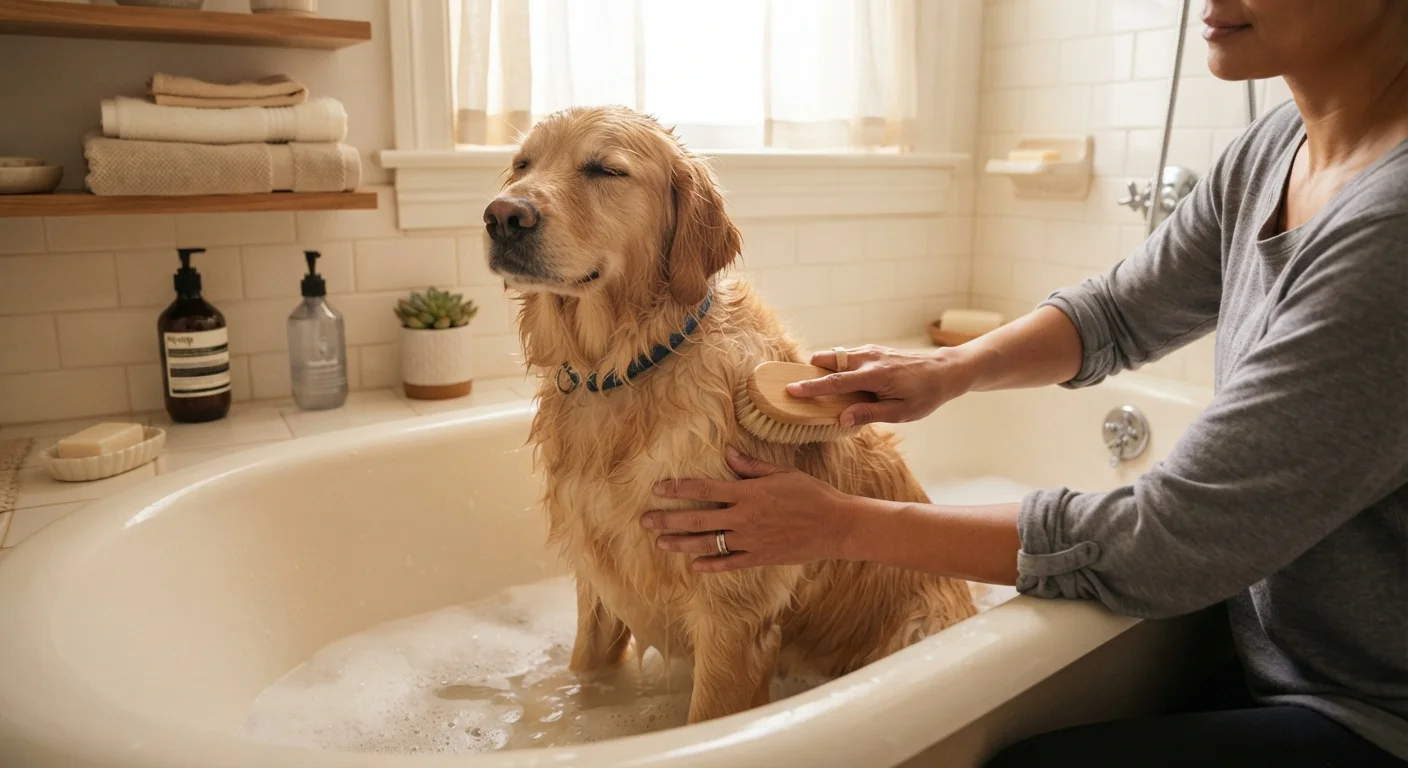
Use a brush or comb appropriate for your pet's coat length and texture to work through the fur in sections, moving in the direction of hair growth. Pay attention to behind the ears, under the legs, and around the collar - areas where mats tend to form. Removing tangles now prevents water from tightening them into painful knots during the bath.
Introduce water gradually
Run the water before your pet gets in so the sound isn't a surprise. Test the temperature - lukewarm, not hot - on your own wrist. Place your pet on the non-slip mat and wet the coat slowly from the neck down, avoiding ears and eyes. Use a cup or handheld nozzle rather than overhead spray if your pet is sensitive to the pressure.
Shampoo, lather, and rinse thoroughly
Apply a small amount of pet shampoo and work it gently into the coat using your fingertips. Lather from the back of the neck toward the tail, then down the legs. Rinse completely - leftover shampoo residue can irritate skin. A second rinse is advisable for thicker coats.
Dry the coat gently but completely
Wrap your pet in an absorbent towel and blot - don't rub vigorously, which can cause tangles and friction. If your pet tolerates sound, a pet-safe blow dryer on a low, cool setting can speed drying. Keep the dryer moving so heat doesn't concentrate on one area. Brush through the coat again once mostly dry to prevent new mats from forming.
Trim nails in small increments
Hold the paw firmly but gently. Clip only the very tip of each nail - the translucent section - to stay clear of the quick (the pink blood vessel inside the nail). On dark nails where the quick isn't visible, take off just a sliver at a time. Do one or two paws per session if your pet is unsettled rather than forcing all four at once.
Know When to Stop - and When to See a Pro
If your pet is panting heavily, trembling, growling, or attempting to bite during grooming, end the session immediately and give them time to recover. Forcing a stressed animal through grooming can worsen fear responses and create long-term aversion. For pets with severe anxiety or medical skin conditions, consult your veterinarian before attempting further at-home grooming.
Building a Routine That Sticks
The most effective grooming routine is one your pet begins to predict. Scheduling sessions at the same time of day - perhaps after a walk when your dog is already calm - helps establish a pattern. Keep early sessions short, even just five minutes of brushing, and gradually extend duration as your pet relaxes into the habit.
Grooming is also part of a larger constellation of daily care. Tasks like dental hygiene, ear cleaning, and nail checks are frequently skipped but have a real impact on long-term health. Our guide to the everyday pet care routine most owners overlook covers these in practical detail. Similarly, the connection between mental stimulation and your pet's overall wellbeing - including how they handle stress during grooming - is explored in overlooked wellness habits that quietly affect pet longevity.
If your pet's coat, skin, or nails require specialized attention beyond basic at-home care, a professional groomer or your veterinarian can help bridge the gap.