

Key Takeaways
- Dental disease is the most common preventable health problem in dogs and cats.
- Overgrown nails can alter posture and cause joint pain over time.
- Skipping ear cleaning allows moisture and debris to create chronic infections.
- Most overlooked care tasks take under five minutes but have lasting health impact.
- Regular at-home checks complement - but do not replace - veterinary visits.
Why Routine Pet Care Falls Through the Cracks
Most pet owners are diligent about feeding, walks, and annual vet visits. But a handful of daily and weekly care tasks - brushing teeth, trimming nails, cleaning ears, checking skin folds - are routinely skipped, not out of neglect, but because they feel unfamiliar or unimportant. The consequences tend to build quietly until a vet appointment reveals a problem that's been developing for months.
Understanding why these tasks get overlooked is the first step toward building better habits. This article walks through the most common mistakes pet owners make in their everyday care routines, why each one happens, and how to correct course without turning your household upside down. For a broader look at what responsible care involves, see everything that goes into responsible pet ownership.
Skipping tooth brushing because the pet resists or the owner assumes it isn't necessary.
Why it happens: Dental care for pets isn't intuitive, and resistance from the animal makes owners give up quickly. Many assume bad breath is normal rather than a sign of developing disease.
Waiting until nails are visibly long or curling before trimming them.
Why it happens: Nail trims can be stressful for both pet and owner, especially if a quick (the blood vessel inside the nail) has been accidentally cut in the past. Owners often delay to avoid the confrontation.
Neglecting ear cleaning until visible debris or odor is obvious.
Why it happens: Ears are easy to overlook because problems develop internally and aren't visible. Owners often don't check ears unless the pet is shaking its head or scratching persistently.
Ignoring skin folds, coat condition, and changes in the skin between vet visits.
Why it happens: Without a structured routine, coat and skin changes - flakiness, redness, new lumps - can be overlooked because they develop gradually. Owners may not know what normal looks like for their specific pet.
Assuming annual vet visits make at-home monitoring unnecessary.
Why it happens: Pet owners often rely entirely on professional checkups, not realizing how much can change between annual appointments - particularly in older animals.
Building the Habit Without the Struggle
The common thread across all these overlooked tasks is unfamiliarity - for both owner and pet. Animals that weren't conditioned to handling as puppies or kittens may resist ear checks or nail trims, which makes owners avoid the task, which makes the resistance worse. Breaking that cycle means starting slowly and keeping sessions short and positive.
Never Use Human Products on Pets
Human toothpaste, ear cleaners, and skin products are formulated for human biology and can be toxic or irritating to animals. Fluoride in human toothpaste, for example, is harmful if ingested by dogs or cats. Always use products specifically formulated and approved for use in the species you're caring for, and confirm choices with your veterinarian when in doubt.
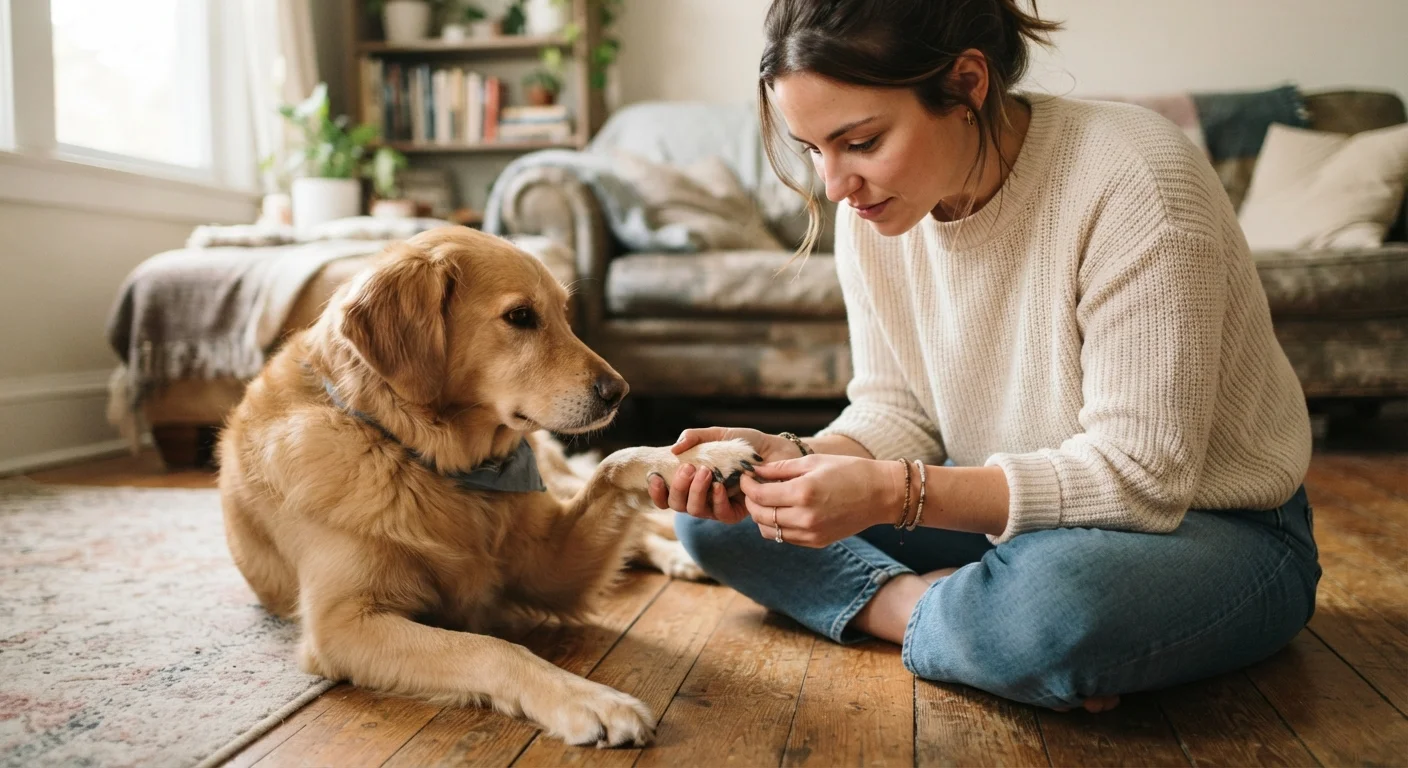
Pairing each task with something your pet already enjoys - a treat, a favorite toy, calm praise - helps build a neutral or positive association over time. Consistency matters more than frequency at first; even touching your pet's paws for 30 seconds daily builds tolerance faster than a monthly struggle session. For guidance on keeping grooming calm and manageable at home, grooming at home without stressing your pet out offers practical techniques.
Pairing home care with a simple monthly check helps you spot changes before they become problems. The monthly at-home pet wellness check is a structured way to build that habit. And if you notice behavioral changes alongside physical ones - hiding, aggression, or unusual chewing - why pets act out and what's usually behind it can help you identify a possible root cause.
This article is for general informational purposes only and is not a substitute for professional veterinary advice. Always consult a licensed veterinarian regarding your pet's specific health needs.