

Key Takeaways
- Most dogs and cats develop signs of periodontal disease by age three.
- Bad breath is often the first visible sign of underlying dental disease in pets.
- Dental disease can contribute to problems affecting the heart, kidneys, and liver.
- Regular professional cleanings and home brushing significantly reduce oral disease risk.
- Many pets hide dental pain, so owners cannot rely on behavioral cues alone.
Why Pet Dental Disease Flies Under the Radar
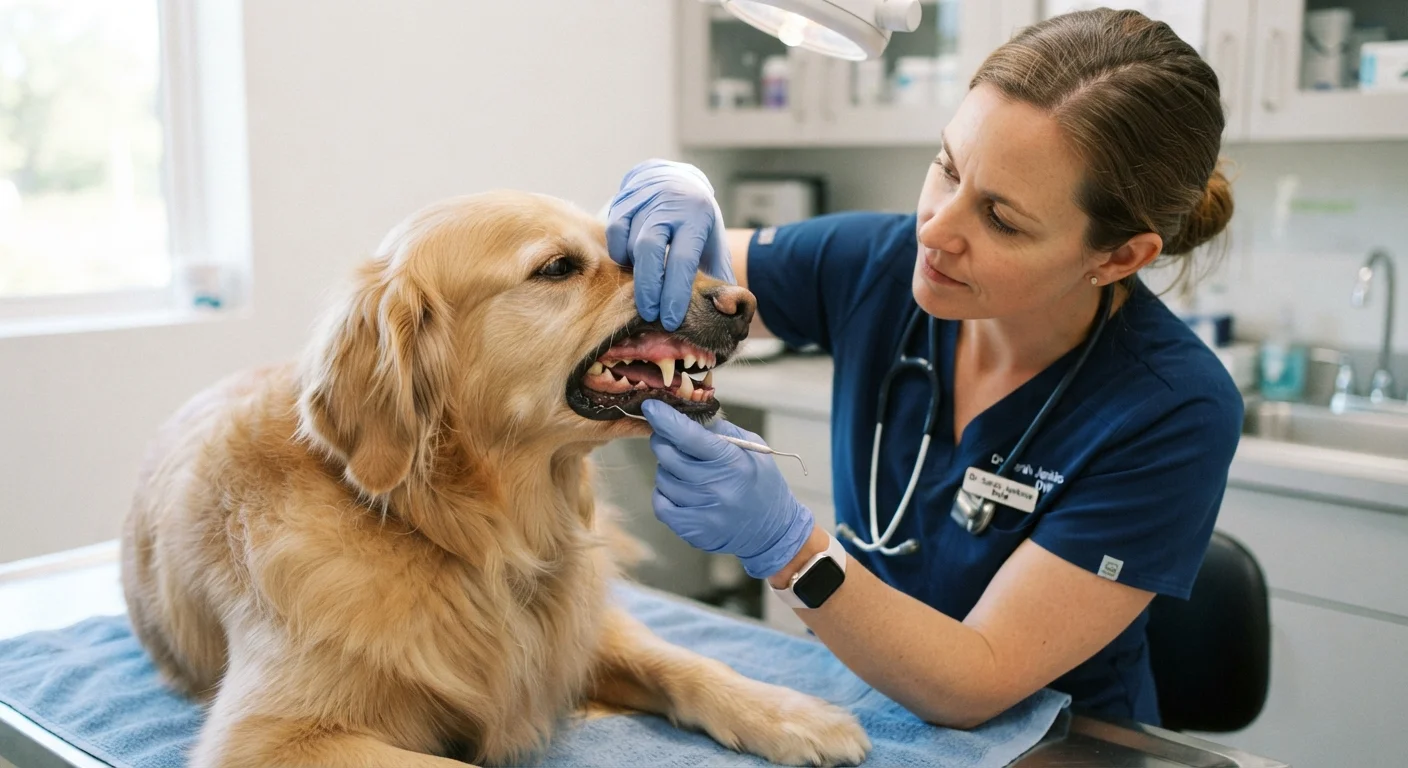
Periodontal disease - infection and inflammation of the structures supporting the teeth - is one of the most frequently diagnosed conditions in companion animals. According to veterinary dental organizations, an estimated 80% of dogs and 70% of cats show evidence of oral disease by the time they reach three years of age. Yet many owners are caught off guard at annual checkups when a veterinarian flags significant tartar buildup, gum recession, or loose teeth.
Part of the disconnect is behavioral. Cats and dogs are instinctively inclined to mask pain and discomfort. A pet may continue eating, playing, and appearing outwardly normal while quietly living with significant oral disease. Unlike a limp or a visible wound, dental deterioration is largely invisible without hands-on examination.
Understanding what healthy and unhealthy pet mouths look like - and separating fact from common myth - puts owners in a much stronger position to protect their animals. See our everyday pet care routine guide for a broader look at oral hygiene alongside other often-skipped habits.
Myth
Bad breath in dogs and cats is just normal - it's what animal mouths smell like.
Fact
Significant bad breath (halitosis) in pets is typically a sign of bacterial overgrowth associated with dental or gum disease, not a normal baseline.
While a pet's breath is unlikely to smell minty fresh, a strong, persistent foul odor is a clinical indicator, not an inevitable feature of being a dog or cat. The smell comes from volatile sulfur compounds produced by bacteria colonizing plaque, tartar, and infected gum tissue. Mild, transient breath changes can occur after eating certain foods, but chronic halitosis warrants a veterinary dental evaluation.
Myth
If my pet is still eating normally, their teeth must be fine.
Fact
Pets frequently continue eating despite significant dental pain because their drive to eat is strong and they have few ways to communicate discomfort.
This is one of the most dangerous misconceptions in pet dental care. Animals in the wild - and by extension domesticated pets - have a strong survival instinct to eat regardless of pain. Veterinarians routinely discover broken teeth, abscesses, and advanced periodontal disease in animals whose owners reported completely normal appetite and behavior. A maintained appetite should never be used as a proxy for oral health.
Myth
Dental cleanings are unnecessary because dry kibble keeps teeth clean on its own.
Fact
Dry food has minimal clinically meaningful impact on dental plaque and does not eliminate the need for professional cleanings or home care.
The idea that crunchy kibble acts like a toothbrush is widely repeated but not well-supported by veterinary dental research. Most kibble shatters on contact rather than abrading the tooth surface. Certain specially formulated dental diets with larger, fibrous kibble pieces do show measurable benefit - but standard dry food does not. The Veterinary Oral Health Council evaluates products for efficacy; checking for their seal is a reliable guide.
Myth
Dental disease only affects the mouth and is not a serious health concern.
Fact
Chronic periodontal disease has been associated with systemic complications involving the heart, kidneys, and liver in companion animals.
The mouth is not isolated from the rest of the body. Bacteria from infected gum tissue can enter the bloodstream - a process called bacteremia - and reach major organs. Research in veterinary medicine has identified associations between severe periodontal disease and conditions including endocarditis (heart valve infection) and kidney damage. While the relationship is still being studied, the biological pathway is well established, giving veterinarians strong reason to treat oral disease as a whole-body concern. This is especially relevant for senior pets, whose organ systems may be more vulnerable.
Myth
Anesthesia for dental cleanings is too risky to be worth it, especially for older pets.
Fact
Modern veterinary anesthesia protocols, including pre-anesthetic bloodwork and monitoring, make professional cleanings reasonably safe for most pets including seniors.
Anesthetic risk is real and should be discussed openly with a veterinarian - but it is frequently overstated as a reason to forgo necessary dental care. Modern protocols use multi-drug approaches that reduce the amount of each drug needed, continuous vital-sign monitoring, and IV fluid support. Pre-anesthetic screening helps identify underlying conditions that require extra precaution. For many older pets, the health risks of untreated dental disease outweigh the managed risks of anesthesia. A veterinarian can help assess the individual risk-benefit balance.
What the Evidence Says About Prevention and Treatment
Veterinary dentistry has a strong evidence base supporting several preventive strategies. Daily toothbrushing using toothpaste formulated for pets (never human toothpaste, which contains ingredients unsafe for animals) is considered the gold standard. Even brushing several times per week meaningfully reduces plaque accumulation compared to no brushing at all.
Professional dental cleanings performed under general anesthesia allow veterinarians to scale above and below the gumline, probe each tooth, and take dental radiographs (X-rays) - steps that cannot be replicated in an awake animal. These cleanings are not purely cosmetic; they are diagnostic and therapeutic procedures.
80%
Dogs with oral disease by age 3
Veterinary dental organizations estimate approximately 80% of dogs show signs of periodontal disease by their third year of life.
70%
Cats affected by dental disease by age 3
An estimated 70% of cats display evidence of oral disease by age three, making it among the most prevalent feline health conditions.
#1
Most diagnosed condition in companion animals
Periodontal disease is consistently cited by veterinary professionals as the most commonly diagnosed health problem seen in routine practice.
For owners who struggle with brushing, dental diets, water additives, and certain chews that carry the Veterinary Oral Health Council (VOHC) seal have demonstrated efficacy in reducing plaque and tartar in controlled studies. These serve as adjuncts, not replacements, for professional care.
Monitoring dental changes at home is also valuable. A structured monthly wellness check can help you spot early changes in gum color, swelling, or tooth surface before they escalate. If your pet shows sudden reluctance to eat hard food, excessive drooling, or pawing at the mouth, these warrant prompt veterinary attention - learn more in our guide to signs your pet may need a vet sooner than you think.
Anesthesia-Free Dental Cleanings Are Not Equivalent
Procedures marketed as "anesthesia-free" dental cleanings remove visible tartar from tooth surfaces but cannot address disease below the gumline, where periodontal damage actually begins. They also do not allow for safe dental probing or radiographs. Major veterinary dental organizations, including the American Veterinary Dental College, do not consider these procedures a substitute for professional cleanings performed under general anesthesia.
This article is for general informational purposes only and does not constitute veterinary medical advice. Always consult a licensed veterinarian for guidance specific to your pet's health and dental care needs.