

Why the Scale Alone Doesn't Tell the Full Story
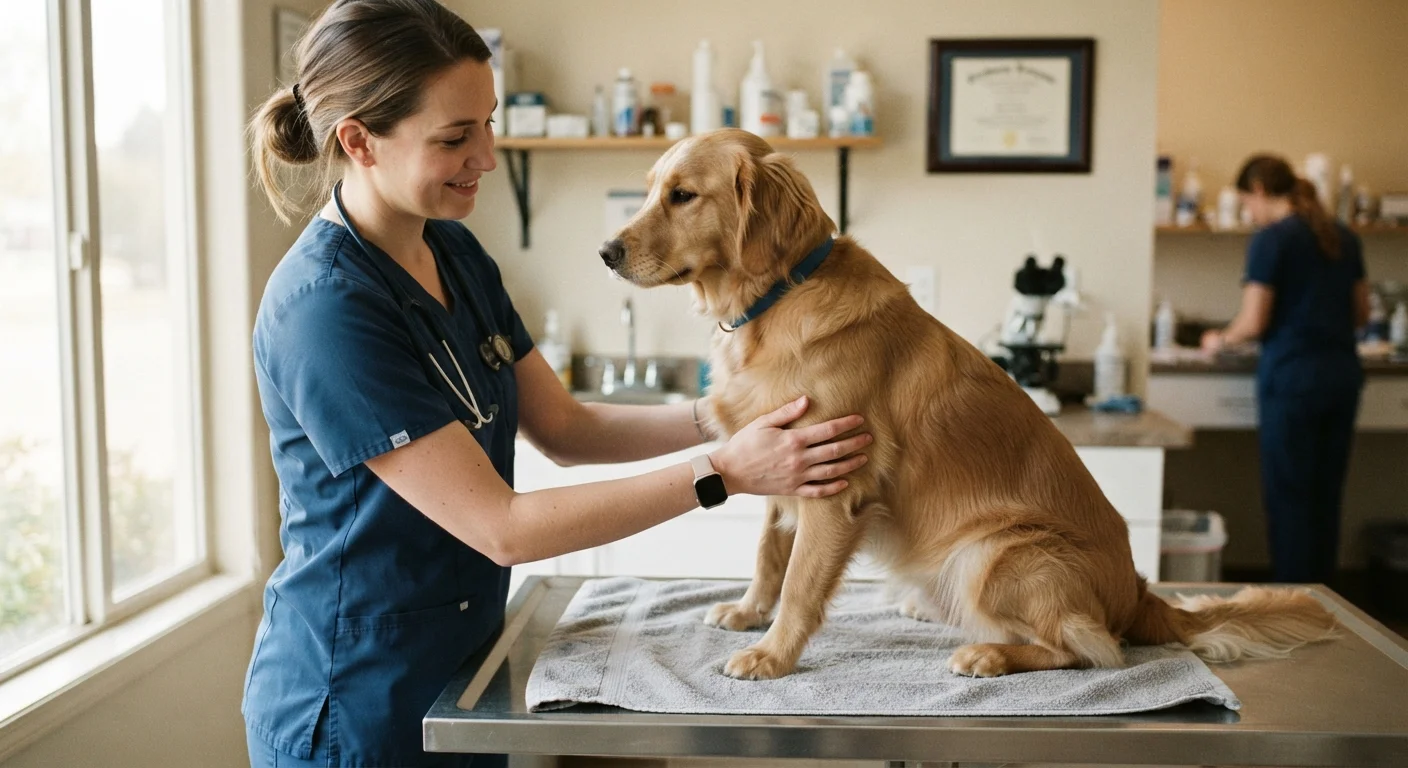
A number on the scale can be misleading. A 65-pound Labrador and a 65-pound Greyhound are in entirely different physical states - one may be carrying excess fat while the other is lean and athletic. That's why veterinarians rely on a standardized evaluation called the Body Condition Score (BCS) to assess whether an animal is at a healthy weight for its individual build.
The BCS system examines fat coverage over specific body landmarks - the ribs, spine, hips, and waist - rather than comparing a pet to a single weight number. Most veterinary practices use either a 5-point or 9-point BCS scale, where the midpoint represents ideal condition. A score of 3/5 or 4-5/9 is generally considered optimal, though your veterinarian will interpret the result in context with your pet's breed, age, and health history.
Pairing BCS awareness with a structured monthly wellness check gives owners a much more complete picture of their pet's health trajectory over time.
How to Assess Body Condition at Home
You don't need clinical training to perform a basic body condition check. Here's a simple, hands-on approach vets recommend:
- Rib check: Place both hands on your pet's sides, thumbs along the spine. You should be able to feel individual ribs with light pressure - but not see them prominently. If you have to press hard to feel them, excess fat may be present. If they're immediately visible and sharp, the animal may be underweight.
- Waist check: View your pet from above. Most healthy dogs and cats show a slight inward tuck behind the ribs. A straight or outward-bulging profile often signals excess weight.
- Abdominal tuck: Look from the side. The belly should rise slightly from the chest toward the hindquarters - a sagging abdomen is a common indicator of obesity.
These assessments work across dogs and cats, though breed-specific body types - like the deep chests of Whippets or the dense coats of Huskies - can affect how you interpret results. When in doubt, ask your veterinarian to walk you through the evaluation in person.
Understanding body language alongside physical checks can also be valuable. See our health-focused primer on reading your dog's body language for signs of discomfort that may accompany weight-related conditions.
Body Condition Score (BCS)
A standardized numerical system used by veterinarians to evaluate an animal's fat coverage and overall physical condition relative to its ideal body weight. It is assessed through visual inspection and hands-on palpation of specific landmarks.
Palpation
The act of using hands and fingers to physically examine an animal's body - feeling for fat coverage, muscle mass, or abnormalities. Vets use palpation as a core part of BCS assessment.
Muscle Condition Score (MCS)
A companion assessment to BCS that evaluates muscle mass separately from fat. An animal can have excess fat but still experience significant muscle loss, making MCS an important additional tool.
Ideal Body Weight (IBW)
The weight range at which an individual animal is estimated to be in optimal health, based on breed, sex, and body frame - not a fixed universal number.
What Abnormal BCS Scores Mean for Your Pet's Health
Both underweight and overweight conditions carry health risks, and recognizing them early matters. Animals scoring at the low end of the BCS scale - with visible ribs, spine, and hip bones, and little muscle mass - may be experiencing malnutrition, dental pain that limits eating, parasites, or an underlying systemic illness. These pets warrant prompt veterinary evaluation.
On the other end, pets scoring in the overweight-to-obese range are more susceptible to joint disease, diabetes, respiratory difficulty, and a shorter lifespan. Veterinary research consistently links excess body fat in dogs and cats to reduced quality of life and increased disease burden, though individual outcomes vary.
Nutritional changes are often part of the management plan - and reading food labels accurately is foundational. Our plain-language breakdown of pet nutrition labels explains how to evaluate what's actually in your pet's food. For older animals, body condition benchmarks can shift; consult our article on how health monitoring changes as pets age for age-specific guidance.
This article is for general informational purposes only and is not a substitute for professional veterinary advice. Always consult your veterinarian before making changes to your pet's diet or care plan.