
Iceland in Winter: What Travelers Actually Experience Beyond the Northern Lights

Key Takeaways
- Iceland's winter offers far more than aurora chasing - geothermal pools, lava caves, and glaciers are accessible year-round.
- Daylight in December and January can drop to just four or five hours, which shapes how you plan each day.
- Road conditions are serious; many highland roads close entirely in winter - always check conditions before driving.
- Winter flights from the US to Reykjavík can be less in demand, making it a viable shoulder-season option for budget-conscious travelers.
- Aurora sightings are never guaranteed - cloud cover and solar activity both play a major role.
- Packing the right layering system matters as much as your itinerary in Icelandic winter conditions.
Iceland in Winter
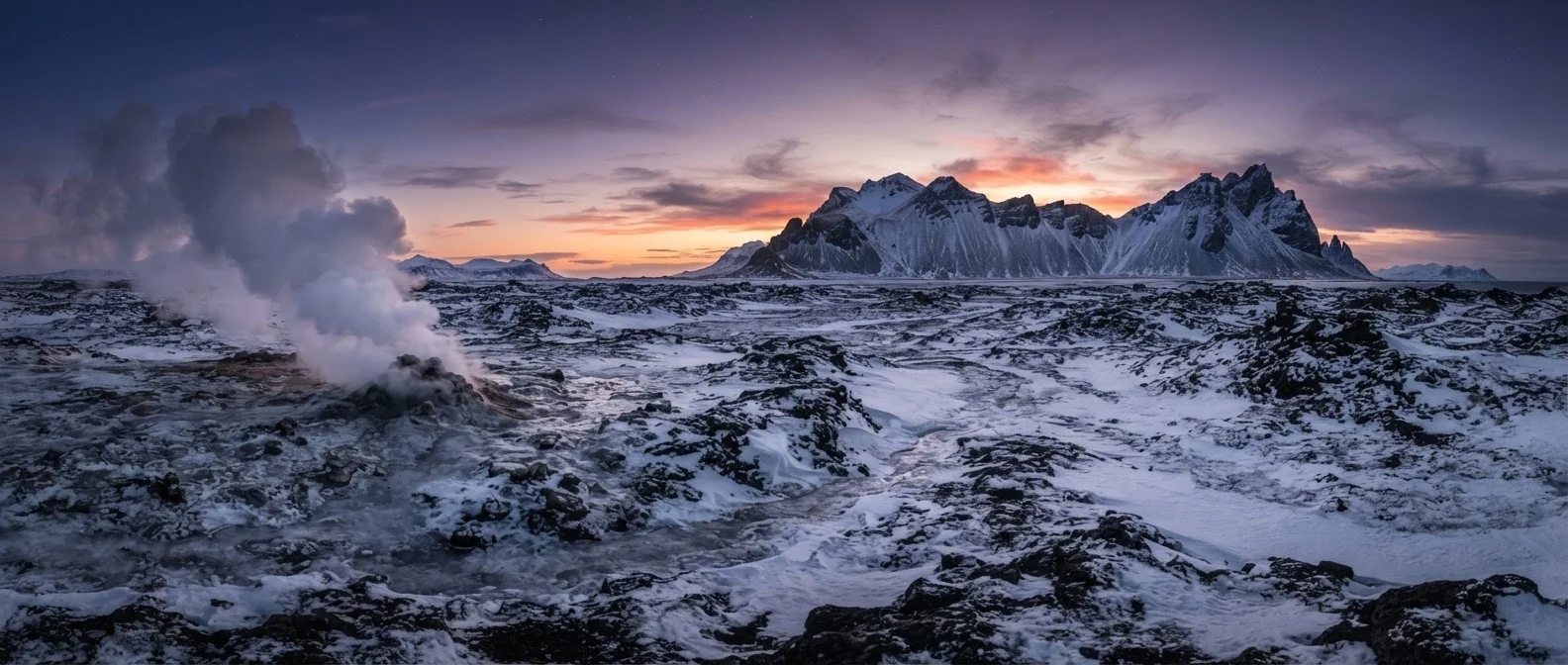
Iceland's winter season - roughly November through March - is a period of extreme darkness, sub-freezing temperatures, and dramatically reduced daylight, sometimes as few as four to five hours per day. For travelers, it presents a radically different Iceland than the midnight-sun summer version: snow-draped volcanic terrain, steaming geothermal pools, and a quieter, more atmospheric version of the country. The northern lights are the headline draw, but they're far from the whole story.
Iceland sits just below the Arctic Circle, which means polar night (continuous darkness) doesn't technically occur in Reykjavík, though daylight is extremely limited. True polar night is experienced in destinations farther north, like northern Norway.
The Reality of Darkness and Light
Iceland in winter is, first and foremost, a lesson in radical light. Arriving in December, many American visitors are surprised to find that the sun barely crests the horizon - and only for a few precious hours. Rather than treating this as a liability, seasoned Iceland travelers build their itineraries around it. Outdoor activities - waterfall walks, glacier hikes, lava field explorations - are scheduled during daylight. Evenings become opportunities to soak in a hot pot, explore Reykjavík's cafe culture, or position yourself under dark skies watching for auroras.
This experience sits firmly in the category that travel writers call "off-season" - though Iceland in winter is increasingly its own distinct draw. Understanding what off-season really means at any destination helps set honest expectations before you board the plane.
~4-5 hrs
Daylight hours in Reykjavík in December
According to the Icelandic Meteorological Office, the winter solstice in Reykjavík yields roughly four hours and seven minutes of daylight.
75%+
Of Iceland's tourist arrivals occur May-September
Icelandic Tourism Board data consistently shows summer months dominate visitor traffic, making winter a notably quieter period.
Sept-March
Optimal window for aurora viewing in Iceland
The Icelandic Met Office identifies this six-month window as the primary aurora season, contingent on dark skies and solar activity.
What's Actually Open and Accessible
Contrary to common assumptions, Iceland doesn't shut down in winter. Geothermal attractions - hot springs, volcanic caves, and heated outdoor pools - are fully operational and, many visitors argue, more enjoyable when surrounded by snow. Ice cave tours inside Vatnajökull glacier are only possible in winter when the caves are stable enough to enter safely. Whale watching operates year-round from Húsavík and Reykjavík, with humpback and minke whales commonly spotted even in January.
What isn't accessible matters just as much. The famous F-roads through Iceland's interior highlands close entirely from roughly October through late spring. This means iconic drives like the Kjölur route or access to Landmannalaugar are off the table. Stick to the Ring Road and known coastal routes, always checking the Vegagerðin road conditions portal before departing.
Check Road Conditions Every Morning
Iceland's weather shifts fast. A road that was clear at 8am can be closed by noon due to drifting snow or ice. The Vegagerðin app (road.is) provides real-time color-coded road status and is widely considered essential by winter drivers. Download it before you land.
Northern Lights: Honest Expectations
The northern lights - aurora borealis - are real, spectacular, and genuinely possible in Iceland from September through March. They are also deeply weather-dependent and unpredictable. Cloud cover (which Iceland has plenty of in winter) can blank out even a strong aurora event. A clear night with a solar activity index of KP3 or higher gives you a fighting chance, but veteran Iceland visitors will tell you: book a winter trip for the full experience, and treat an aurora sighting as a bonus rather than a given.
The Icelandic Meteorological Office publishes a free aurora forecast tool that tracks both cloud cover and geomagnetic activity. Apps aggregating this data are widely used by locals and travelers alike. Getting 30-40 minutes outside Reykjavík dramatically improves your odds by reducing light pollution.
Planning Practically: What American Travelers Should Know
Iceland's winter is genuinely manageable with preparation. Transatlantic flights from east coast US hubs operate regularly to Keflavík International Airport, and demand is measurably lower than summer peak - which can translate to more scheduling flexibility. Compare this to shoulder season travel trade-offs, where timing shifts come with their own set of compromises. In Iceland's case, winter travelers trade crowds and long daylight for moody solitude, geothermal immersion, and ice caves.
Currency is the Icelandic króna (ISK); US dollars are not widely accepted outside tourist contexts, so plan to use cards or exchange currency. Iceland consistently ranks among the most expensive travel destinations globally, so budgeting conservatively is wise. Accommodation in Reykjavík ranges from guesthouses to hotels; outside the capital, options thin out considerably in winter, so book rural lodging well in advance.
Travel conditions, road accessibility, and attraction availability can change rapidly in Iceland, especially in winter. Always verify entry requirements, road status, and facility hours through official Icelandic government and operator sources before and during your trip.