

Travel & Trips

Your Pre-Departure Checklist for International Travel

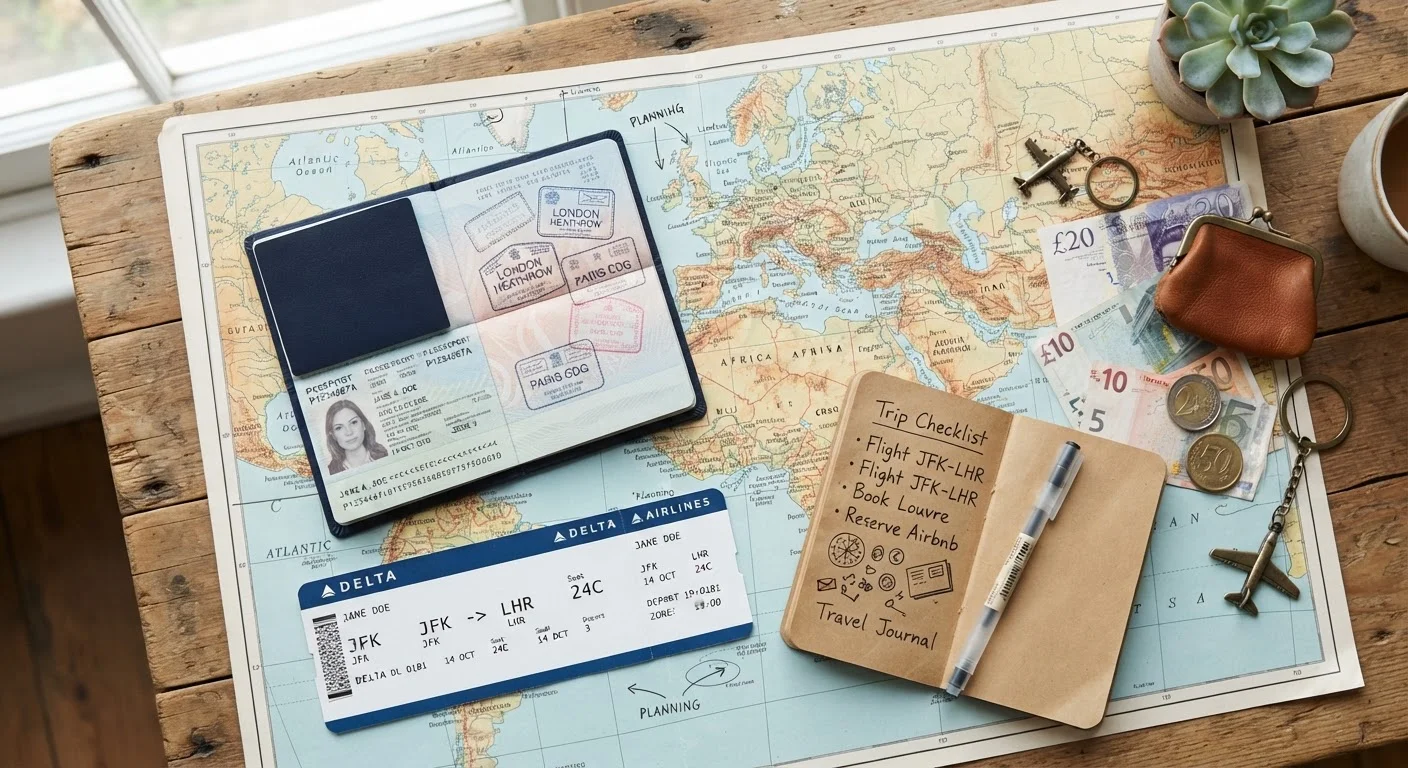
Open passport and boarding pass arranged with travel items on a world map

Key Takeaways

  • Check passport validity well in advance — many countries require at least six months of remaining validity.
  • Notify your bank and credit cards before departure to avoid frozen accounts abroad.
  • Research entry requirements, visa rules, and health advisories through official government sources.
  • Store digital and physical copies of critical documents separately from originals.
  • Confirm travel insurance coverage before you leave, not after something goes wrong.
45–90 min

Summary

22 items · 45–90 minutes

Why a Pre-Departure Checklist Matters

International travel introduces a layer of complexity that a domestic trip simply doesn't carry. A forgotten document, an expired passport, or a missed visa requirement can derail your plans before you ever reach the gate. Working through a structured checklist — ideally two to four weeks before departure — gives you time to fix problems, not just discover them.

This checklist covers four core areas: documents, health and safety prep, finances, and day-of logistics. Think of it as your quality-control pass before wheels-up. For a complementary look at saving money before you even book, see our pre-trip savings checklist.

Documents & Identity

Verify your passport is valid for at least six months beyond your return date, as many countries enforce this requirement at the border. Must
Research and obtain any required visas or entry permits for every country you plan to visit, including transit stops. Must
Make two copies of your passport, visa, and travel insurance policy — leave one copy at home and keep another separate from your originals. Must
Save digital copies of all critical documents to a secure cloud storage service accessible from your phone. Should
Check whether your destination requires an International Driving Permit if you plan to rent or drive a vehicle. Should

Health & Safety Prep

Consult your healthcare provider or a travel medicine clinic at least four to six weeks before departure about destination-specific vaccinations or health precautions. Must
Check the CDC Traveler Health page and U.S. Department of State travel advisories for your destination to understand current health and safety conditions. Must
Pack a travel health kit including any prescription medications (with documentation), basic first aid supplies, and any over-the-counter remedies your provider recommends. Must
Confirm your travel insurance policy covers emergency medical care and medical evacuation, and note the 24-hour assistance number. Must
Research local emergency numbers and the nearest embassy or consulate at your destination. Should

Finances & Money

Notify your bank and all credit card issuers of your travel dates and destinations to prevent your accounts from being flagged for fraud. Must
Confirm whether your cards charge foreign transaction fees and identify which cards to prioritize abroad. Should
Carry a small amount of local currency for arrival expenses, as airport ATMs and currency exchange counters may not always be accessible. Should
Note your bank's international ATM partners at your destination to minimize fees when withdrawing local currency. Nice to have

Logistics & Day-Of Prep

Reconfirm your flight, hotel, and any pre-booked transfers or tours 24–48 hours before departure. Must
Arrange transportation to the airport and budget enough time for international check-in, which typically requires arriving at least three hours early. Must
Download offline maps, translation apps, and airline apps to your phone before leaving home WiFi. Should
Confirm your mobile plan's international coverage or arrange a local SIM or travel data plan for your destination. Should
Pack a universal power adapter suitable for the electrical outlets used in your destination country. Should
Enroll in the State Department's Smart Traveler Enrollment Program (STEP) so the nearest U.S. embassy can reach you in an emergency. Should
Arrange for your mail to be held or collected and confirm any home or pet care plans are in place. Nice to have
Leave a detailed itinerary — including hotel names, phone numbers, and flight numbers — with a trusted contact at home. Nice to have

Tools and Resources You'll Need

Before diving into the checklist itself, gather the resources below. Having them in one place — a dedicated travel folder, physical or digital — will speed up the process considerably.

Required

U.S. Department of State Travel Website (travel.state.gov)

Look up passport and visa requirements, travel advisories, and embassy locations for your destination.

Required

CDC Travelers' Health Portal (wwwnc.cdc.gov/travel)

Research destination-specific health notices, recommended vaccinations, and disease outbreaks.

Required

STEP (Smart Traveler Enrollment Program)

Register your trip with the nearest U.S. embassy so you can be contacted in case of emergencies abroad.

Required

Secure cloud storage (any provider)

Store scanned copies of your passport, visa, insurance policy, and itinerary for access anywhere.

Optional

Offline maps app

Navigate your destination without relying on mobile data or WiFi connectivity.

Required

Universal power adapter

Charge your devices using the electrical outlets common in your destination country.

If you're also planning a domestic leg of the journey involving a long drive, it's worth running through a pre-drive vehicle check before hitting the road to the airport.

A Few Critical Reminders Before You Go

Passport and Visa Issues Won't Wait

Airlines and border agents enforce entry requirements strictly — a passport that expires one day too soon or a missing visa can mean being denied boarding or turned back at the border. Start your document review at least four to six weeks before your trip, not the night before. If your passport needs renewal or a visa application requires processing, that lead time is non-negotiable.

Verify All Entry Requirements Officially

Entry rules — including visa requirements, health documentation, and vaccination proof — can change without much notice. Do not rely on third-party travel blogs or forums for definitive guidance. Always confirm requirements directly through the official government sources of both your destination country and the U.S. Department of State before you travel.

Once you've worked through the checklist, do a final sweep 24 to 48 hours before departure. Confirm flight times directly with your airline — schedules can shift — and recheck any travel advisories that may have changed since you first researched your destination. The U.S. Department of State's travel advisory pages and the CDC's traveler health notices are the most reliable official sources for this.

This article provides general travel planning information only. Always verify entry requirements, health advisories, and visa rules through official government sources before traveling, as conditions can change. Nothing in this article constitutes legal, medical, or financial advice.

Travel & Trips Editorial Team is the collective byline for our editorial team and contributor network. Articles published under this byline or an editorial pen name are researched, written, and reviewed according to our editorial standards for clarity, consistency, and independence before publication.

View all articles by Travel & Trips Editorial Team →
Disclaimer: The content provided on our blog site traverses numerous categories, offering readers valuable and practical information. Readers can use the editorial team’s research and data to gain more insights into their topics of interest. However, they are requested not to treat the articles as conclusive. The website team cannot be held responsible for differences in data or inaccuracies found across other platforms. Please also note that the site might also miss out on various schemes and offers available that the readers may find more beneficial than the ones we cover.