

Key Takeaways
- Healthy soil contains billions of microorganisms that drive nutrient cycling and plant growth.
- Soil structure - how particles clump together - determines drainage, aeration, and root penetration.
- Organic matter is the single most impactful factor homeowners can improve in their soil.
- Soil pH controls which nutrients plants can actually absorb, regardless of how much is present.
- Practices like mulching, composting, and reducing tillage protect and rebuild soil biology over time.
Soil Health
Soil health refers to the ongoing capacity of soil to function as a living ecosystem - sustaining plants, filtering water, cycling nutrients, and supporting countless microorganisms. Healthy soil isn't just dirt; it's a dynamic mix of minerals, organic matter, water, air, and billions of living organisms working in concert. When soil health is strong, plants can access what they need to grow with far less intervention.
Soil scientists often measure health through biological indicators (microbial biomass, earthworm counts), chemical indicators (pH, nutrient levels), and physical indicators (aggregate stability, compaction). All three dimensions interact and must be considered together.
The Living World Under Your Feet
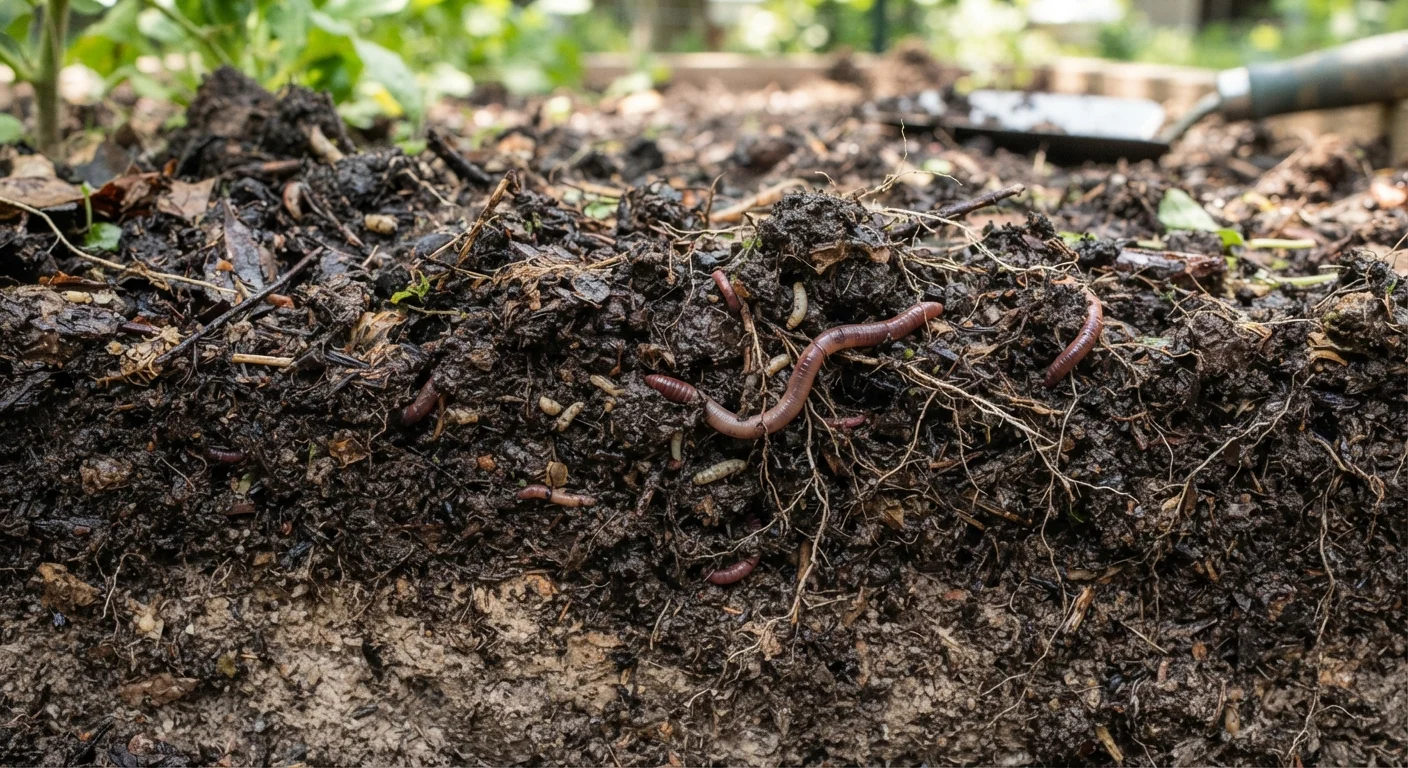
Most gardeners spend their time focused on what they can see - leaves, flowers, and fruit. But the most important action in any garden happens underground. A single teaspoon of healthy topsoil can contain more microorganisms than there are people on Earth. Bacteria, fungi, protozoa, nematodes, and earthworms form an interconnected web that breaks down organic matter, releases nutrients, and makes them accessible to plant roots.
This biological community is fragile. Compaction from foot traffic, excessive tilling, synthetic chemical overuse, and leaving soil bare and exposed can all suppress microbial activity. When that happens, plants must work harder for every nutrient they absorb - and they often fall short.
Understanding what's happening below the surface is the first step toward working with your soil rather than against it. Whether you're planning a vegetable plot or a perennial border, soil biology is where success begins. If you're newer to gardening, our beginner's guide to starting a vegetable garden covers how soil preparation fits into the broader picture of setting up a productive growing space.
Soil Biology Is Regionally Variable
Soil composition, native microbial communities, and natural pH vary significantly across the United States - from the acidic, clay-heavy soils of the Southeast to the alkaline, sandy soils of the Southwest. General principles apply broadly, but local cooperative extension services are the best resource for region-specific soil guidance and testing programs.
Soil Structure: Why Texture and Aggregates Matter
Soil texture - the ratio of sand, silt, and clay particles - is largely fixed and determined by your local geology. But soil structure, meaning how those particles clump together into aggregates, is something you can actively influence. Good structure creates pore spaces that hold both air and water, giving roots room to grow and microorganisms room to thrive.
Clay soils hold nutrients well but can become waterlogged and compacted. Sandy soils drain quickly but struggle to retain moisture and nutrients. The goal in both cases is to add organic matter, which binds particles into stable aggregates and improves both drainage and moisture retention simultaneously.
~1 billion
Bacteria per teaspoon of healthy topsoil
USDA Natural Resources Conservation Service estimates of microbial populations in productive agricultural and garden soils.
5%
Organic matter in ideal garden topsoil
Most productive garden soils contain around 5% organic matter by weight; many suburban soils start well below this threshold.
6.0-7.0
Optimal pH range for most vegetables
University extension guidelines consistently identify this range as where the widest variety of nutrients remain chemically available to plant roots.
Compaction is one of the most common and overlooked soil problems in home gardens. It collapses pore spaces, cuts off oxygen to roots, and makes it harder for water to infiltrate. Minimize foot traffic in growing beds, consider raised beds where compaction is a persistent issue, and avoid working wet soil - a few simple habits that protect structure over time.
Nutrients, pH, and the Chemistry of Availability
Plants require a range of nutrients to grow - macronutrients like nitrogen, phosphorus, and potassium in larger quantities, and micronutrients like iron, manganese, and zinc in smaller amounts. But nutrient presence in soil doesn't guarantee nutrient availability to plants. That's where pH comes in.
Soil pH is measured on a scale from 0 to 14, with 7 being neutral. Most garden plants perform best in slightly acidic to neutral soil (roughly pH 6.0-7.0). Outside this range, chemical reactions in the soil lock up certain nutrients, making them inaccessible even when present in abundance. Yellowing leaves on an otherwise well-fed plant can often be traced back to a pH problem rather than a genuine nutrient deficit.
A basic soil test - widely available through cooperative extension services and garden centers - tells you your current pH and primary nutrient levels. From there, amendments like lime (to raise pH) or sulfur (to lower it) can help bring soil into the right range. This is far more targeted than applying fertilizer blindly.
Building Soil Health Over Time
The good news: soil health responds to consistent, thoughtful management. Organic matter is the cornerstone. Adding compost regularly feeds soil biology, improves structure, and provides a slow release of nutrients. Our guide to home composting walks through exactly how to turn kitchen and yard waste into a powerful soil amendment.
Keeping soil covered is equally important. Bare soil loses moisture, erodes, and heats up - all conditions that stress the microbial community. Mulching garden beds with wood chips, straw, or shredded leaves moderates temperature, retains moisture, and adds organic matter as it breaks down. See our overview of mulching techniques and materials for practical depth and timing guidance.
Reducing disturbance - minimizing tillage, avoiding heavy chemical inputs, and rotating plant families in vegetable beds - allows fungal networks and microbial populations to stabilize. Soil health is not built in a single season; it's accumulated through small, consistent practices that compound over years.
Start With a Soil Test Before Amending
Before adding lime, sulfur, or fertilizer, get a basic soil test. Applying amendments without knowing your baseline can push pH or nutrient levels in the wrong direction. Many county cooperative extension offices offer low-cost testing, and results typically include specific amendment recommendations tailored to your soil type and intended crops.