

Key Takeaways
- Composting requires balancing carbon-rich 'browns' and nitrogen-rich 'greens' in roughly a 3:1 ratio.
- Moisture, aeration, and particle size all affect how quickly your pile breaks down.
- Finished compost improves soil structure, water retention, and biological activity.
- Most kitchen scraps and yard waste can be composted; a short list of materials should always be avoided.
- A basic compost pile can produce usable material in as little as two to three months with regular turning.
What you will need
Why Composting Belongs in Every Home Garden
Composting is one of the most practical habits a homeowner can develop. Rather than sending organic kitchen waste to landfill, you redirect it into a biological process that produces a genuine soil amendment - one that improves soil texture, supports microbial life, and supplies slow-release nutrients to plants. Understanding what's happening beneath your garden makes it clear why adding organic matter matters: healthy soil biology depends on a steady supply of decomposing carbon material.
Finished compost improves sandy soils by helping them retain water, and it opens up heavy clay soils by improving drainage and aeration. It also acts as a mild, balanced fertilizer - unlike synthetic inputs, it releases nutrients gradually as microorganisms continue to break it down. Whether you're starting a vegetable garden from scratch or tending established beds, homemade compost is a low-cost, high-value resource you can produce from materials you'd otherwise throw away.
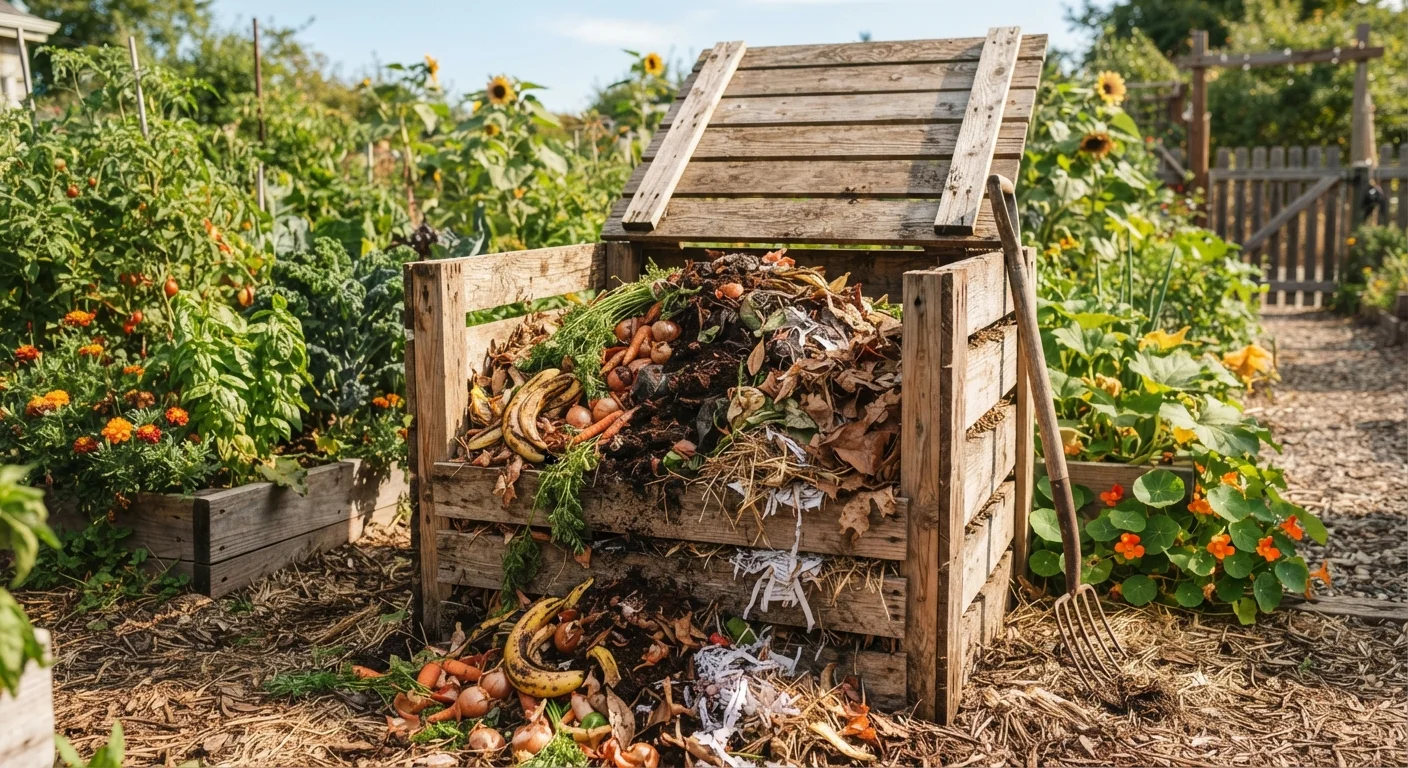
Compost bin or designated pile area
Contains materials, retains heat, and keeps pests out during decomposition.
Garden fork or compost turning tool
Used to aerate the pile regularly, which accelerates breakdown.
Kitchen scrap collection container
Collects vegetable peels, coffee grounds, and other compostable scraps at the counter before transferring to the outdoor pile.
Garden hose or watering can
Adds moisture to a dry pile to maintain the damp-sponge consistency needed for active decomposition.
Compost thermometer
Monitors internal pile temperature to confirm active decomposition is occurring.
Shredder or lawn mower
Reduces particle size of browns and greens to speed up breakdown.
What to Compost and What to Leave Out
Most plant-based household waste is compostable. Fruit and vegetable scraps, eggshells, coffee grounds, paper filters, tea bags (check for plastic stitching first), paper towels, cardboard, and dry leaves are all fair game. Grass clippings and fresh garden trimmings contribute valuable nitrogen. From the yard, fallen leaves, straw, and untreated wood chips are excellent carbon sources. Pair your compost habit with good mulching practices - excess leaves and wood chips that don't make it into the pile can go directly onto beds as mulch.
Never Compost These Materials
Meat, fish, dairy products, oily foods, pet waste, and diseased plants should never go into a home compost pile. These materials can attract pests, create odor problems, and in some cases introduce pathogens into the finished compost. Stick to plant-based kitchen scraps and untreated yard waste for safe, effective results.
Speed Up Decomposition Naturally
Chop or shred materials into smaller pieces before adding them to the pile. Smaller particle sizes dramatically increase the surface area available to decomposing microorganisms, which can cut your composting timeline in half. A simple garden shredder or even a lawn mower run over dry leaves achieves this quickly.
Following the Steps to Build and Manage Your Pile
The steps below cover everything from setting up your bin to harvesting finished compost. Pay particular attention to the balance of browns and greens and the importance of regular turning - these two factors account for most of the variation in how quickly a home pile produces usable compost. Gather what you need before you begin.
What you will need
Choose a location and set up your bin
Select a spot that receives partial sun and is reasonably convenient to both your kitchen and garden beds. Good drainage is important - avoid low-lying areas where water pools. A bin can be purchased ready-made or built from wire mesh, wooden pallets, or cinder blocks. A minimum interior volume of about 27 cubic feet (a 3×3×3-foot cube) is generally needed to generate enough heat for active decomposition. Leave the base open to the ground so earthworms and beneficial microorganisms can move freely into the pile.
Understand and collect your materials
Effective composting relies on a balance between two categories of material. Browns (carbon-rich): dry leaves, cardboard, newspaper, straw, wood chips, and paper bags. Greens (nitrogen-rich): vegetable and fruit scraps, coffee grounds and filters, tea bags, fresh grass clippings, and plant trimmings. Aim for roughly three parts browns to one part greens by volume. Too many greens without enough browns produces a soggy, smelly pile; too many browns slows decomposition significantly. Keep a small lidded container on your kitchen counter to collect scraps before transferring them outdoors.
Build and layer your pile
Start with a 4- to 6-inch layer of coarse browns - wood chips or straw work well here - directly on the soil to aid drainage and airflow at the base. Follow with a layer of greens, then another layer of browns on top. Lightly moisten each layer as you go. Continue alternating layers as materials become available. You do not need to add all material at once; most home composters build their pile gradually over weeks. If you have a large volume of material to start, building the pile all at once can accelerate initial heating.
Maintain moisture and aeration
The pile should feel roughly as moist as a wrung-out sponge - damp throughout but not dripping. Check moisture by squeezing a handful of material; a few drops of water should appear. If the pile is too dry, add water and mix it in. If it is too wet and smells strongly of ammonia, add more browns and turn the pile. Aerate by turning the entire pile with a garden fork every one to two weeks, moving outer material toward the center where temperatures are highest. This is the single most effective way to accelerate decomposition and prevent odors.
Monitor for heat and progress
An actively decomposing pile will heat up noticeably - sometimes reaching between 130°F and 160°F in its core. This heat is beneficial: it accelerates breakdown and helps neutralize weed seeds and some pathogens. You can check this with a long-stem compost thermometer, or simply notice that steam rises when you turn the pile on a cool morning. Over time, the pile will shrink in volume. When materials are no longer recognizable and the compost smells earthy and pleasant, it is nearing readiness.
Harvest and apply finished compost
Finished compost is dark brown, crumbly, and has a rich, earthy smell. Unfinished material (recognizable chunks, or a still-active pile) should be set aside to continue breaking down. Sift finished compost through a coarse screen or hardware cloth to separate any large pieces, which can go back into the active pile. Apply 1 to 3 inches of finished compost to garden beds and work it gently into the top few inches of soil. Compost also works well as a top dressing around established plants or mixed into container potting soil.
Putting Your Compost to Work
Once you have a steady supply of finished compost, the applications in your yard are broad. Work it into new garden beds before planting, use it as an annual top dressing on established beds, or blend it into potting mixes for container gardens. Even small balcony or patio setups benefit from compost-enriched potting soil. If you're working with limited ground space, composting can complement vertical gardening strategies - nutrient-rich soil gives vertically grown plants the reserves they need to thrive in confined root zones.
With a consistent routine, a well-managed backyard compost pile becomes a self-sustaining resource - one that closes the loop between your kitchen, your yard, and your garden beds.
Avoid Weed Seeds and Treated Wood
Do not add weeds that have gone to seed or plants treated with persistent herbicides - both can survive the composting process and cause problems in your garden later. Wood ash from treated or painted lumber should also be kept out of the pile.