

Key Takeaways
- DIY renovation is well-suited to cosmetic and low-risk tasks like painting, tiling backsplashes, and installing fixtures.
- Electrical, structural, and plumbing work typically requires licensed contractors and local permits in most US jurisdictions.
- Skipping required permits can affect your homeowner's insurance coverage and complicate future home sales.
- Honest self-assessment of your skill level, tools, and time availability is essential before starting any project.
- Hiring a contractor costs more upfront but often reduces long-term risk for complex or code-regulated work.
Our Verdict
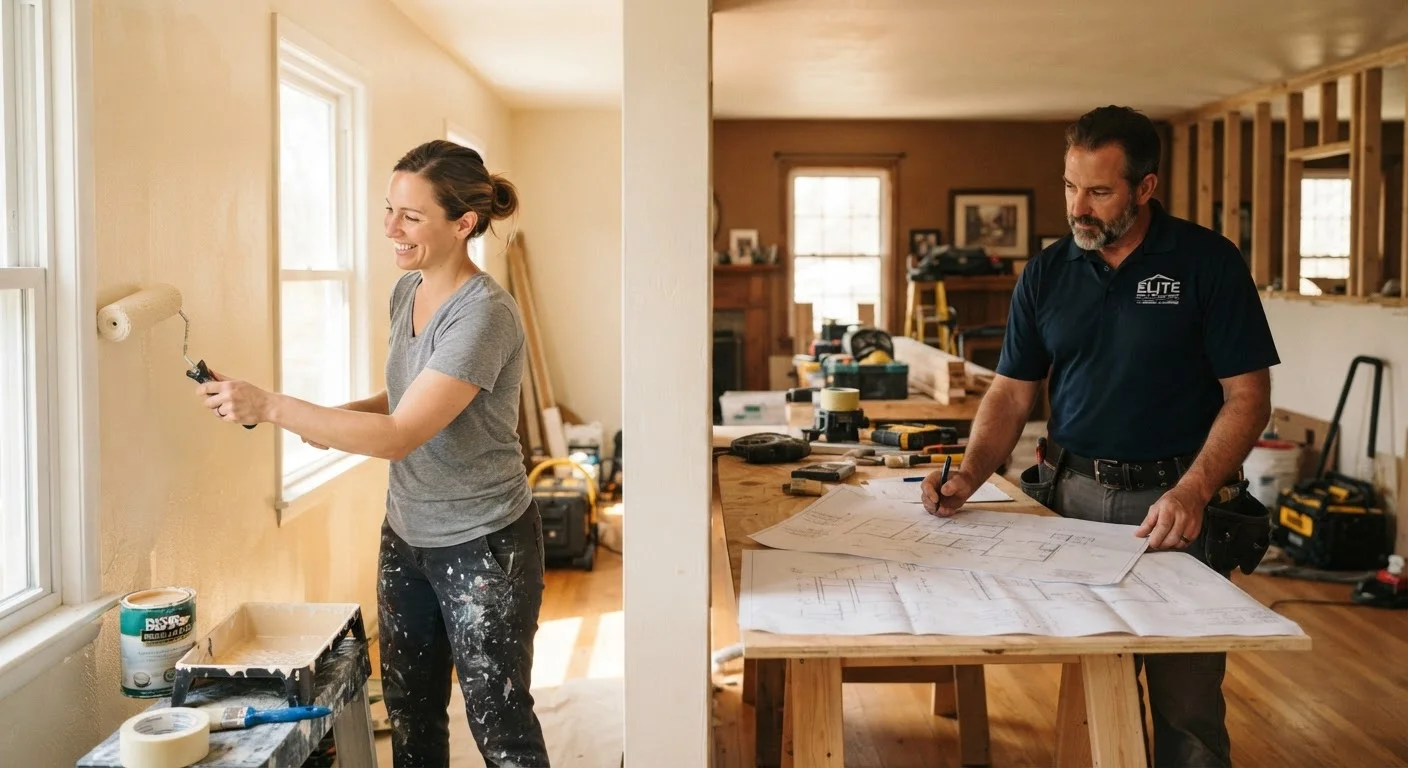
Neither DIY nor hiring a contractor is universally better - the right choice depends on the complexity of the project, local code requirements, and your own skills and risk tolerance. Cosmetic and straightforward repairs reward DIY effort; work that touches structural integrity, electrical systems, or plumbing almost always warrants professional involvement.
| Best for | Recommended |
|---|---|
| Homeowners comfortable with tools doing low-stakes cosmetic upgrades | DIY Renovation |
| Projects involving electrical panels, load-bearing walls, or major plumbing | Hiring a Contractor |
| Budget-conscious homeowners on simple, well-documented tasks | DIY Renovation |
| Any project that legally requires a licensed tradesperson in your jurisdiction | Hiring a Contractor |
How to Assess Any Project Before Picking Up a Tool
Before deciding whether to DIY or hire out, run every project through three filters: complexity, code requirements, and consequence of failure. A cosmetic task with a clear undo path - painting a room, swapping cabinet hardware, laying peel-and-stick tile - sits comfortably in DIY territory for most homeowners. A job that could crack a foundation, start a fire, or flood a floor if done wrong belongs in a different category entirely.
Ask yourself honestly: Do I have the right tools? Have I done anything comparable before? Can I recognize when something has gone wrong mid-project? If the answer to any of these is uncertain, factor that uncertainty into your decision - it's not a reason to panic, but it is a reason to research further or consult a professional before starting.
Also consider time. A contractor completes projects as their livelihood; a weekend DIYer working in two-hour windows may stretch a two-day project into two months, leaving a bathroom or kitchen partially functional for far longer than expected. For projects affecting daily life at home, realistic timeline planning matters as much as skill.
Projects Well-Suited to DIY
Many renovation tasks are genuinely DIY-friendly for homeowners who invest time in learning the process beforehand. Common examples include:
- Interior painting - walls, trim, and ceilings with proper prep and ventilation
- Installing flooring - laminate, luxury vinyl plank, and engineered hardwood often use click-lock systems requiring no adhesives
- Kitchen backsplash tiling - a manageable weekend project with the right adhesive and grout
- Replacing faucets and showerheads - most involve simple supply-line connections and no permit in typical jurisdictions
- Painting or replacing cabinet doors - high visual impact, low structural risk
- Basic drywall patching - holes from nails or small anchors, not structural openings
These projects reward patience and preparation. Watching manufacturer installation guides, reading your local jurisdiction's guidance, and doing a dry run before committing are habits that separate successful DIY outcomes from frustrating ones.
Start With a Practice Run on Low-Stakes Projects
If you're building DIY skills, tile a laundry room before tackling a master bathroom. Patch a small drywall section before opening up a whole wall. Low-visibility, low-consequence projects are ideal for developing technique without high-stakes pressure. Document what worked and what you'd do differently - those notes become your personal instruction manual for the next project.
Where a Licensed Contractor Is Typically Required
Certain work is restricted by law in most US states - meaning a license isn't just recommended, it's legally required. This includes:
- Main electrical panel work, new circuit installations, and service upgrades
- Structural changes - removing or modifying load-bearing walls, adding or altering beams
- HVAC installation - new ductwork, furnace replacement, or central air conditioning
- Major plumbing - moving drain lines, adding new supply lines, or installing gas lines
- Roofing in many jurisdictions - especially when tied to insurance claims
The reason these restrictions exist isn't bureaucratic convenience - it's that errors in these systems can be catastrophic and are often invisible until something fails. A misrouted gas line or an overloaded circuit doesn't announce itself before causing harm.
If you're curious about what specifically requires a permit where you live, our guide to home renovation permits explains the permit process and the real risks of skipping it. And for a closer look at what homeowners can legally handle in the electrical space, see the truth about DIY electrical work.
Unpermitted Work Can Follow You at Resale
Unpermitted renovations often surface during buyer home inspections and can require expensive remediation before a sale can close. In some cases, work must be opened up and inspected by a building official - meaning finished walls or ceilings may need to come down. Before skipping a permit to save time or money, weigh that risk against the cost of doing it correctly from the start.
Comparing the Two Approaches Side by Side
Understanding the trade-offs between DIY and contractor work helps you make a grounded decision - not one driven by cost anxiety or overconfidence in either direction.
| DIY Renovation | Hiring a Contractor | |
|---|---|---|
| Upfront cost | Lower - materials only | Higher - includes labor fees |
| Skill requirement | Varies; learnable for many tasks | Professional expertise built in |
| Legal compliance risk | Higher if permits are missed | Contractor typically manages permits |
| Time investment | Significant; evenings and weekends | Faster; work done during business hours |
| Quality consistency | Depends on experience and prep | Generally more predictable results |
| Suitable project types | Cosmetic, low-risk, well-documented | Structural, electrical, plumbing, HVAC |
| Insurance and warranty | No workmanship warranty | Often includes labor warranty |
For projects like a bathroom remodel that blend DIY-friendly tasks (painting, hardware swaps) with contractor-required work (moving drain lines, adding ventilation), a hybrid approach often makes the most sense. A room-by-room bathroom remodel checklist can help you identify which phases you can own and which need a licensed hand.
Making the Final Call Confidently
The goal isn't to do everything yourself or to outsource everything - it's to match the task to the right approach. Start by obtaining your local building department's list of permit-required work. That document alone will clarify where legal lines exist in your jurisdiction, independent of skill level.
When you do hire a contractor, get multiple written estimates, verify license and insurance status through your state's contractor licensing board, and ask for references from comparable projects. When you DIY, document your work with photos, save product manuals, and pull any required permits yourself - homeowners are generally allowed to do this for work they perform on their own primary residence, though rules vary by state and project type.
The same logic applies beyond the home. DIY car maintenance vs. taking it to a shop follows an almost identical framework: straightforward tasks reward DIY effort while others genuinely require professional tools and expertise. Developing the habit of honest project assessment is a skill that pays dividends across every domain of home and vehicle ownership.