
The Weekend Warrior's First Renovation: A Grounded Introduction to Home Improvement

Key Takeaways
- Starting with small, low-stakes projects builds confidence and practical skill faster than reading alone.
- A modest set of quality hand and power tools covers the vast majority of beginner home repairs.
- Permits are legally required for many structural, electrical, and plumbing projects - skipping them carries real risk.
- Knowing when to call a licensed professional is itself a valuable DIY skill, not a defeat.
- Budgeting realistically for materials and unexpected costs prevents the most common beginner frustration.
Start here
Why First Projects Matter More Than You Think
Next
Building Your Starter Tool Kit
Then
Choosing the Right First Project
Important
Safety, Permits, and Knowing Your Limits
Keep going
Building Skills Over Time
Why First Projects Matter More Than You Think
Home improvement is a set of learnable skills, not an innate talent. The gap between a nervous first-timer and a confident weekend renovator is almost always a handful of small, completed projects - not years of professional training. What you choose to tackle first shapes your habits, your tool instincts, and your appetite for bigger work.
That's why starting deliberately matters. A rushed or over-ambitious first project doesn't just waste money - it can create safety hazards, code violations, or repairs that cost more to fix than the original problem. A well-chosen first project, on the other hand, teaches you how your home is actually built, which is knowledge that pays dividends on every future repair.
Before you touch a wall, it's worth taking stock of your home's current condition, your available time, and your financial footing. If you haven't already, working through a household budget before committing to renovation spending can save you real frustration.
Building Your Starter Tool Kit
You don't need a full workshop to get started. A focused set of versatile tools handles the vast majority of beginner projects without overwhelming your budget or storage space.
Load-bearing wall
A wall that supports the weight of the structure above it. Removing or modifying one without professional assessment can compromise your home's structural integrity.
Stud
The vertical wooden or metal framing member inside a wall. Anchoring shelves, cabinets, or heavy items to studs (rather than just drywall) provides secure, lasting support.
Circuit breaker
A safety switch in your electrical panel that cuts power to a specific circuit when it's overloaded. Always switch the relevant breaker off - and verify it's off - before working near wiring.
Plumb and level
"Plumb" means perfectly vertical; "level" means perfectly horizontal. These terms describe alignment standards that affect how walls, shelves, tiles, and frames look and function over time.
Building permit
An official approval from your local government authorizing specific construction or renovation work. It ensures the project will be inspected and meet local safety codes.
Caulk
A flexible sealant applied along joints and gaps - around tubs, windows, or baseboards - to prevent water infiltration and air leaks.
The Essential Hand Tools
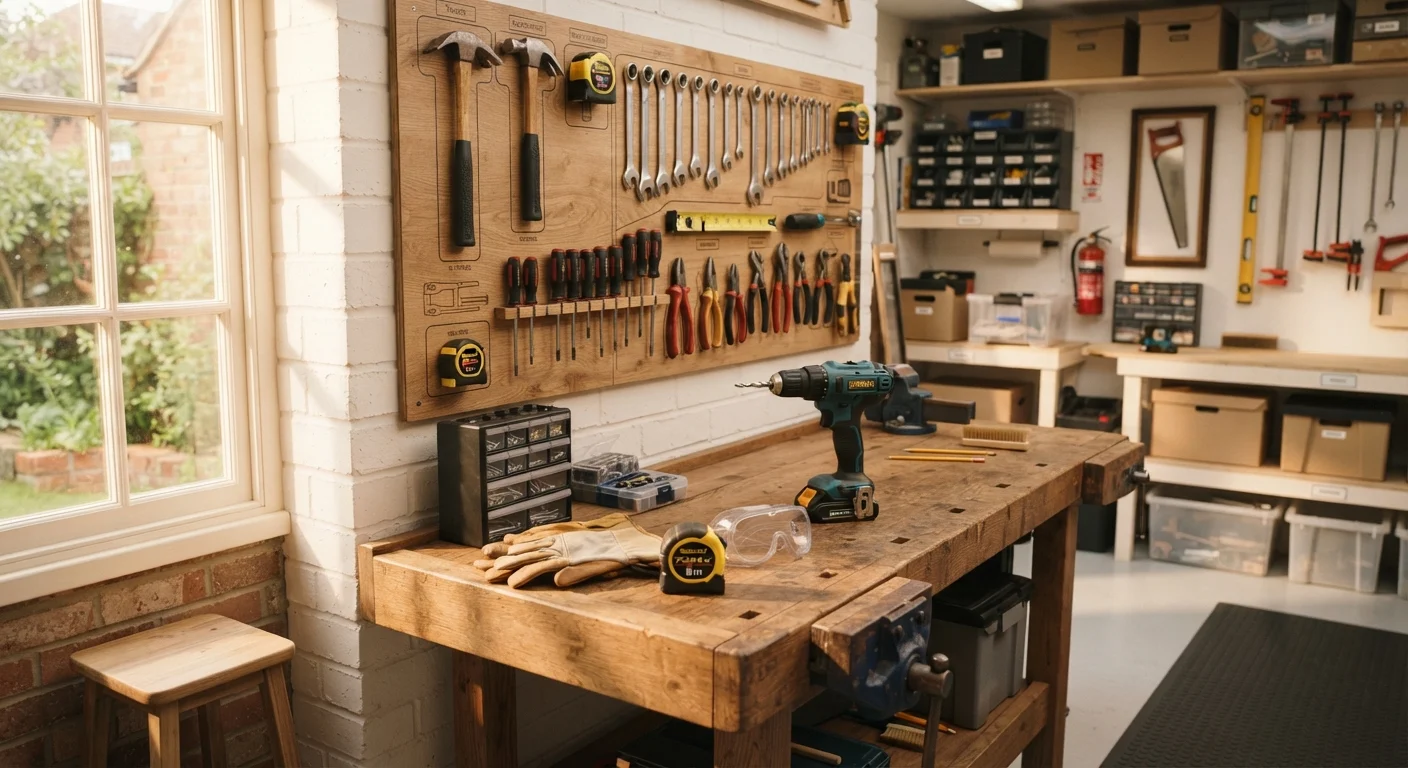
- Tape measure (25 ft) - your most-used tool on any project
- Hammer - 16 oz. smooth-face for general use
- Utility knife - for scoring drywall, cutting caulk, and a dozen other tasks
- 4-foot level - ensures shelves, frames, and tile are plumb and square
- Screwdriver set - flat-head and Phillips in multiple sizes
- Adjustable wrench and pliers - covers basic plumbing and hardware work
Your First Power Tool
A cordless drill/driver is the single most useful power tool for beginners. It drives screws, bores holes, and dramatically speeds up assembly tasks. Choose a brushless motor model in the 18-20V range for a balance of power and battery life. Add a drill bit set and a variety of driver bits when you purchase it.
Expand your kit incrementally as projects demand - a circular saw for cutting lumber, an orbital sander for finishing work - rather than buying speculatively upfront.
Choosing the Right First Project
The best first project teaches real skills while keeping consequences manageable. Cosmetic and maintenance tasks fit this profile well: interior painting, replacing a worn faucet, patching small drywall holes, installing new cabinet hardware, or caulking around a tub surround.
Each of these teaches something fundamental - surface preparation, measuring, working cleanly - without exposing you to structural, electrical, or plumbing risk. They also have a visible payoff, which matters for motivation.
Make Your First Project a Quick Win
Choose something you can complete in a single weekend with the tools you already own or plan to buy. Finishing a project - even a small one - builds momentum that carries you into more complex work. A two-hour hardware swap teaches more than three weekends of planning a bathroom remodel.
How to Scope a Project Honestly
Before committing to any project, ask three questions:
- What's the worst realistic outcome if I make a mistake? Peeling paint is recoverable. A flooded bathroom or a wiring error is not.
- Do I understand every step before I start? Watch multiple tutorial sources for any unfamiliar technique. If steps still seem unclear, that's a signal to pause.
- What will this realistically cost - including a mistake buffer? Add 15-20% to your materials estimate for waste, returns, and do-overs.
Once you're comfortable with interior projects, you might consider tackling outdoor spaces. Our beginner's guide to vegetable gardening is a great parallel skill-builder for your outdoor areas.
Safety, Permits, and Knowing Your Limits
Safety in home improvement is not about fear - it's about working deliberately. Basic protective habits include wearing safety glasses whenever cutting or drilling, using hearing protection with loud power tools, and never working on electrical components without verifying the circuit is off at the breaker.
Permits are a separate but equally important topic. Many homeowners assume permits are optional bureaucracy, but they exist to ensure work meets safety standards - and skipping them can create serious problems when you sell your home or file an insurance claim. Our guide on when renovation permits are required explains which projects typically trigger permit requirements and what the process involves.
Electrical work deserves special caution. Some jurisdictions allow licensed homeowners to perform limited electrical tasks; others require a licensed electrician for nearly everything beyond swapping a light fixture. Learn the rules in your state and municipality before touching wiring. See our article on DIY electrical work legality and safety for a clear breakdown.
When a project involves structural walls, gas lines, or the main electrical panel, the right call is usually a licensed professional. That decision is a skill in itself - not a failure. Our guide on DIY versus hiring a contractor helps you draw that line thoughtfully.
Building Skills Over Time
Home improvement competence accumulates through repetition and reflection, not through a single ambitious project. After each completed task, take a few minutes to note what worked, what surprised you, and what you'd do differently. That habit accelerates learning faster than any tutorial.
A practical progression for most beginners looks like this: start with pure cosmetic work (painting, hardware), move to basic repairs (patching, caulking, fixture replacement), then advance to light carpentry and tiling before considering larger structural or mechanical work. Each tier builds on the last.
Keeping your home organized and well-maintained also makes future repairs easier - you'll know where things are, notice problems earlier, and have clear access to work areas. The principles in our home organization starter guide apply just as well to a workshop or utility room as to a living space.
The goal isn't perfection on the first attempt - it's a finished project you learned from, completed safely, and can build on. That foundation is worth more than any single outcome.