

Key Takeaways
- Free-feeding is convenient but increases the risk of overeating and obesity in most dogs.
- Timed meals improve digestion, help monitor appetite changes, and support healthier weight management.
- Portion control works within any schedule and is essential for dogs prone to weight gain.
- Your dog's age, breed, and activity level should guide how many meals they receive per day.
- Always consult your veterinarian before changing your dog's feeding routine significantly.
Our Verdict
Timed, portioned meals are the approach most consistently supported by veterinary guidance for adult dogs, offering better weight control and appetite monitoring. Free-feeding suits a narrow group of dogs but carries real risks for most. Whichever method you choose, consistency and regular vet check-ins make the biggest difference.
| Best for | Recommended |
|---|---|
| Most adult dogs, especially those prone to weight gain | Timed meals with portion control |
| Puppies under six months requiring frequent energy intake | Three timed meals per day |
| Highly active working or sporting dogs with high caloric needs | Timed meals with adjusted portion size |
| Grazing cats transitioning to a multi-pet household | Free-feeding (dry food only, monitored closely) |
Why Your Feeding Method Matters More Than You Think
Most dog owners focus on what to feed their dog-protein content, ingredient quality, grain-free versus traditional formulas. But how and when you feed can be just as influential on your dog's digestive health, energy levels, and long-term weight. Feeding routines affect everything from gut motility to behavioral cues around food, and the wrong approach for your individual dog can quietly contribute to obesity, anxiety, or irregular digestion over time.
There are three primary feeding methods: free-feeding (food available at all times), timed meals (set portions offered at scheduled times), and portion control within a flexible window. Understanding the practical tradeoffs helps you make a more confident, informed choice-one you can discuss with your veterinarian. For a deeper look at what's actually inside your dog's food, see our plain-language guide to pet nutrition labels.
Free-Feeding: Convenience With Real Tradeoffs
Free-feeding means leaving a bowl of dry kibble accessible throughout the day. Dogs self-regulate as they choose. For busy households, the appeal is obvious-you fill the bowl once (or twice) and skip the scheduling.
The problem is that most domestic dogs are not efficient self-regulators. Unlike wolves or wild canids, many breeds have been selectively developed in ways that reduce satiety signaling. A 2019 study published in PLOS ONE found that Labrador Retrievers, one of the most common family breeds, frequently carry a genetic variant affecting the POMC gene-tied to reduced feeling of fullness. These dogs will simply keep eating when food is available.
Beyond overeating, free-feeding makes it harder to detect early signs of illness. A dog that grazes all day may go 12-18 hours without you noticing a drop in appetite, which is often one of the first indicators of a health issue. Free-feeding is also problematic in multi-dog households, where one dog may dominate the bowl.
Free-Feeding Risks for Most Dogs
Leaving food available around the clock suits very few dogs. Most breeds, particularly food-motivated ones like Beagles and Labs, will overeat consistently. Free-feeding also masks appetite loss, a key early warning sign of illness. If you currently free-feed and your dog is above ideal body weight, speak with your veterinarian about transitioning to timed meals.
Free-feeding dry food may be a reasonable approach only for dogs who are confirmed self-regulators, under close weight monitoring, and living as the sole pet. Wet or raw food should never be left out due to spoilage risk.
Timed Meals: The Approach Most Vets Recommend
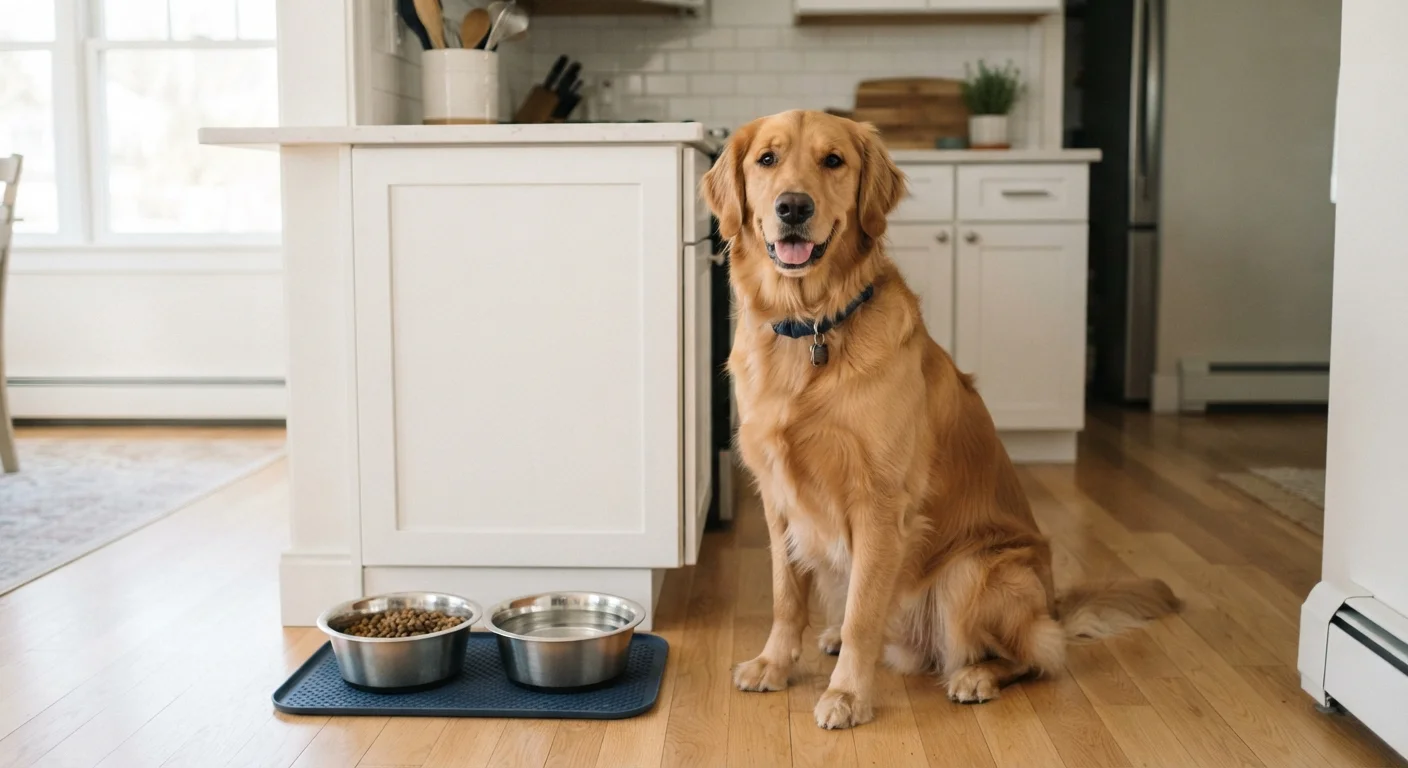
Timed meals involve offering a measured portion at fixed intervals-typically twice daily for adult dogs, and three times daily for puppies under six months. The bowl is placed down, and whatever isn't eaten within 15-20 minutes is picked up until the next scheduled feeding.
This method offers several advantages: you can track intake day to day, you'll notice appetite changes quickly, and your dog's digestive system benefits from regularity. Scheduled meals also reinforce routine, which can reduce food-related anxiety and support easier house-training in younger dogs.
For most adult dogs, two meals per day-morning and evening, spaced roughly 8-12 hours apart-aligns well with their digestive rhythm. Very large or deep-chested breeds (such as Great Danes or Standard Poodles) may benefit from smaller, more frequent meals to reduce the risk of bloat (gastric dilatation-volvulus), a serious condition your vet can advise on specifically.
Pair Meal Timing With Daily Training
Serving meals at consistent times creates a natural window for reinforcement-based training. Feeding your dog after a short sit or calm settle reinforces good behavior without requiring extra treats. This routine approach pairs well with broader structure-building practices discussed in our comparison of group and private training.
Timed feeding also pairs naturally with positive reinforcement training. When your dog associates meal delivery with your presence and a calm routine, it can strengthen the human-animal bond and support better overall behavior. See how consistent structure plays into building reliable walking habits as well.
Portion Control: The Essential Layer Across All Methods
Regardless of when you feed, how much you feed is equally critical. Portion control isn't a standalone method-it's a discipline that should accompany any feeding schedule.
Pet food packaging includes feeding guidelines, but these are general starting points, not prescriptions. Your dog's actual caloric need depends on age, weight, activity level, reproductive status (spayed/neutered dogs often need fewer calories), and any underlying health conditions. A sedentary senior dog and a working herding dog of the same breed weight can have dramatically different caloric requirements.
| Free-Feeding | Timed Meals | Portion Control (applied to either) | |
|---|---|---|---|
| Ease of management | High - minimal daily effort | Moderate - requires scheduling | Moderate - requires measuring |
| Weight management | Poor for most dogs | Good - intake is predictable | Excellent when accurate |
| Appetite monitoring | Difficult to track | Easy - clear per-meal baseline | Easy alongside timed meals |
| Digestive regularity | Inconsistent | Supports regular digestion | Neutral - depends on schedule |
| Multi-dog household suitability | Poor - resource guarding risk | Good with separate bowls | Good when each dog is measured |
| Suited to puppies | Not recommended | Yes - three meals daily | Essential at any age |
To calibrate portions accurately, use a kitchen scale or a standardized measuring cup-not an imprecise scoop. Track your dog's body condition score (BCS), a 1-9 scale used by veterinarians to assess whether a dog is underweight, ideal, or overweight. You should be able to feel your dog's ribs without pressing hard, and see a visible waist from above. This overview of overlooked wellness habits covers how small daily practices like portion awareness compound into meaningful long-term health outcomes.
Treats count toward daily caloric intake too-many owners underestimate treat calories by 30% or more, which adds up quickly. As part of your dog's broader daily care, see our guide to everyday pet care routines for a fuller picture of what consistent attention can prevent.
This article is for general informational purposes only and does not constitute veterinary advice. Consult a licensed veterinarian before making significant changes to your dog's diet or feeding routine.